
Description
Symptoms
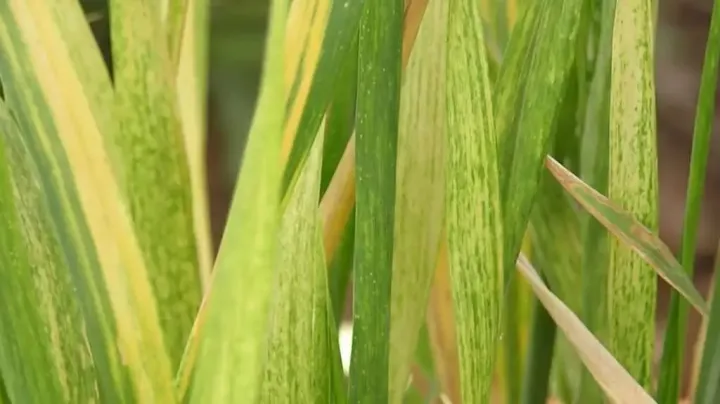
Early symptoms of the disease appear as light-colored streaks, stripes, or a mosaic-like pattern on the leaves of young plants. As the infection progresses, these chlorotic areas expand, giving the field a pale or yellow appearance.
Infected plants show significant stunting in growth compared to healthy ones. Leaf deformation is common, with leaves appearing twisted or thread-like, which severely disrupts the plant's photosynthetic efficiency.
Plants infected early in the autumn may exhibit excessive tillering, but the resulting tillers remain weak and underdeveloped. Patches of stunted vegetation are often visible throughout the field during the growth stages.
Symptoms often become more pronounced in the spring, especially when warmer temperatures accelerate viral replication within the plant tissues. Leaves may show yellowing and eventually wither at the margins.
The disease is systemic, meaning the virus spreads throughout all parts of the plant, including the roots and developing ears. This leads to severe disruptions in reproductive development and reduces overall grain quality.
Pathogen
The causative agent of this disease is the Russian winter wheat mosaic virus. It is a viral pathogen that relies on specific insect vectors to transmit the infection between plants during feeding.
The virus primarily affects winter cereals, with winter wheat and winter barley being the most susceptible host crops. Certain wild grass species can also act as reservoirs, maintaining the virus in the environment throughout the seasons.
The main vector responsible for spreading the disease in the field is the striped leafhopper. Adults and nymphs acquire the virus while feeding on infected plants and then transmit it to healthy seedlings during their subsequent migration.
The pathogen is capable of surviving within the vector for a prolonged period, ensuring its persistence in the agroecosystem. Transmission typically occurs when leafhoppers migrate from infected areas to newly emerged winter crops.
Understanding the link between the pathogen and the insect vector's life cycle is essential for developing effective strategies to manage and prevent outbreaks in agricultural fields.
Conditions for development
Disease development is heavily dependent on the population density of the striped leafhopper in the field. Conditions such as warm and humid weather in late summer and autumn favor the rapid multiplication of these vectors.
The presence of weeds in or near the field acts as a reservoir for both the virus and the insect vector. Reducing the prevalence of these host weeds is a crucial step in managing the disease spread.
The optimal temperature for leafhopper activity ranges from 15 to 25 degrees Celsius. In these conditions, vectors are highly mobile and can efficiently transfer the virus to young wheat or barley seedlings.
Early sowing dates for winter crops often coincide with the peak migration period of leafhoppers. This makes the seedlings particularly vulnerable to infection, as they have limited resistance during the early growth stages.
Soil moisture stress can further weaken the crop, making it more susceptible to infection. Poor environmental conditions coupled with high vector pressure create a perfect environment for the virus to thrive.
Why it matters
The primary economic impact of Russian winter wheat mosaic is the significant reduction in crop yield. Infected plants often produce smaller ears with shriveled grains, drastically lowering the thousand-grain weight.
Severe infections can cause plant thinning in the field, as compromised plants may not survive the winter season. Low winter hardiness is a direct consequence of the viral infection weakening the plant's physiological state.
Crop loss can be substantial in years with high disease incidence. Beyond quantity, the quality of the grain is often degraded, making the harvest unsuitable for milling or other commercial processing requirements.
The virus impairs the root system's ability to absorb water and nutrients, making the crop less resilient to other environmental stresses. This results in a persistent growth deficiency throughout the entire vegetation period.
Financial losses also include the increased costs of management, such as the need for repeated insecticide applications and, in severe cases, the potential need to re-sow entire fields.
Protection
Effective management focuses on controlling the leafhopper vector. Timely application of insecticides during periods of peak insect migration is the most reliable way to prevent large-scale infection of the field.
Adjusting the sowing date is a vital agricultural practice. By delaying planting until after the peak flight of the vector, farmers can significantly reduce the risk of early-season infection for their winter wheat crops.
Rigorous weed control is essential for preventing the buildup of viral reservoirs near wheat fields. Removing grassy weeds denies the leafhoppers the food and shelter they need to survive and reproduce.
The use of resistant or tolerant cultivars is a long-term strategy for managing the mosaic virus. Breeding efforts aimed at developing wheat varieties that limit viral spread are crucial for sustainable agriculture.
Proper agronomic management, including balanced fertilization, helps plants maintain a robust immune system. Strong, well-nourished plants are generally better equipped to tolerate viral pressure and recover from stress.
Pathogens and affected parts
Affects crops · 1
Discussion
No discussions yet — be the first.