
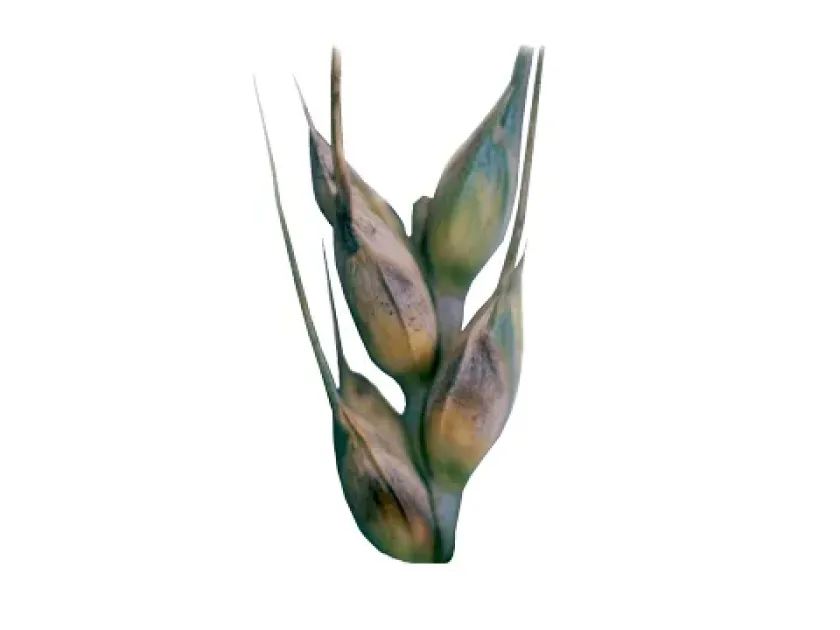
Description
Symptoms
Initial symptoms include the appearance of small, light-brown or grayish spots on the leaves. These spots gradually expand into elongated, irregular lesions with dark margins.
A distinctive feature of the disease is the presence of minute black dots (pycnidia) embedded within the center of the necrotic lesions, which can be easily identified with the naked eye.
Infection typically progresses from the lower canopy upwards. As the disease advances, the lesions merge, covering larger areas and causing the leaf tissue to wither and die prematurely.
Severe infestations can lead to the necrosis of leaf sheaths and stems, which weakens the structural integrity of the plant and may cause lodging in high-density stands.
When environmental conditions remain favorable, the entire plant may show signs of yellowing and senescence well before maturity, significantly impacting its health.
Pathogen
The disease is caused by the fungus Stagonospora avenae (syn. Septoria avenae), which belongs to the Ascomycota phylum. It primarily targets the foliage and stems of oat plants and can persist on crop debris and in the soil.
The pathogen spreads through conidia, which are dispersed by wind and rain splashes. Once the spores land on susceptible tissue, they germinate under humid conditions to initiate the infection cycle.
The fungus forms pycnidia, small black fruiting bodies that appear on the necrotic lesions. These structures are the primary source of secondary inoculum, facilitating rapid disease spread throughout the growing season.
Stagonospora avenae has a wide host range, which includes winter barley, rye, and various wild grass species, allowing the pathogen to thrive across diverse agricultural landscapes.
The fungus is highly resilient, capable of adapting to varying environmental conditions, which ensures its survival even in regions with fluctuating seasonal weather.
Conditions for development
Septoria leaf blotch thrives in cool, moist environments. Prolonged periods of rainfall, high humidity, and overcast skies are the most critical factors for spore germination and infection.
The disease development is most rapid during the tillering and jointing growth stages of oats. Frequent dew and mist contribute to the sustained leaf wetness required for pathogen success.
Dense crop stands often have reduced air circulation, creating a favorable microclimate that keeps the foliage wet for longer periods, thereby increasing disease pressure.
Excessive nitrogen fertilization promotes lush canopy growth, which delays leaf drying and makes the plants more vulnerable to fungal colonization.
Infected crop stubble remaining on the soil surface serves as the primary reservoir for the initial outbreak each season, especially in reduced-tillage farming systems.
Why it matters
The primary impact of the disease is the significant reduction of the photosynthetically active leaf area, which limits the plant's capacity to synthesize energy and biomass.
Premature leaf death disrupts grain filling, resulting in smaller, shriveled grains and a substantial decrease in the thousand-grain weight, a key yield component.
In cases of severe epidemics, crop yield losses can reach 20% to 30%, especially if the flag leaf is heavily infected, which is critical for final grain development.
The infection also deteriorates grain quality, making the produce less desirable for industrial processing and reducing its value as certified seed stock.
The disease weakens the overall vitality of the oat plant, potentially predisposing it to other biotic stresses and secondary pathogens that further reduce yield.
Protection
Cultural management is vital; crop rotation with non-host species is the most effective way to break the pathogen's life cycle and reduce the inoculum load in the field.
Effective management includes deep plowing or incorporating crop residues into the soil to accelerate the decomposition of infected stubble before the next planting season.
Using certified, healthy seeds and, where necessary, fungicide seed treatments can significantly lower the risk of early-season infection.
Foliar application of systemic fungicides, such as triazoles or strobilurins, during the vegetative growth stages provides reliable disease suppression if thresholds are met.
Selecting oat cultivars with natural resistance to Stagonospora avenae is a long-term solution that minimizes reliance on chemical inputs and ensures stable production.
Pathogens and affected parts
Affects crops · 1
Discussion
No discussions yet — be the first.