
Description
Symptoms
Symptoms are most visible in early spring, shortly after the winter crops break dormancy and begin active growth.
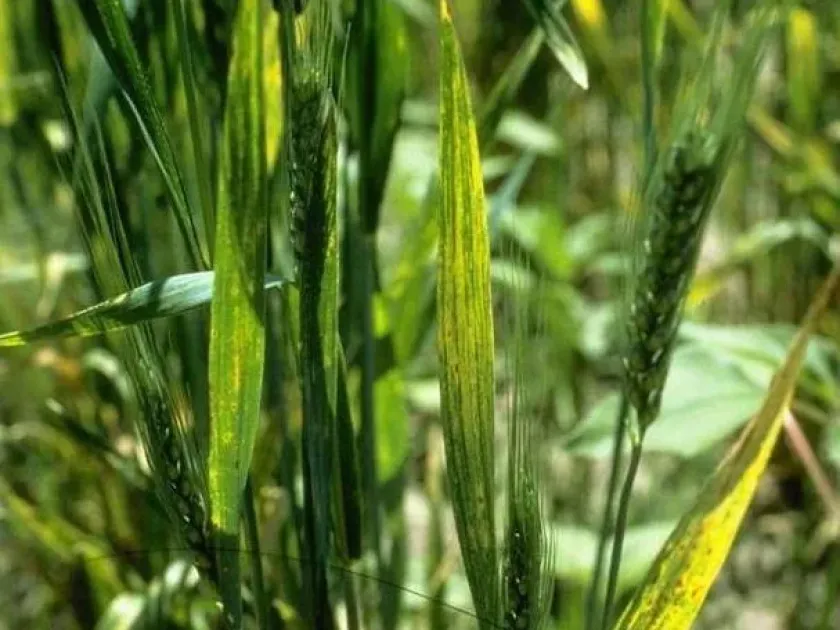
Leaves display characteristic chlorotic patterns, including mosaic spots, mottling, and yellow-green streaks, often described as a mosaic.
Infected plants appear stunted and may exhibit excessive tillering, giving them a bushy appearance in the field.
As the disease progresses, lower leaves may turn yellow and necrotic, significantly reducing the photosynthetic area of the canopy.
The distribution of the disease is typically patchy, following the moisture patterns and the distribution of the fungal vector in the soil.
Pathogen
The causative agent of the disease is the Wheat soil-borne mosaic virus (WSBMV), which belongs to the Furovirus genus.
The virus relies on the soil-borne obligate parasite Polymyxa graminis, a plasmodiophorid protist, to infect host plants.
The fungus acts as a biological vector, carrying the viral particles within its long-lived resting spores located in the soil.
These spores can survive in the soil for over a decade, making the pathogen extremely difficult to eradicate once it is established.
Infection is initiated when the zoospores of the fungus penetrate the root cells of winter wheat or barley during moist conditions.
Conditions for development
Cool and moist soil conditions are essential for the transmission of the virus, as the fungal vector requires water for zoospore movement.
The optimal temperature range for infection is between 10 and 15 degrees Celsius, typical of early autumn weather.
Fields with poor drainage or naturally high moisture levels are at a much higher risk of developing severe mosaic outbreaks.
Consecutive cropping of susceptible winter wheat or barley varieties leads to the rapid build-up of the virus and fungal vector populations.
The movement of soil particles via farm machinery is the primary mechanism for spreading the disease across different fields or farms.
Why it matters
The disease causes significant yield losses by reducing the number of fertile tillers and the overall grain fill of the plants.
Stunted development of the root system limits water and nutrient uptake, making crops more susceptible to drought and seasonal stress.
Economic losses vary depending on the susceptibility of the cultivar and the environmental conditions during the early growth stages.
High levels of virus incidence in a field often lead to a reduction in grain quality, affecting market value and protein content.
Once the soil is infested, the persistent nature of the fungal vector ensures that the disease remains a recurring threat to subsequent winter cereal crops.
Protection
Planting resistant or tolerant wheat cultivars is the primary and most effective management strategy against the soil-borne mosaic virus.
Extending the crop rotation period with non-host crops can help to gradually decline the population of Polymyxa graminis over time.
Adjusting planting dates to avoid early autumn conditions can sometimes reduce the window of opportunity for fungal-mediated virus transmission.
Cleaning soil from machinery and field equipment before moving to non-infested fields is critical to prevent further spread of the pathogen.
Improving soil drainage through proper field management can minimize the environmental conditions necessary for the fungal vector to thrive.
Pathogens and affected parts
Affects crops · 2
Discussion
No discussions yet — be the first.