

Pest · Hymenoptera · affects Apple, Potato, Fodder beet
Especially harmful
European apple sawfly
Hoplocampa testudinea
Description
How to identify
The European apple sawfly (Hoplocampa testudinea) is a member of the Tenthredinidae family. Adults are approximately 6–7 mm long with a yellowish-brown body and distinct black markings on the head and thorax, making them easy to recognize during flight.
The larvae are creamy white with a brownish head and ten pairs of legs. A distinguishing characteristic of the larva is the strong, bug-like odor it emits when disturbed. They develop rapidly inside young fruitlets, feeding on the developing core.
These insects overwinter as mature larvae inside silken cocoons deep within the soil. Pupation takes place in early spring, synchronized with the onset of the apple flowering season, which is crucial for the survival of the new generation.
Adults emerge just as the blossom buds begin to show pink. They feed on nectar and pollen but do not damage the tree tissue directly. The female uses her ovipositor to insert eggs into the base of the flower, ensuring a food source for offspring.
This pest is highly specialized and attacks only apple trees. Crops such as fodder beet, winter rapeseed, cabbage, pepper, sunflower, winter barley, or common hop are not affected by this specific sawfly species, allowing for localized control strategies.
What it damages
The main host plant is the domestic apple tree. Larvae cause significant damage by burrowing into the young fruitlets, destroying seeds and pulp. This leads to heavy fruit drop, which can severely impact yield if not managed through proper monitoring.
When it appears
The activity begins during the apple blossom period. Adults are attracted to the flowers to feed and lay eggs. Monitoring should begin as soon as the first pink buds appear on the trees to determine the need for immediate control measures.
Larval emergence occurs shortly after petal fall. This is a critical window for intervention, as the larvae move from the exterior of the fruitlet to the interior, where they are protected from contact insecticides and harder to eradicate.
Signs of infestation
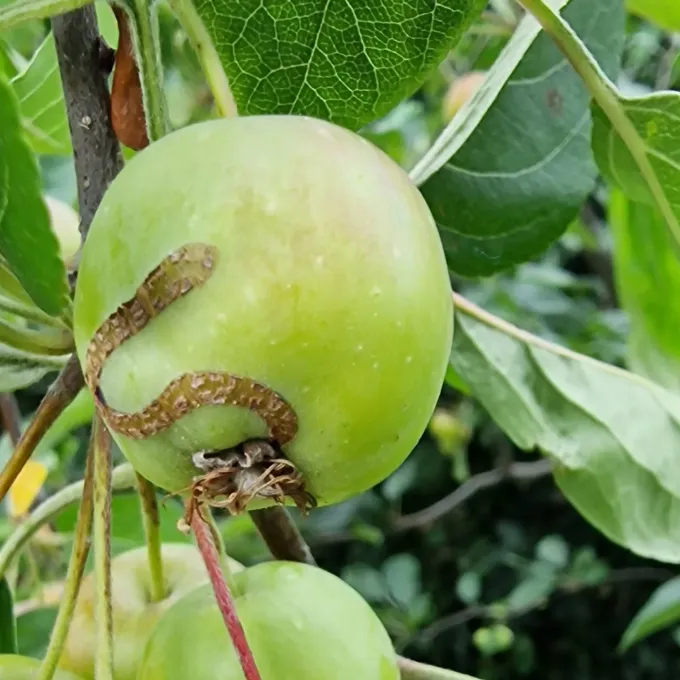
Early infestation signs include thin, spiral-shaped surface scars on the fruitlets. These are created by the young larvae as they graze on the surface before boring deeper into the fruit to reach the central core during their development.
A dark, frass-filled hole is typically visible at the side of the fruit. In many cases, damaged fruitlets exude a gummy substance from the entry hole, and the fruits eventually turn brown and fall to the ground prematurely.
Control measures
Cultural control includes disturbing the soil around the base of trees in autumn or early spring to destroy the overwintering cocoons. Collecting and destroying fallen fruit regularly is essential to prevent larvae from returning to the soil.
Chemical control should be timed immediately after petal fall, when the larvae are exposed. White sticky traps can be used to monitor adult population density and determine the precise timing for the application of plant protection products.
In brief
15
Damages crops
Content graph
Damages crops · 15
Reference
Connections · European apple sawfly
Most often together:
Marketplace
Products · 12


Biology
Taxonomy
- Latin name
- Hoplocampa testudinea
- Order
- Hymenoptera
- Family
- Tenthredinidae
- EPPO code
- HOPLTE
Community
Discussion
No discussions yet — be the first.