


Last Treatment Interval, Days
1
By type of action
Systemic herbicide
By application method
Foliar herbicide, Soil herbicide
By Mode of Action
Selective herbicide
Your mark
2 votes
100% positive ratings
Store offers · 14 from 13 stores
14 offers in 13 stores — from 29.7 € per 1 l.
Available at: Agrarian · Agrariyam · Agro-Time · Agrohim · Agromaks2020 · Agropolex · Agrotema · Агрозахист Дніпро · ePole · Grano · Гектар · Kurkul · Semena-online
Prices are collected automatically from store websites and converted at the current exchange rate. Check the price and availability on the store website before ordering.
Description
Pik, VDG — post-emergence herbicide with long residual activity for controlling annual and some perennial weeds in corn, flax, and cereal crops.
Active ingredient: prosulfuron, 750 g/kg
Base unit
0.1 kg.
The active ingredient — prosulfuron — belongs to the sulfonylurea chemical class. The formulation is effective at very low application rates, minimizing environmental impact. The long protective period — up to 8 weeks — allows complete elimination of weed competition with a single application.
HOW PIK WORKS
Prosulfuron penetrates weed plants 2–3 hours after application via leaves, stems, and roots and rapidly distributes throughout the plant to growth points, causing color changes (yellowing, chlorosis) and halting leaf and stem growth. Complete weed death occurs within 15–20 days, depending on species, weather conditions, and application rate.
SPECTRUM OF ACTION
Annual and some perennial broadleaf weeds, including those resistant to 2,4-D and MCPA.
Highly sensitive:
chickweed (species), field bindweed, hardy knotweed, daisy (species), marigold (species), and others.
Sensitive:
common starwort, field radish, field mustard, blue chicory, burnet (species), drooping water-plantain, wormwood-leaved ragwort, field poppy, three-petaled violet, sticky cinquefoil, yellow bedstraw (species), medicinal valerian, field dock, bindweed (species), dock (species), and others.
WHEN TO APPLY PIK
Corn tolerates post-emergence applications of Pik, VDG regardless of growth stage. The wide application window allows flexible timing without phytotoxicity to the crop. However, earlier applications are recommended, as early weed control significantly increases crop yield.
Pik, VDG is an economical solution when annual broadleaf weeds dominate overall weed pressure. If perennial broadleaf weeds dominate, apply a tank mix of Pik, VDG + Banvel, VR.
When using the product, consider the following restrictions:
Do not apply to cereals with legume intercrops.
Recommended for use on soils with pH not exceeding 7.
If replanting is necessary, sow only cereal crops, corn, or millet.
Do not sow sunflower, sugar beet, buckwheat, vegetables, rapeseed, or legumes in the following year.
Composition
Active ingredients
- Prosulfuron гербицид Производные сульфонилмочевины
Application
Used on crops
Specifications
| Last Treatment Interval, Days | 1 |
|---|---|
| By type of action | |
| By application method | |
| By Mode of Action | |
| By Application Timing | |
| Form of the preparation | |
| Application rate | Up to 25 g/ha |
| Danger Class | 3 |
| Maximum number of treatments | 1 |
| Registration year | 2017 |
| Catalog | Catalog → Herbicides, Desiccants |
| Manufacturer | Syngenta |
| Manufacturer | Syngenta Crop Protection Monthey SA |
| Manufacturer | Syngenta Chemicals B.V. |
| Manufacturer | Syngenta Production France S.A.S. |
| Manufacturer | Kemark |
| Legal data |
Show · 1
|
| Country | Belgium |
No reviews yet. Be the first to share your experience.
Alternatives
Herbicides, Desiccants · similar preparations
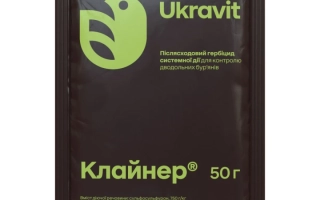

Zlakodin, WG (sulfosulfuron 750 g/kg)
Jiangsu Agricoem Laboratory Co., Ltd.
055 5 offers
48.05 € ≈ 2 448 ₴




See also
Often considered together with this product




Recently viewed
Products you’ve viewed on this site
Reviews