

Disease · fungal · affects Carnation, Common oat, Maize
Especially harmful
Loose smut
Ustilago tritici
Description
Symptoms
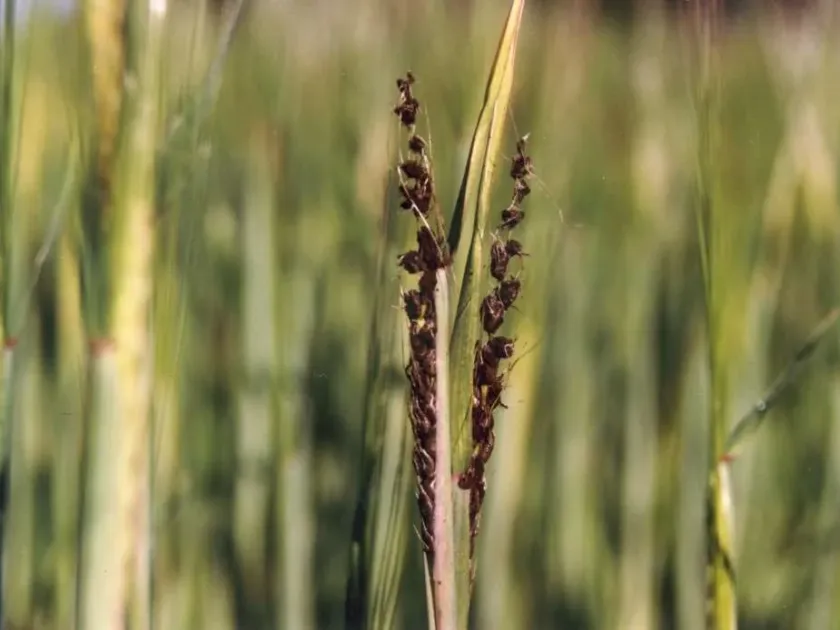
Symptoms of loose smut become apparent at the time of heading. Affected plants often emerge slightly earlier than healthy ones.
The entire inflorescence is transformed into a black, powdery mass of teliospores. The spikelets are usually entirely replaced by this fungal mass.
Initially, the spore mass is covered by a thin grey membrane. This membrane quickly ruptures, releasing the spores to be dispersed by wind and rain.
Eventually, the rachis of the ear remains bare, and the entire reproductive potential of the infected plant is destroyed.
There are no symptoms on the leaves, stems, or roots; the damage is exclusively focused on the spikes or panicles.
Pathogen
The causal agent of loose smut is the fungus Ustilago tritici. It is a highly specialized pathogen that affects various cereal crops, including winter and spring wheat, and barley.
The disease cycle begins during the flowering stage of the host plant. Teliospores are carried by wind to the stigmas of healthy flowers, where they germinate and infect the developing embryo.
Once inside the grain, the fungus establishes a dormant mycelium within the seed embryo. The infected grain appears perfectly healthy and normal to the naked eye.
Upon planting the infected seeds, the fungus resumes growth. The mycelium grows systemically within the plant, tracking the growth of the stem up to the floral primordia.
The fungus remains internal and invisible throughout the vegetative stages of the plant, only emerging as a mass of spores during the heading stage.
Conditions for development
Environmental conditions during the flowering stage are critical for the spread of loose smut. Optimal temperatures for spore germination range between +18°C and +24°C.
High humidity and frequent rainfall during the flowering period facilitate the movement and successful infection of stigmas by teliospores.
The internal development of the mycelium is influenced by the rate of host growth. Conditions that slow down the plant's growth can allow the fungus to colonize the tissue more effectively.
The pathogen is spread via airborne spores that can travel long distances, meaning even isolated fields are at risk if an inoculum source is present nearby.
The prevalence of the disease is strictly dependent on the presence of the pathogen in the seeds and the synchronization of weather conditions with the host flowering.
Why it matters
Loose smut causes direct yield loss as every infected ear is completely sterile. This directly reduces the total grain production of the field.
Since the infection is seed-borne and internal, it is easily spread to new areas or farms through the exchange of seed material.
Without proper management, the level of infection can compound over several seasons, eventually leading to severe crop losses.
The disease does not produce toxins harmful to livestock, but it does significantly lower the commercial value and quantity of the harvested crop.
Because the disease is systemic, there is no way to cure infected plants during the growing season, making preventive measures the only viable strategy.
Protection
The most important control measure is the use of pathogen-free, certified seeds. Testing seed batches for internal infection is a critical preventive step.
Systemic seed treatment with fungicides is mandatory. These chemicals penetrate the seed embryo and eradicate the dormant mycelium before it can activate.
Agricultural practices, such as crop rotation and the selection of resistant cultivars, are highly effective in reducing the long-term impact of the disease.
- Using certified, smut-free seeds for planting.
- Seed treatment with high-efficacy systemic fungicides.
- Selecting wheat and barley varieties known for their resistance to Ustilago tritici.
- Proper disposal of severely infected crop residues to prevent inoculum buildup.
Regular field scouting during heading is essential to identify the level of infection and decide on the management strategy for the next planting season.
In brief
8
Affects crops
Biology
Pathogens and affected parts
Pathogens
Affected plant parts
whole plant
Content graph
Affects crops · 8
Reference
Connections · Loose smut
Most often together:
Marketplace
Products · 769










Community
Discussion
No discussions yet — be the first.