
Description
Symptoms
Symptoms of Merlinius infestation are often non-specific, frequently resembling nutrient deficiency or drought stress. Crops like winter barley, hops, and alfalfa may show stunted growth.
Visible signs include chlorosis (yellowing) of leaves, decreased plant vigor, and overall unevenness of the field. During dry spells, affected plants exhibit rapid wilting compared to healthy neighbors.
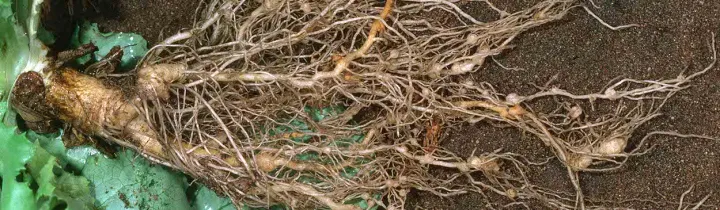
The root system itself displays clear evidence of infestation, characterized by reduced root branching, discoloration, and brown necrotic lesions on the younger root tips.
In ornamental plants like rhododendrons, the damage results in poor leaf development, twig dieback, and a general loss of plant vitality. The root system becomes unable to sustain the plant's water needs.
Confirmation of the disease requires laboratory analysis of soil and root samples to identify the presence and density of these nematodes, as visual symptoms are rarely diagnostic on their own.
Pathogen
Merlinius is a genus of microscopic roundworms (nematodes) classified as ectoparasites. Unlike endoparasites that burrow deep into tissues, these organisms inhabit the soil and feed on the surface of plant roots.
They belong to the family Telotylenchidae and are known as plant-parasitic nematodes. Their ability to survive in various soil types and adapt to different environments makes them persistent agricultural pests.
The life cycle of these nematodes is intimately tied to the presence of host plants. They typically feed on the root hairs and epidermal cells of the roots, causing significant stress to the plant's nutrient uptake system.
These pests do not only damage roots directly but also create pathways for secondary infections by fungi and bacteria. This complex interaction often makes diagnosis challenging for farmers.
Transmission occurs through contaminated soil, irrigation water, and the movement of infected plant material. Once established in a field, they can remain active for several seasons if host plants are present.
Conditions for development
The development of Merlinius populations is strongly influenced by soil moisture and temperature. They thrive in loose, moderately moist soils that allow for easy movement between root systems.
The optimal temperature range for their reproductive activity is generally between 15°C and 25°C. During these conditions, their life cycle progresses rapidly, leading to exponential population growth.
Sandy and silty soils are particularly favorable for these nematodes because their pore structure facilitates the migration of the worms toward new root sources.
Agricultural practices, such as continuous monocropping of alfalfa or hops, significantly increase the risk of infestation by providing a constant food source for the nematodes throughout the year.
Poor water management, specifically waterlogging, can create localized environments where nematode activity is maximized, further exacerbating the damage to sensitive crops.
Why it matters
The primary harm caused by Merlinius is yield reduction due to the disruption of the plant's ability to absorb water and essential minerals from the soil.
In winter barley, heavy infestation leads to a thinner crop stand and smaller grain size. This economic loss is compounded by the weakened plants' increased susceptibility to soil-borne diseases.
For perennial crops like hops and alfalfa, the damage results in the premature decline of plantations, forcing farmers to replant much sooner than expected, which incurs significant costs.
The presence of nematodes creates a constant stress factor, reducing the plant's overall resilience to environmental extremes like drought or frost, which is particularly critical for sensitive crops.
In ornamental settings, the loss of plant health impacts the aesthetic value and can lead to the death of expensive specimens, making the control of these pests a high priority.
Protection
The most effective management strategy is crop rotation. By alternating infested fields with non-host crops, farmers can significantly lower the nematode population in the soil over time.
Strict sanitation practices, such as deep tilling to disrupt the soil environment and removing weeds that act as reservoir hosts, are essential components of integrated pest management.
Ensuring the use of certified, clean plant material and preventing the spread of infested soil via machinery are key preventive measures for maintaining field health.
- Use of nematicides for high-pressure infestations in commercial fields.
- Application of organic amendments to boost plant root health and tolerance.
- Utilizing biological control agents, such as nematode-trapping fungi, to suppress population density.
An integrated approach that combines cultural, biological, and chemical methods is necessary to effectively manage Merlinius and ensure the long-term productivity of agricultural lands.
Pathogens and affected parts
Affects crops · 4
Discussion
No discussions yet — be the first.