
Description
Symptoms
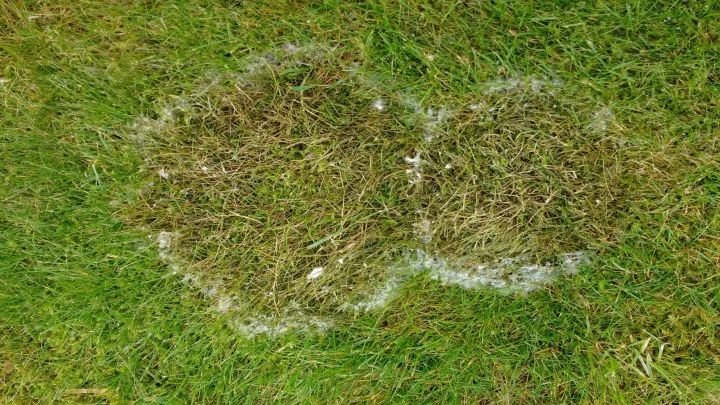
Symptoms become visible immediately after snowmelt in the spring. Affected areas typically exhibit patches of matted, water-soaked, and decaying leaves.
A characteristic white or pinkish mycelial growth covers the infected plants, which is why it is commonly referred to as pink snow mold.
The fungal mycelium eventually destroys the leaf tissue, turning it into a slimy mass that dries out later in the season. Necrotic lesions are often found in the crown region.
Stunted growth and yellowing are early indicators, which progress to complete plant death if the environmental conditions remain favorable for the pathogen.
In severe infestations, the patches of mold can merge, destroying large portions of the field and significantly reducing the overall plant population density.
Pathogen
The causal agent of pink snow mold is the fungus Microdochium nivale, a pathogen that thrives in cool, moist environments. It is a significant threat to various winter cereals including winter barley.
The fungus survives in the soil, on crop debris, and on infected seeds, making it a persistent threat in agricultural fields. It exists in the form of mycelium or conidia during the off-season.
Once conditions become favorable, the fungus spreads rapidly by producing spores, which are disseminated by wind or splashing water, allowing it to colonize healthy plants.
Unlike many other fungi, Microdochium nivale is psychrophilic, meaning it thrives at temperatures close to freezing, which gives it a competitive advantage during winter months.
This pathogen does not require complex structures for survival, allowing it to remain viable in the soil for several years even in the absence of a host crop.
Conditions for development
Pink snow mold development is strongly favored by long-lasting snow cover, especially when the soil underneath has not completely frozen.
Temperatures between 0°C and 10°C are ideal for the fungal growth. High relative humidity and prolonged moisture are essential for the expansion of the fungal colonies.
Excessive nitrogen fertilization in the autumn leads to lush, succulent plant growth, which is highly susceptible to fungal penetration and colonization.
Delayed seeding or early seeding combined with a mild, wet autumn increases the window for initial fungal infection before the plant enters winter dormancy.
Poor soil drainage and low-lying field areas where water tends to pool also create microclimates conducive to the rapid spread of the pathogen.
Why it matters
The primary economic impact is the loss of winter crop stands, which frequently requires costly field reseeding in the early spring.
Infection significantly reduces the number of healthy stems per square meter, directly lowering the potential grain yield at harvest.
Affected plants that survive the winter often show weakened vigor and an increased susceptibility to other diseases, such as root rot and leaf blotch.
The presence of pink snow mold can also affect the overall quality of the grain, leading to smaller kernels and lower weight, impacting the marketability of the crop.
In extreme scenarios, the entire crop can be lost in localized spots or across vast field areas, leading to severe financial consequences for producers.
Protection
Effective seed treatment with systemic fungicides is the first line of defense, ensuring that seedlings are protected during the vulnerable early growth stage.
Implementing proper crop rotation helps in breaking the disease cycle by removing the host plants for several years, thus reducing soil-borne inoculum.
Balanced fertilization, particularly avoiding excessive autumn nitrogen, helps in maintaining sturdy plant tissues that are more resistant to infection.
In high-risk regions, preventative fungicide application in late autumn, just before the first snowfall, is a highly recommended practice for effective control.
Selecting varieties that show natural resistance or tolerance to Microdochium nivale is a sustainable long-term strategy for managing this fungal threat.
Pathogens and affected parts
Affects crops · 1
Discussion
No discussions yet — be the first.