
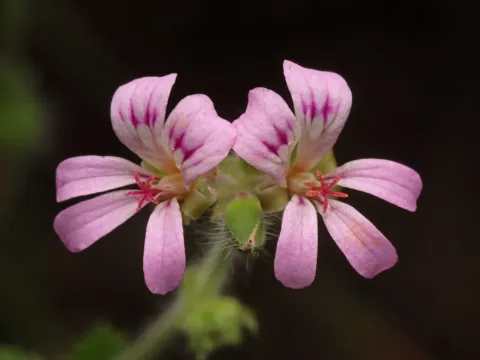
Pelargonium
Pelargonium
Pelargonium propagation by seed typically takes place in late winter or early spring, specifically from February to March. Seeds should be sown in a sterile, light, and well-draining substrate, kept at a consistent temperature of 20–22 degrees Celsius to ensure uniform germination.
What the section contains
 Alchemilla-leaved pelargonium
Pelargonium alchemilloides
Alchemilla-leaved pelargonium
Pelargonium alchemilloides
 Field Pelargonium
Pelargonium campestre
Field Pelargonium
Pelargonium campestre
 Fleshy Pelargonium
Pelargonium carnosum
Fleshy Pelargonium
Pelargonium carnosum
 Grape-leaved pelargonium
Pelargonium vitifolium
Grape-leaved pelargonium
Pelargonium vitifolium
 Hooded-leaf pelargonium
Pelargonium cucullatum
Hooded-leaf pelargonium
Pelargonium cucullatum
 Madagascar pelargonium
Pelargonium madagascariense
Madagascar pelargonium
Pelargonium madagascariense
 Myrrh-leaved pelargonium
Pelargonium myrrhifolium
Myrrh-leaved pelargonium
Pelargonium myrrhifolium
 Night-scented pelargonium
Pelargonium triste
Night-scented pelargonium
Pelargonium triste
 Nutmeg scented geranium
Pelargonium fragrans
Nutmeg scented geranium
Pelargonium fragrans
 Oak-leaved pelargonium
Pelargonium quercetorum
Oak-leaved pelargonium
Pelargonium quercetorum
 Odorless pelargonium
Pelargonium inodorum
Odorless pelargonium
Pelargonium inodorum
 Pelargonium acetosum
Pelargonium acetosum
Pelargonium acetosum
 Pelargonium acraeum
Pelargonium acraeum
Pelargonium acraeum
 Pelargonium alternans
Pelargonium alternans
Pelargonium alternans
 Pelargonium appendiculatum
Pelargonium appendiculatum
Pelargonium appendiculatum
 Pelargonium aridum
Pelargonium aridum
Pelargonium aridum
 Pelargonium articulatum
Pelargonium articulatum
Pelargonium articulatum
 Pelargonium auritum
Pelargonium auritum
Pelargonium auritum
 Pelargonium barklyi
Pelargonium barklyi
Pelargonium barklyi
 Pelargonium betulinum
Pelargonium betulinum
Pelargonium betulinum
 Pelargonium boranense
Pelargonium boranense
Pelargonium boranense
 Pelargonium candicans
Pelargonium candicans
Pelargonium candicans
 Pelargonium caroli-henrici
Pelargonium caroli-henrici
Pelargonium caroli-henrici
 Pelargonium crassipes
Pelargonium crassipes
Pelargonium crassipes
 Pelargonium crithmifolium
Pelargonium crithmifolium
Pelargonium crithmifolium
 Pelargonium echinatum
Pelargonium echinatum
Pelargonium echinatum
 Pelargonium endlicherianum
Pelargonium endlicherianum
Pelargonium endlicherianum
 Pelargonium hirtum
Pelargonium hirtum
Pelargonium hirtum
 Pelargonium hybrids
Pelargonium hybrids
Pelargonium hybrids
 Pelargonium incrassatum
Pelargonium incrassatum
Pelargonium incrassatum
 Pelargonium laxum
Pelargonium laxum
Pelargonium laxum
 Pelargonium luridum
Pelargonium luridum
Pelargonium luridum
 Pelargonium minimum
Pelargonium minimum
Pelargonium minimum
 Pelargonium mollicomum
Pelargonium mollicomum
Pelargonium mollicomum
 Pelargonium moniliforme
Pelargonium moniliforme
Pelargonium moniliforme
 Pelargonium praemorsum
Pelargonium praemorsum
Pelargonium praemorsum
 Pelargonium ranunculophyllum
Pelargonium ranunculophyllum
Pelargonium ranunculophyllum
 Pelargonium rodneyanum
Pelargonium rodneyanum
Pelargonium rodneyanum
 Pelargonium scabrum
Pelargonium scabrum
Pelargonium scabrum
 Pelargonium sidoides
Pelargonium sidoides
Pelargonium sidoides
 Peppermint geranium
Pelargonium tomentosum
Peppermint geranium
Pelargonium tomentosum
 Pine-scented pelargonium
Pelargonium denticulatum
Pine-scented pelargonium
Pelargonium denticulatum
 Rose geranium
Pelargonium capitatum
Rose geranium
Pelargonium capitatum
 Rose geranium
Pelargonium radens
Rose geranium
Pelargonium radens
 Scarlet pelargonium
Pelargonium inquinans
Scarlet pelargonium
Pelargonium inquinans
 Scented geranium
Pelargonium odoratissimum
Scented geranium
Pelargonium odoratissimum
 Sticky pelargonium
Pelargonium glutinosum
Sticky pelargonium
Pelargonium glutinosum
 Thick-stemmed pelargonium
Pelargonium crassicaule
Thick-stemmed pelargonium
Pelargonium crassicaule
Pelargonium
Vegetative propagation via cuttings is the most preferred method to maintain the specific traits of the cultivar. Cuttings are taken from healthy, terminal shoots, allowed to callus for several hours, and then planted in a moist peat-perlite mixture until roots are established.
Seedlings require prickling out once they reach the two-to-three leaf stage to prevent overcrowding and root entanglement. Proper spacing is critical to ensure adequate airflow and light penetration for every individual plant during its early development phase.
During the nursery stage, plants should be regularly monitored for development density. Applying growth regulators or simple pinch-back techniques at the appropriate time encourages branching and results in a more compact and commercially attractive plant habit.
Supplemental lighting is highly recommended for late-winter sown seeds to prevent etiolation. Strong, sturdy seedlings are the foundation for high-quality production and successful field or container performance later in the season.
Pelargonium belongs to the Geraniaceae family and thrives in conditions that provide high solar intensity. These plants require full sun exposure, which is vital for maintaining vibrant leaf coloration and fostering an abundance of flowering shoots throughout the growing cycle.
The ideal soil for Pelargonium should be fertile, porous, and possess a neutral or slightly acidic pH level. Excellent drainage is non-negotiable, as waterlogged substrates quickly lead to root decay and the development of systemic fungal infections.
Temperature management is crucial: the optimal growth range is 18–25 degrees Celsius during the day. For winter dormancy, plants should be kept in a cool environment, ideally between 12–15 degrees Celsius, to allow for proper flower bud induction for the upcoming season.
Irrigation practices should follow a wet-dry cycle, allowing the top layer of the potting medium to dry out before the next watering. Over-watering is the most common mistake in Pelargonium management, often leading to irreversible damage to the root system.
Nutrient supplementation should prioritize potassium over nitrogen to support reproductive growth rather than excessive vegetative expansion. Controlled-release fertilizers or bi-weekly liquid feedings are standard in professional floriculture settings.
Botrytis, or gray mold, is the most destructive fungal disease affecting Pelargonium, especially in greenhouse conditions with high humidity levels. It manifests as a fuzzy gray growth on petals and leaves, often spreading rapidly in dense, poorly ventilated plant stands.
Root rot and stem rots are persistent threats caused by poor sanitation or over-watering. Using sterilized growing media and implementing proper hygiene practices in the growing area are the primary defenses against these soil-borne pathogens.
Pests like whiteflies, aphids, and spider mites represent significant risks to crop productivity. These insects not only sap nutrients from the leaves but can also serve as vectors for various plant viruses, necessitating a robust integrated pest management strategy.
Scouting for early signs of infestation on the underside of leaves is essential for timely intervention. Early detection allows for targeted treatments, which are much more effective and environmentally friendly than broad-spectrum emergency spraying.
Physical removal of infected or dead plant material is a simple but vital sanitation task. Removing spent flower heads prevents them from becoming sites for fungal colonization and ensures the plant directs its energy toward new, healthy growth.