
Pelargonium minimum
Pelargonium minimum
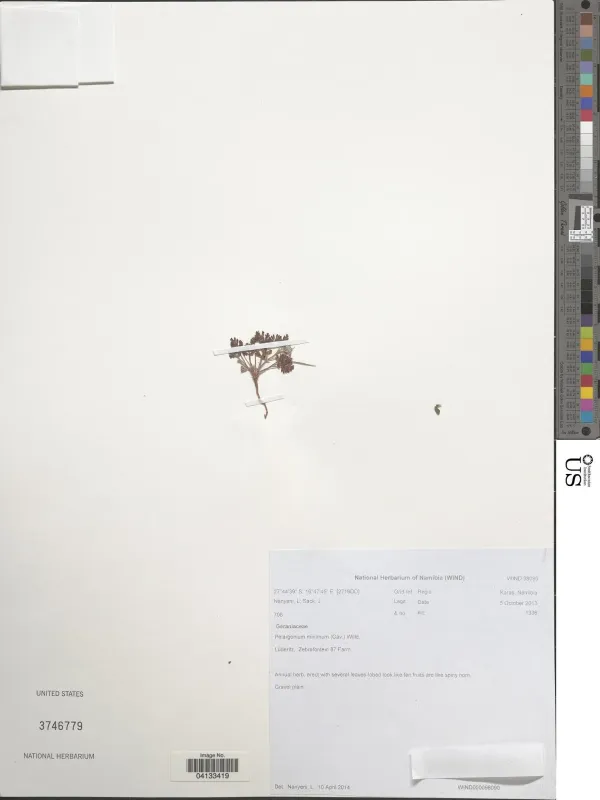
Description
Sowing dates
Pelargonium minimum is a distinct, miniature species belonging to the Geraniaceae family. Its evolutionary adaptation to the harsh, rocky environments of South Africa has resulted in a compact growth habit that differentiates it significantly from standard ornamental geraniums.
Propagation is typically achieved through seeds sown in a highly porous, well-draining medium. The seeds require stable temperatures and high light levels to germinate effectively, usually taking several weeks to establish themselves into viable seedlings.
Biologically, this plant functions somewhat like a succulent, storing water within its specialized stems and leaves. This physiological feature is essential for its survival in arid conditions but requires careful consideration when planning its cultivation in a greenhouse or home environment.
Vegetative propagation via cuttings is possible but delicate, as the succulent-like tissues are prone to rot if the cutting surface is not properly calloused before being placed into the rooting substrate.
The culture thrives when exposed to bright, indirect sunlight, though it can tolerate direct morning light. Ensuring adequate airflow is crucial to prevent the plant from becoming etiolated, which would ruin its characteristic miniature form.
Growing requirements
Cultivation requirements for Pelargonium minimum center on replicating its natural rocky habitat. The soil mix must be exceptionally well-draining, often incorporating pumice, coarse sand, or perlite to ensure the roots remain well-oxygenated and never waterlogged.
Watering must be approached with extreme caution. The "soak and dry" method is standard, ensuring that the substrate dries out completely between waterings to prevent root rot, which is the most frequent cause of failure in this species.
Temperature control is vital, as the plant prefers moderate days and cool nights. It is not cold-hardy and must be protected from frost, with indoor temperatures ideally maintained above 10 degrees Celsius even during the winter dormancy period.
Nutrient requirements are relatively low compared to other agricultural crops. A dilute, low-nitrogen liquid fertilizer applied sparingly during the active growth phase is sufficient to support its slow development without encouraging leggy growth.
Space management is simplified by its small stature, making it an excellent candidate for specialized rock gardens or small container arrangements where it can be monitored closely for signs of stress or improper moisture levels.
Main diseases and pests
Root and crown rot represent the primary threats to Pelargonium minimum. These diseases are almost always linked to improper watering, poor drainage, or inadequate air circulation, which creates an environment conducive to fungal proliferation.
Pests such as spider mites and mealybugs frequently target the plant, especially when the ambient humidity is too low. These insects can cause significant damage to the delicate foliage, necessitating frequent monitoring and timely intervention with appropriate pesticides.
Fungal infections, including botrytis, can occur if water remains on the leaves for extended periods. Avoiding overhead watering is a key preventative measure to maintain the health of the plant canopy and prevent foliage decay.
Systemic insecticides are generally effective against persistent infestations, but they should be used according to specific labels to avoid chemical damage to the plant's sensitive succulent tissues.
Maintaining a quarantine area for new plants is essential to prevent the introduction of pests or pathogens into a collection of Pelargonium minimum, as the plants have limited resilience once a heavy infestation takes hold.