
Sticky pelargonium
Pelargonium glutinosum
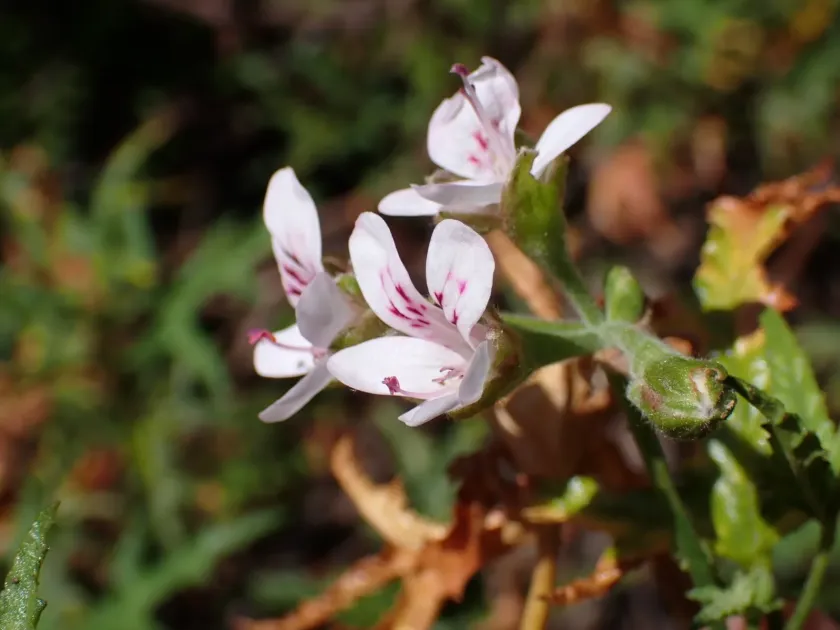
Description
Sowing dates
Pelargonium glutinosum, belonging to the Geraniaceae family, is typically propagated through stem cuttings to ensure the preservation of its distinct morphological characteristics. The best time for taking cuttings is late spring or late summer when the plant is in a phase of active vegetative growth.
When propagating via seeds, it is necessary to use a well-draining, sterile substrate. Seeds should be sown at a depth of about 0.5 cm, kept at a constant temperature of 20–22°C, and provided with consistent moisture levels to facilitate successful germination.
Once cuttings are placed in the rooting medium, they require bright, indirect light to encourage root development without causing heat stress. High humidity levels at the beginning of the process can be beneficial, provided there is adequate ventilation.
Young plants should be transplanted into individual pots once they have developed a strong root system and at least two pairs of true leaves. Gradual acclimation to lower humidity and more direct light is essential for hardening off the young plants.
Propagation through division of older, multi-stemmed plants is also possible but less frequent compared to cuttings. Proper sanitation of tools before and after handling the plants is crucial to prevent the spread of soil-borne pathogens.
Growing requirements
This species thrives in locations with high levels of natural sunlight. Adequate solar radiation is critical for the development of the sticky, glandular hairs on the leaves, which contain the plant's characteristic aromatic essential oils.
The soil should be light, porous, and slightly acidic to neutral in pH. A mixture consisting of peat, perlite, and coarse sand provides the necessary drainage required to prevent water stagnation in the root zone, which is a major cause of failure.
Temperature management is vital; the plant is not frost-hardy and should be moved indoors when temperatures drop below 10°C. In the garden, it is often treated as an annual or a seasonal plant in temperate climates.
Watering should be performed thoroughly, allowing the top layer of the soil to dry out significantly between applications. Overwatering leads to root rot and can weaken the plant's ability to defend itself against opportunistic infections.
Fertilization with a balanced, water-soluble fertilizer is recommended during the active growing season. However, nitrogen levels should be moderate to prevent lush, succulent foliage growth at the expense of aromatic potency and flower production.
Yield
The yield of Pelargonium glutinosum is primarily defined by the biomass of its aromatic leaves and the concentration of its secondary metabolites. High production levels are achieved in environments with optimal light intensity and proper plant spacing.
In ornamental settings, yield is measured by the plant's ability to produce continuous blooms and maintain a dense, well-branched architecture. Regular pruning or pinching of the tips is a standard practice to increase the density of the foliage.
Commercial extraction of essential oils requires standardized conditions where plants are grown in controlled environments. Proper nutrition and light cycle management can significantly influence the yield of volatile compounds per unit of biomass.
The plant's productive life is approximately 3–4 years, after which it tends to become woody and less vigorous. Periodic replacement or rejuvenation via heavy pruning is necessary to maintain high production levels in a professional setting.
Data on leaf biomass indicates that under ideal conditions, a single healthy mature plant can yield significant amounts of foliage, which can be harvested multiple times throughout the growing season without compromising plant health.
Main diseases and pests
Common pests include aphids, whiteflies, and spider mites. These insects tend to colonize the undersides of leaves, especially in warm, dry indoor environments where natural predators are absent and plant stress levels may be elevated.
Fungal pathogens such as Botrytis cinerea (gray mold) represent the greatest threat to the foliage. These infections are primarily triggered by high humidity, poor air circulation, and moisture accumulating on the leaves during irrigation.
Root rot caused by Phytophthora or Pythium species is a significant danger if the drainage is inadequate. Prevention through strict irrigation schedules and the use of well-structured soil is far more effective than chemical control.
Phytosanitary practices are essential for managing threats; this includes removing yellowing or necrotic leaves immediately and ensuring that individual plants have enough space to allow for sufficient airflow around the foliage.
Early identification of pest populations is key to management. Using yellow sticky traps can help monitor insect activity, while biological control agents like predatory mites can be used as a safer alternative to synthetic pesticides.
Harvesting
Harvesting for aromatic essential oils should occur during the morning, once the dew has evaporated but before the intense heat of midday. This ensures that the concentration of aromatic oils in the glandular trichomes is at its peak.
Clipping the stems using clean, sharp secateurs allows for selective harvesting. It is important to leave enough lower leaves on the stem to allow the plant to continue its physiological processes and recover quickly after the harvest.
Post-harvest processing involves drying the foliage in a shaded, well-ventilated area. Direct sunlight should be avoided during the drying process to prevent the degradation of heat-sensitive aromatic compounds and preserve the plant's scent.
Once dried, the leaves should be stored in airtight, opaque containers to prevent oxidation and moisture absorption. This method of storage is crucial for maintaining the quality and potency of the botanical material for an extended period.
Proper record-keeping regarding harvest dates and plant age can assist in optimizing the timing of future collections, ensuring that the highest quality botanical material is consistently obtained from the cultivation site.