
Pelargonium sidoides
Pelargonium sidoides
Description
Growing requirements
Pelargonium sidoides, commonly known as African geranium, is a perennial herb belonging to the Geraniaceae family. It is native to the high-altitude regions of South Africa, where it thrives in well-drained, nutrient-poor, rocky or sandy soils.
This species is highly adapted to sunny conditions and requires intense light to develop its signature thick rhizomes. It is not cold-hardy, preferring temperatures between 20°C and 28°C, and it demands protection from prolonged frost to ensure plant survival.
Agronomic soil management focuses on providing excellent aeration. The plant is drought-tolerant, but waterlogging is the primary cause of crop failure, as it quickly leads to root rot in the fleshy rhizomes.
Propagation can be achieved through seeds or vegetative division. When planting in fields, maintain sufficient spacing between individuals to promote airflow and minimize the risk of humidity-related pathogens.
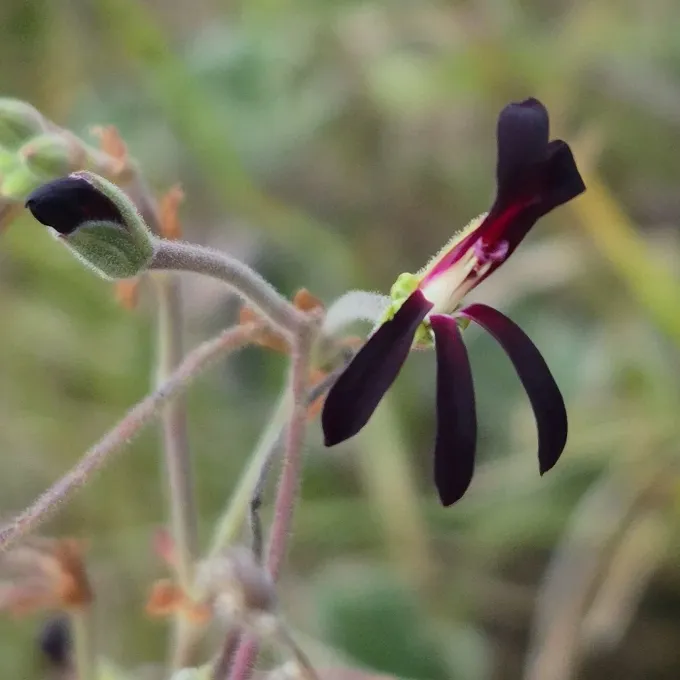
Morphologically, the plant is characterized by its basal rosette of heart-shaped, velvety leaves and long stalks bearing dark maroon, almost black flowers.
Yield
The primary economic product is the root system, which contains high levels of phenolic compounds, specifically coumarins, used globally in cough and cold remedies.
Yield depends heavily on the plant's age; a growing cycle of at least 24 to 36 months is typically required to allow the rhizomes to reach their full medicinal potential and mass.
Balanced fertilization, particularly potassium and phosphorus, is essential during the active growing season to enhance root density and active ingredient concentration.
Yields are maximized by ensuring consistent sunlight exposure, as the synthesis of secondary metabolites in the roots is directly linked to the plant's photosynthetic activity.
Post-harvest processing involves rapid washing, slicing, and controlled low-temperature drying to maintain the integrity of the bioactive compounds.
Main diseases and pests
Root rot, caused by various species of Pythium and Phytophthora, is the most significant threat to Pelargonium sidoides, particularly in high-moisture environments.
Pests like spider mites and mealybugs can infest the foliage, particularly in greenhouse cultivation or during hot, dry spells, reducing the plant's overall vigor.
Integrated pest management, including regular crop rotation and the use of natural predators, is recommended to minimize reliance on synthetic chemicals.
Effective drainage systems and avoiding over-irrigation remain the primary strategies for disease prevention, as once root damage occurs, recovery is often difficult.
Regular monitoring for leaf spotting or yellowing is essential, as these are often early warning signs of inadequate soil ventilation or systemic infections.
Harvesting
Harvesting is traditionally performed during the dry season, which allows for easier soil extraction and better initial drying of the harvested root biomass.
The roots are carefully unearthed, ensuring that the rhizomes remain intact, as physical damage can increase the risk of contamination before processing.
Immediately after harvest, the raw material must be cleaned of all soil particles, as lingering moisture and dirt can lead to rapid microbial degradation.
Drying is performed in specialized, climate-controlled facilities at temperatures not exceeding 40°C to ensure that the chemical profile remains stable.
After reaching the desired moisture content, the final herbal product is stored in airtight, moisture-resistant packaging to preserve quality for export and further extraction.