
Rose geranium
Pelargonium radens
Description
Sowing dates
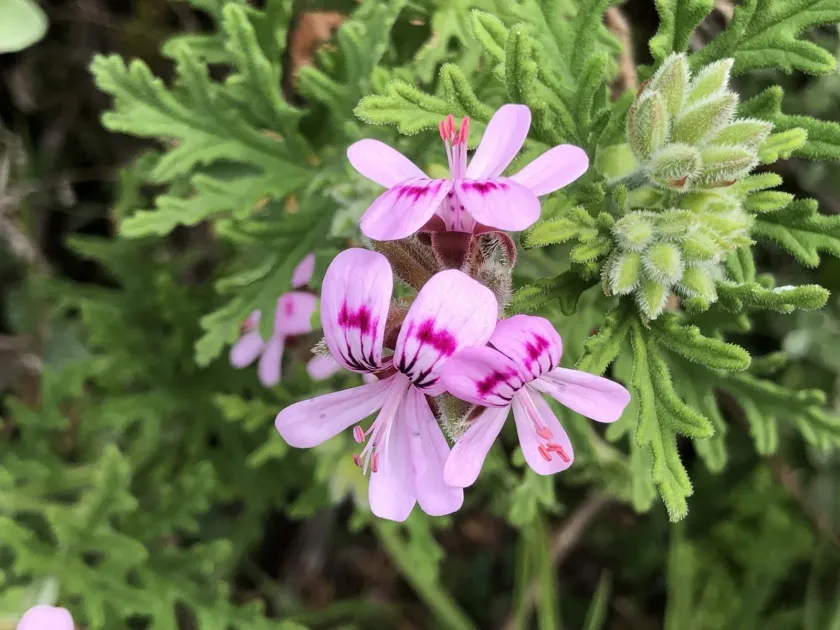
Rose geranium (Pelargonium radens) is a perennial shrub belonging to the Geraniaceae family, primarily cultivated for its highly fragrant leaves used in the perfume and flavoring industry.
Propagation of this crop is achieved through cuttings, as this method ensures the consistency of the essential oil profile across the entire plantation.
Planting is usually scheduled for the spring season once the frost risk has passed, allowing the plants to establish a strong root system before the heat of summer.
The planting density is carefully managed, typically keeping a distance of 50 to 70 centimeters between plants to allow for adequate airflow and plant growth.
Routine renewal of the planting stock is essential to maintain high yield levels and prevent the spread of soil-borne pathogens within the field.
Growing requirements
As a plant originating from South Africa, rose geranium thrives in warm, temperate climates and requires plenty of sunshine to synthesize its essential oils.
The soil must be well-drained and slightly acidic to neutral in pH; waterlogged conditions are extremely detrimental and lead to rapid root rot.
Adequate irrigation is necessary, but it should be applied judiciously to keep the soil moist without promoting fungal development on the foliage.
Rose geranium is sensitive to extreme cold and requires protection from frost, often necessitating cultivation in greenhouses in cooler northern latitudes.
Regular fertilization with balanced nutrients is needed to support the rapid vegetative growth that characterizes the peak production season.
Yield
The economic value of rose geranium is measured by the production of essential oil, which is extracted from the leaves and stems via steam distillation.
Yields vary depending on the plant age, the soil quality, and the effectiveness of agricultural practices such as weed control and nutrient management.
The concentration of essential oil in the tissues is highest during the early flowering phase, which dictates the optimal timing for the harvest.
Modern agronomic practices aim to maximize biomass production while ensuring that the chemical composition of the oil meets industry quality standards.
Successful farms often implement rotational cycles to keep the soil healthy and ensure consistent oil quality throughout the plantation's productive lifespan.
Main diseases and pests
Fungal diseases, especially those causing root rot, represent the primary threat to the stability of rose geranium plantations under unfavorable moisture conditions.
Powdery mildew can rapidly spread across the foliage, particularly in dense plantings where moisture lingers on the leaf surfaces for extended periods.
- Aphids: These insects cluster on succulent shoots, causing significant stress to the plant and hindering leaf development.
- Spider mites: These pests thrive in dry conditions and can cause severe chlorosis and leaf drop if left uncontrolled.
- Whiteflies: These small pests can transmit viral infections and reduce the overall photosynthetic capacity of the crops.
Integrated Pest Management (IPM) is strongly recommended to protect the crop while minimizing the impact on the quality of the essential oil.
Preventive measures, including sanitation of tools and field hygiene, remain the most effective strategy against the spread of pests and diseases.
Harvesting
Harvesting is a critical operation performed when the essential oil content in the foliage reaches its maximum level, typically at the beginning of the flowering cycle.
The plants are harvested by mowing the upper canopy, leaving enough base stems to allow the plants to regenerate for a second or third harvest in a single season.
The raw biomass must be transported quickly to the distillation facility to avoid fermentation and the loss of the delicate volatile compounds in the oil.
Purity is paramount during the harvest; any weeds or debris collected along with the geranium leaves can significantly degrade the final scent profile of the oil.
Storage of the harvested material should be avoided; it should be processed within hours to ensure the highest yield and quality of the final product.