
Rose geranium
Pelargonium capitatum
Description
Growing requirements
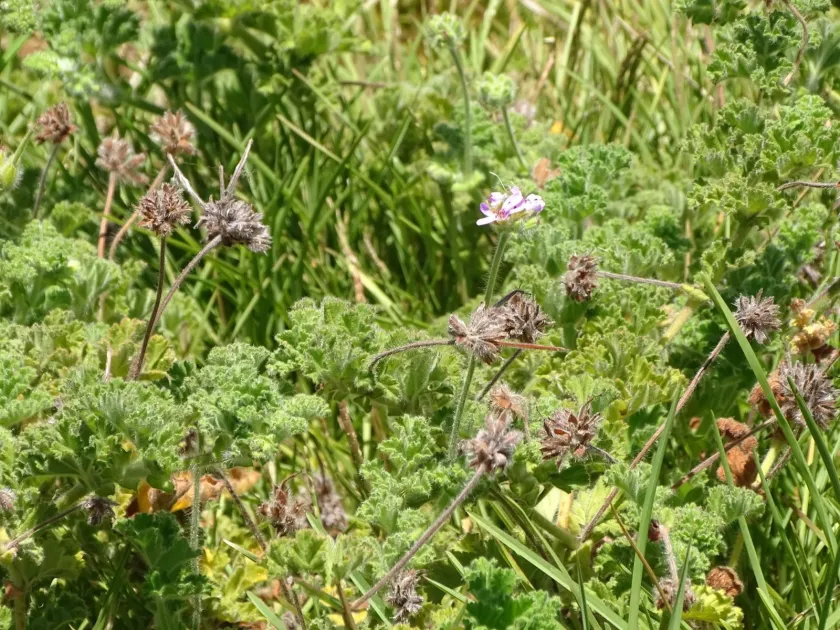
Pelargonium capitatum, commonly known as rose geranium, belongs to the Geraniaceae family. Native to the coastal regions of South Africa, this perennial subshrub is adapted to sandy environments and thrives in full sun exposure.
The plant is highly sensitive to frost and requires a Mediterranean-like climate to prosper. In agricultural practice, maintaining ambient temperatures above freezing is critical for the survival of the stands and the longevity of the perennial roots.
Well-drained, sandy-loam soils are ideal for the cultivation of this species. Waterlogging must be avoided at all costs, as the plant is highly susceptible to root rot and other moisture-related pathogens when grown in heavy, compact soils.
While the plant is known for its inherent drought tolerance, consistent moisture during the peak vegetative stage significantly boosts biomass production. Drip irrigation is often used in modern plantations to provide precise water management.
Propagation is primarily achieved through stem cuttings in nursery environments. This ensures genetic uniformity and high survival rates upon transplantation, allowing farmers to establish productive fields in a standardized manner.
Yield
The primary economic value of Pelargonium capitatum lies in its high-quality essential oil, which is rich in geraniol and citronellol. This oil is a staple in the fine fragrance and cosmetic industries for its distinct, rose-like scent.
Harvesting the aerial biomass at the correct phenological stage is crucial. The peak concentration of essential oils is typically found in the leaves just before or during the early blooming stage, which dictates the scheduling of harvest.
Industrial processing involves steam distillation of the harvested foliage. To maximize yields, the harvested material should be transported and processed quickly to prevent the degradation of sensitive volatile compounds.
Beyond oil production, the species has potential applications in the medicinal and herbal sectors. Its aromatic properties are also utilized in natural pest-repellent formulations for both agricultural and household use.
Yield management also involves regular pruning of the shrubs, which encourages the development of new, high-oil-content branches, thereby extending the productive lifespan of the plantation over several years.
Main diseases and pests
Aphids and spider mites are the most common pests affecting rose geranium crops. These insects proliferate in warm, dry environments and can cause significant damage to the foliage, thereby reducing the oil quality.
Fungal diseases, specifically Botrytis cinerea (gray mold), pose a major threat to crops grown in humid or poorly ventilated conditions. Effective management requires adequate spacing between rows to facilitate airflow.
Root rot pathogens are a persistent issue in soils with poor drainage. Once a plant is infected, it is usually necessary to remove and destroy it to prevent the spread of soil-borne pathogens to healthy neighboring plants.
Integrated pest management strategies are recommended to keep the crop healthy. This includes the use of biological controls and strict sanitation practices, such as sterilizing pruning tools between different sections of the field.
Environmental monitoring is vital to detect early signs of stress or infestation. A healthy, well-nourished plant is naturally more resistant to the mentioned threats, highlighting the importance of proper soil fertility management.
Harvesting
Harvesting is typically conducted using mechanical mowers or hand-cutting techniques during dry weather to ensure that the biomass is free of excess moisture, which facilitates an efficient distillation process in the factory.