
Fleshy Pelargonium
Pelargonium carnosum
Description
Growing requirements
Fleshy Pelargonium (Pelargonium carnosum) is a distinct succulent member of the Geraniaceae family, native to the arid landscapes of South Africa. It has evolved specific morphological traits, such as a thickened stem, to survive in high-temperature, low-moisture environments.
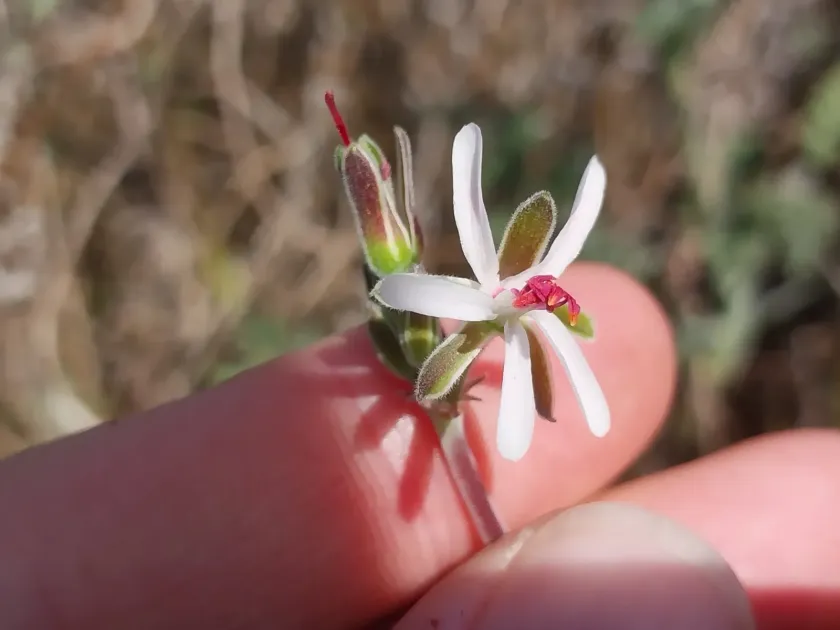
The botanical structure of the plant features succulent, caudex-forming stems and delicate pinnate leaves. During its active growth phase, it produces inflorescences with small, often pale-colored flowers that are typical for this genus in its natural habitat.
Agricultural success depends on a substrate that mimics the plant's native rocky or sandy soil. A high-porosity mix, often composed of pumice, perlite, and a small fraction of organic matter, is essential to prevent water accumulation near the root collar.
Environmental requirements include a high intensity of direct sunlight throughout the year. If grown in a greenhouse or indoor setting, adequate air circulation is mandatory to prevent physiological disorders and to maintain the compact growth habit characteristic of the species.
Temperature management is critical: the species requires warmth during the growing season (+20°C to +28°C) and a cooling period during dormancy (+10°C to +12°C). Strict adherence to these cycles ensures the long-term vitality of the succulent stems.
Main diseases and pests
The primary threat to the health of Pelargonium carnosum is root rot, triggered by overwatering or poor drainage. Once established, fungal pathogens can spread rapidly through the succulent tissues, leading to irreversible stem decay.
Mealybugs are the most common pests, often settling in the crevices of the caudex and the base of the petioles. Due to their waxy coating, they are resistant to many topical treatments, necessitating the use of systemic insecticides.
Spider mites represent another significant threat, particularly in dry environments with low humidity. They weaken the plant by feeding on the sap of the succulent leaves, which can lead to leaf yellowing, necrosis, and eventual plant collapse if not treated.
Fungal diseases like powdery mildew may occur in stagnant, humid air conditions. Maintaining a proper airflow around the plants and avoiding overhead irrigation are fundamental practices to mitigate the risk of pathogen colonization on the leaves.
- Utilization of mineral-based, fast-draining substrates.
- Application of systemic pesticides for mealybug control.
- Strict adherence to dry-winter dormancy protocols.
- Maintenance of high light levels for optimal stem development.
- Regular inspection for early signs of fungal infection or stress.