
Pelargonium incrassatum
Pelargonium incrassatum
Description
Growing requirements
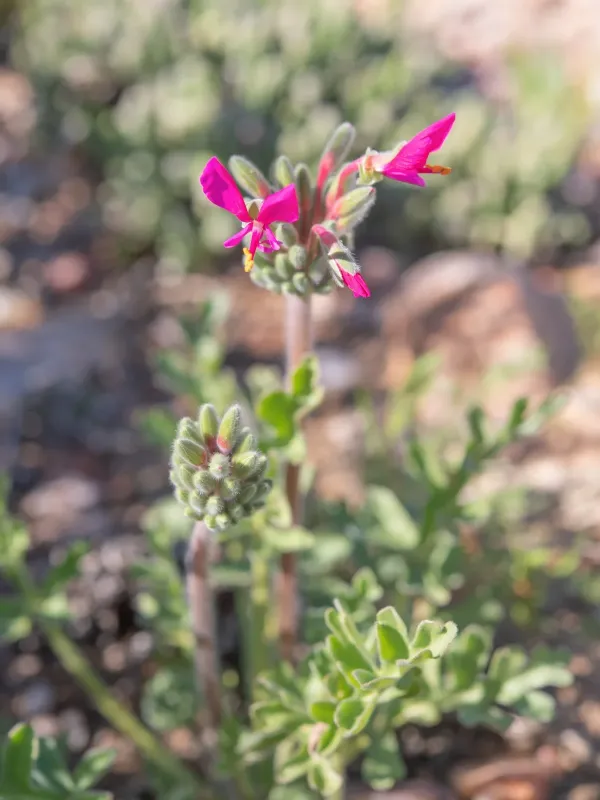
Pelargonium incrassatum is a member of the Geraniaceae family, native to the winter-rainfall regions of the Western Cape province in South Africa.
It is a tuberous geophyte that produces a large, fleshy subterranean tuber, which functions as an organ for water storage and survival during arid seasons.
The plant requires a strictly Mediterranean climate regime, characterized by growth during the cooler months and a total dormant phase during the hot, dry summer.
Cultivation demands highly porous and mineral-rich substrates to ensure rapid water drainage and prevent moisture from stagnating around the tuber.
Full sun exposure is vital to maintain the plant's structural integrity, as insufficient light will result in etiolated growth and poor flowering performance.
Main diseases and pests
The primary threat to Pelargonium incrassatum is rot, specifically affecting the tuber if the soil remains wet during the dormant summer period.
Pests such as mealybugs can colonize the base of the stems or the crevices of the tuber, requiring immediate treatment with systemic insecticides.
Spider mites are common in greenhouses with low humidity, causing leaf discoloration and a general decline in the plant's photosynthetic capacity.
Fungal pathogens like Botrytis can infect the foliage if the plant is overcrowded and lacks proper ventilation during the spring growing season.
Management of these threats relies heavily on precise irrigation control and ensuring that the plant is kept dry and cool throughout its dormant cycle.