
Pelargonium hybrids
Pelargonium hybrids
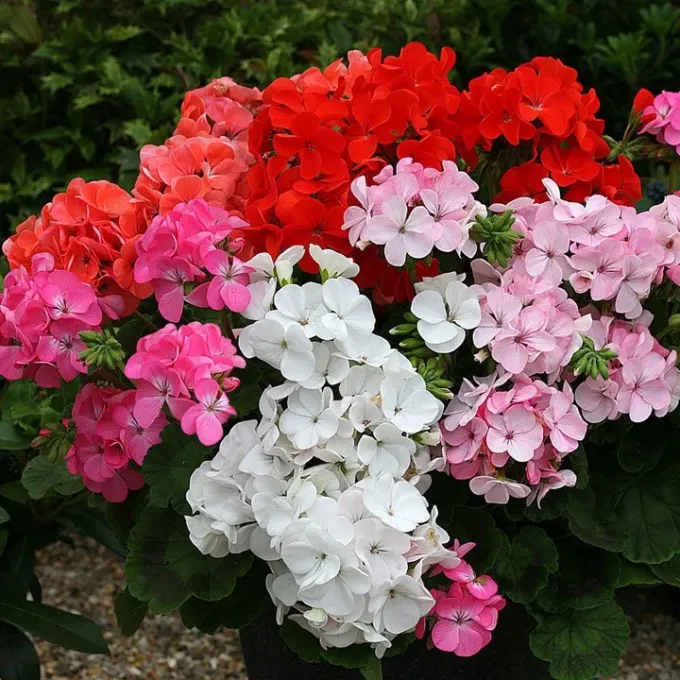
Description
Sowing dates
The sowing of Pelargonium hybrids (Pelargonium hybrids) is typically scheduled from December to February in commercial greenhouse operations. Starting early is essential to ensure well-developed, flowering plants for the spring retail season.
For optimal germination, a stable temperature range of 20 to 22 degrees Celsius must be maintained. It is crucial to utilize a professional-grade, sterilized peat-based substrate mixed with perlite to ensure proper drainage and root aeration.
Seeds should be sown at a depth of approximately 0.5 cm, covered with a transparent layer to maintain humidity until emergence. Proper light exposure after germination is vital to ensure compact and robust seedling growth.
Pelargonium hybrids belong to the Geraniaceae family and represent a diverse group of plants bred for ornamental use. They are valued for their continuous flowering potential and resilience in garden settings.
Their ancestral origins trace back to South African regions, which explains the plant's high demand for bright light and its preference for well-drained, airy soil structures.
Growing requirements
The culture requires high levels of solar irradiance to facilitate healthy stem development and abundant bud formation. Insufficient light leads to etiolation and a significant reduction in overall flower production.
Soil requirements focus on high organic content and excellent porosity. A neutral pH level is ideal for nutrient uptake, and the medium must be well-aerated to prevent physiological root disorders.
Temperature management is critical; the plants thrive at 18–24 degrees Celsius during the day. Protection from frost and extreme thermal fluctuations is necessary to maintain vigor throughout the development cycle.
Irrigation practices should focus on maintaining a moderate moisture level, allowing the substrate to partially dry out between waterings. Fertilization with balanced NPK formulas should be adjusted based on the growth stage.
Pelargonium hybrids serve various purposes, including landscape bedding, balcony container gardening, terrace decoration, and as a staple crop for commercial nursery trade.
Main diseases and pests
The most common pathological threats to Pelargonium hybrids include root rots and Botrytis cinerea. These fungal issues are typically associated with poor air circulation and excessive substrate moisture levels.
Key insect pests include whiteflies, aphids, and spider mites. Effective management involves integrated pest control methods and regular environmental monitoring to catch infestations at an early stage.
- Maintain adequate spacing between pots to ensure air circulation.
- Use fungicides immediately if fungal spot or gray mold symptoms appear.
- Apply insecticidal soaps or specific pesticides as a localized treatment.
- Remove any decaying leaves or spent flowers promptly.
- Ensure the greenhouse environment remains within the recommended humidity range.