
Pelargonium aridum
Pelargonium aridum
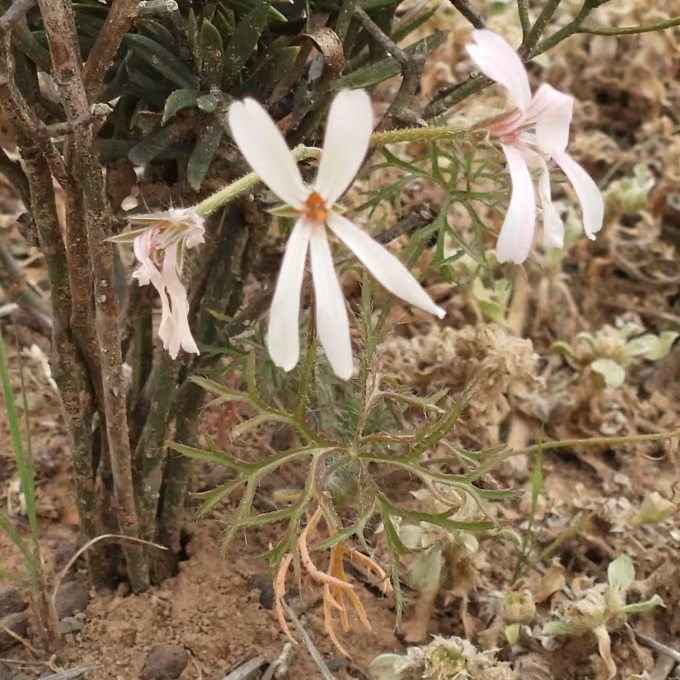
Description
Sowing dates
Pelargonium aridum belongs to the Geraniaceae family. This is a perennial plant that propagates primarily through seeds in its native natural habitat.
Sowing seeds under controlled conditions should ideally be performed in late winter or early spring to ensure the seedlings receive enough light for healthy growth.
The optimal substrate for germination must be loose, airy, and include a significant proportion of sand or perlite to prevent excessive moisture retention.
Seeds sprout at temperatures between 20 and 22 degrees Celsius, while maintaining moderate soil moisture is crucial to avoid damping off.
Transplanting seedlings is carried out after the development of two or three true leaves, carefully moving them into individual containers with efficient drainage holes.
Growing requirements
The plant originates from the arid regions of Southern Africa, which defines its remarkable resilience to dry conditions and intense solar radiation.
For proper development, the culture requires high light intensity, so in indoor settings, it is best placed on south-facing windows or under supplemental grow lights.
The soil should be neutral to slightly acidic with excellent drainage properties; heavy clay soils are detrimental to the root system of this specific variety.
The culture requires moderate watering, and allowing the soil to dry out completely between waterings is a critical requirement for maintaining root health.
The temperature should range from 18 to 25 degrees Celsius during the growing season, while in winter, the plant enters a dormant phase at 12–15 degrees.
Main diseases and pests
The primary threat to Pelargonium aridum is excessive humidity, which promotes root and stem rot caused by pathogenic soil-borne fungi.
If ventilation is insufficient, powdery mildew can develop on the leaves, requiring prompt treatment with systemic fungicides to prevent further spread.
Among common pests, aphids and spider mites are the most damaging, thriving in hot and dry microclimates by feeding on the plant's sap.
Whitefly infestations can also occur, which are best managed using biological insecticides or yellow sticky traps for population monitoring.
Disease prevention involves strict adherence to watering schedules, regular air circulation in the growing area, and maintaining optimal plant spacing.