
Pelargonium auritum
Pelargonium auritum
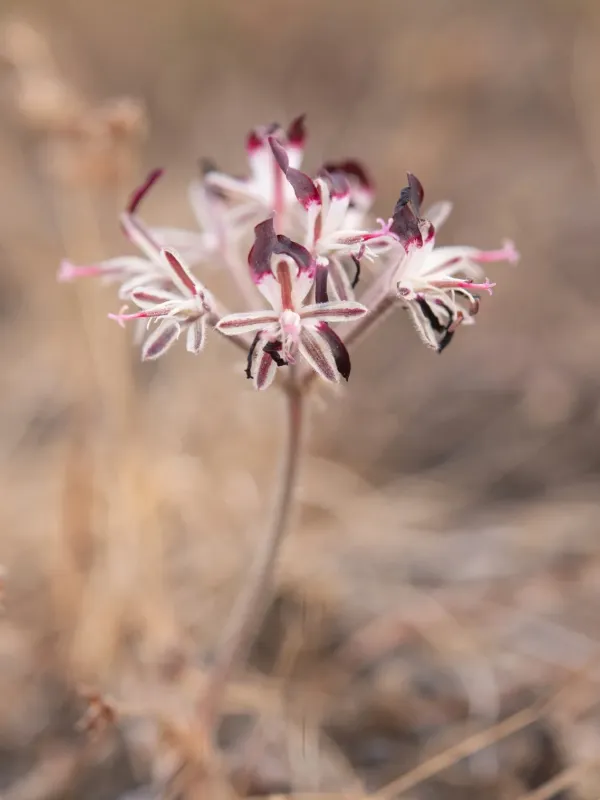
Description
Growing requirements
Pelargonium auritum is a fascinating member of the Geraniaceae family. It is distinct for its tuberous root system, an evolutionary adaptation that allows it to survive in the arid and seasonally dry regions of its native South Africa.
This species thrives in high-light environments, requiring full sun exposure to maintain its compact growth habit. In a controlled environment or greenhouse, it demands high intensity of light, especially during its active growing season to facilitate blooming.
Soil structure is critical for the success of this crop. It necessitates a highly porous, gritty substrate that ensures rapid drainage. A mix comprising coarse sand, perlite, and a small amount of low-nutrient compost is considered optimal for healthy tuber development.
Temperature management must mirror the climate of its origin. As a frost-sensitive plant, it must be protected from temperatures below freezing. It enters a dormant phase after flowering, during which watering should be almost completely withheld to prevent tuber rot.
Watering practices are the most significant aspect of its maintenance. The plants prefer a deep soaking followed by a complete dry-out period. Over-watering, especially during dormancy, is fatal, as it creates an environment conducive to root-rotting pathogens.
Main diseases and pests
Root and crown rots caused by Pythium and Fusarium fungi are the most prevalent threats. These conditions are directly linked to improper moisture management and poorly aerated growing substrates.
Aphids are common pests that colonize tender growth, such as new leaves and flower buds. If left untreated, they can cause significant deformation and transmit various viral pathogens that stunt growth.
Spider mites are another major concern in warm, dry environments. They cause stippling on leaves and can quickly lead to plant senescence if the infestation is not controlled early through humidity management or acaricides.
Botrytis, or grey mold, frequently attacks plants in poorly ventilated greenhouses. High humidity levels combined with stagnant air create the perfect conditions for this fungal outbreak to ruin the foliage.
Insects such as whiteflies may also pose a threat during the growing season. Regular monitoring and the removal of dead or decaying plant material are essential preventive measures to maintain the health of the collection.