
Pelargonium caroli-henrici
Pelargonium caroli-henrici
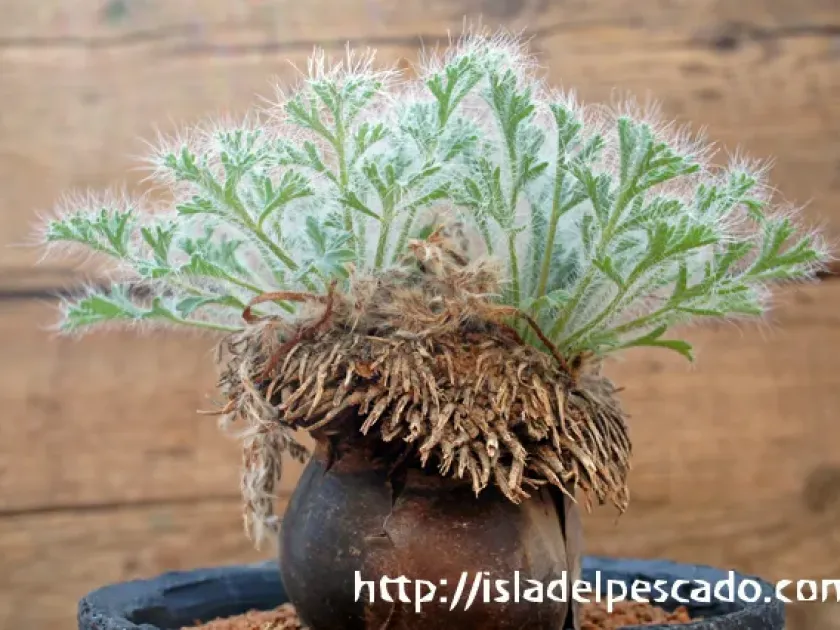
Description
Growing requirements
Pelargonium caroli-henrici is a rare species belonging to the Geraniaceae family. Originating from the Cape region of South Africa, it is botanically defined by its tuberous root system, which allows it to thrive in arid conditions where water availability is highly seasonal.
In terms of soil requirements, this plant demands excellent drainage. A substrate composed of sandy soil, crushed granite, and minimal organic matter is necessary to mimic the natural rocky habitats. Any water retention in the soil can be lethal to the plant.
Light intensity is a critical factor for the healthy development of this species. It requires full sun exposure for several hours a day to prevent legginess and to maintain the characteristic compact structure of the foliage and its potential blooms.
The climate requirements involve warm, dry days and cooler nights. It is not frost-hardy and must be kept in a sheltered environment if outdoor temperatures drop significantly. Consistent airflow is essential to prevent heat stress during peak summer months.
A successful cultivation program follows a distinct rhythm: active irrigation during the spring and summer growth phase and a strict dry dormancy period during the autumn and winter months. Failing to provide this dormancy often prevents the plant from flowering.
Main diseases and pests
The primary threat to Pelargonium caroli-henrici is stem and root rot, typically caused by fungi such as Pythium or Rhizoctonia. Overwatering remains the number one cause of mortality for this species in cultivation.
Common horticultural pests, including spider mites and mealybugs, are frequent challenges. These thrive in dry, stagnant air environments; therefore, providing good ventilation and maintaining optimal humidity levels is the best form of passive prevention.
Viruses and phytoplasmas can occasionally affect the plant, causing mosaic patterns or stunted growth. There is no cure for such infections, so keeping tools sterilized and preventing the transfer of sap between plants is the primary strategy for safety.
Light deprivation is a major risk factor. When plants do not receive enough photons, they become chlorotic and weak, creating an environment where secondary opportunistic pathogens can colonize the plant tissues rapidly.
Mechanical damage to the tuber during repotting is a significant risk. If the skin of the tuber is broken, the wound must be allowed to callus over completely in a dry, shaded area before the plant is returned to the soil to avoid infection.