
Night-scented pelargonium
Pelargonium triste
Description
Growing requirements
The night-scented pelargonium (Pelargonium triste) is a tuberous perennial plant belonging to the Geraniaceae family. Native to South Africa, it is historically significant as one of the first pelargoniums exported to European botanical gardens.
This species is well-adapted to arid environments, possessing a large, underground tuber that stores energy. In cultivation, it requires a well-drained, sandy substrate to prevent root rot and mimic its native rocky habitat.
Cultivation practices must account for its distinct dormancy period. During the growth phase, the plant requires bright, indirect sunlight and regular but moderate watering once the soil surface is dry.
Temperature management is crucial; the plant performs best in moderate conditions and should be protected from excessive humidity, especially when dormant during the warmer months.
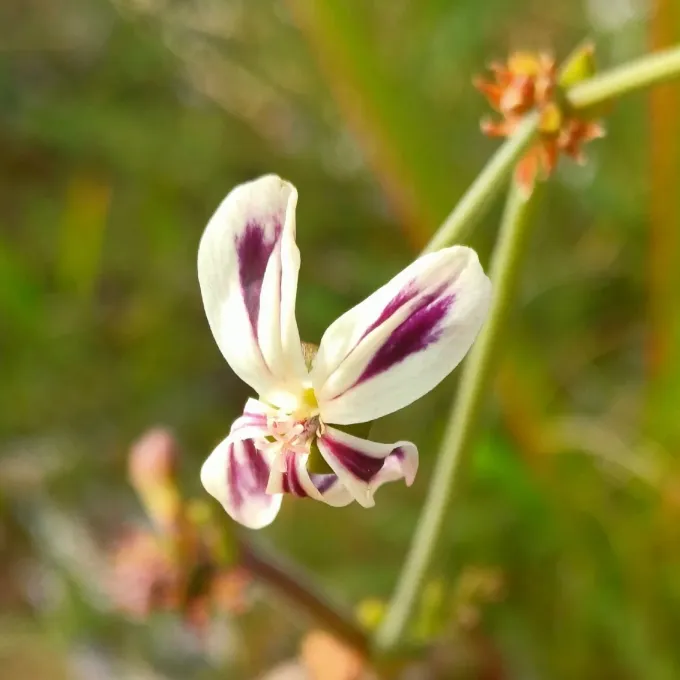
Its botanical beauty lies in its fern-like foliage and the complex, night-fragrant flowers that release a scent similar to cloves, making it a prized specimen for specialized plant collections.
Main diseases and pests
The most significant threat to Pelargonium triste is overwatering, which quickly leads to soft rot of the tuber. Ensuring excellent drainage is the primary defense against this issue.
Spider mites are common pests that thrive in the dry conditions required for this plant, necessitating frequent monitoring of the foliage to detect early signs of infestation.
Powdery mildew may occur if the ventilation is poor or if the plant is kept in overly crowded conditions with high humidity levels.
Aphids can occasionally target new, succulent growth or flower buds, requiring prompt intervention with targeted insecticide treatments to protect the plant's health.
Preventative care involves maintaining good hygiene in the growing space and allowing sufficient spacing between plants to encourage better airflow and prevent pathogens.