
Thick-stemmed pelargonium
Pelargonium crassicaule
Description
Growing requirements
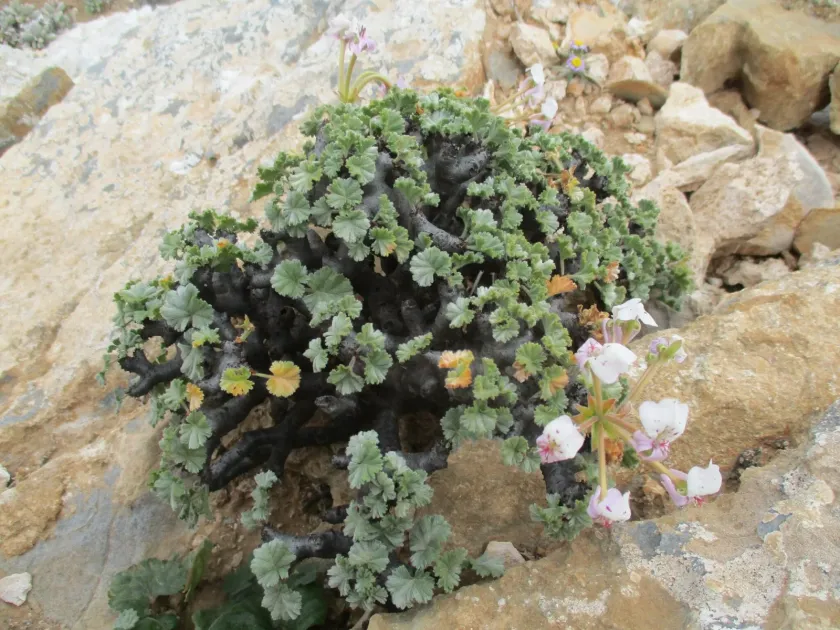
Pelargonium crassicaule, commonly known as the thick-stemmed pelargonium, belongs to the Geraniaceae family. This species originates from the arid regions of Namibia, where it thrives in rocky habitats, demonstrating remarkable evolutionary adaptations to drought.
The plant is characterized by its succulent habit, featuring a thickened, fleshy stem that functions as an organ for water storage. Its leaves are covered in fine pubescence, which minimizes transpiration and provides protection against the intense ultraviolet radiation of the desert environment.
Cultivation of this species requires an exceptionally well-draining substrate. A mix consisting of mineral components, such as pumice, coarse sand, and a small portion of sandy loam, is essential to prevent moisture from lingering around the sensitive root system.
This crop has high demands for solar radiation and should be placed in areas with maximum light exposure. Insufficient light levels will cause the plant to etiolate, resulting in weak, elongated stems that detract from its natural, compact, and aesthetic appearance.
The watering regime must be strictly controlled, mimicking the natural cycles of its native habitat. During the active growing season, water thoroughly only when the substrate has completely dried out, while during the winter dormancy period, the plant should be kept almost entirely dry.
Main diseases and pests
The primary threats to Pelargonium crassicaule are fungal diseases caused by excessive soil moisture and poor air circulation. Root rot and stem rot are the most common issues that can occur quickly if the drainage is inadequate or the humidity level remains too high.
In terms of pests, mealybugs and spider mites represent the most significant challenges for greenhouse and indoor cultivation. These pests thrive in dry conditions and can easily damage the succulent stems, leading to severe stress for the plant.
Management of these pests involves the application of specialized insecticides or acaricides. It is recommended to perform regular physical inspections of the plant's surface, particularly in the crevices between the stem and leaf nodes, to detect early signs of infestation.
Environmental sanitation is critical for disease prevention. Removing any decaying plant material and ensuring consistent airflow around the foliage helps to suppress the conditions favorable for the proliferation of pathogenic bacteria and fungi.
Maintaining proper hygiene during repotting is essential, as the species is sensitive to soil-borne pathogens. Using high-quality, sterilized materials significantly minimizes the risk of introducing diseases that could jeopardize the plant's long-term health.