
Pelargonium moniliforme
Pelargonium moniliforme
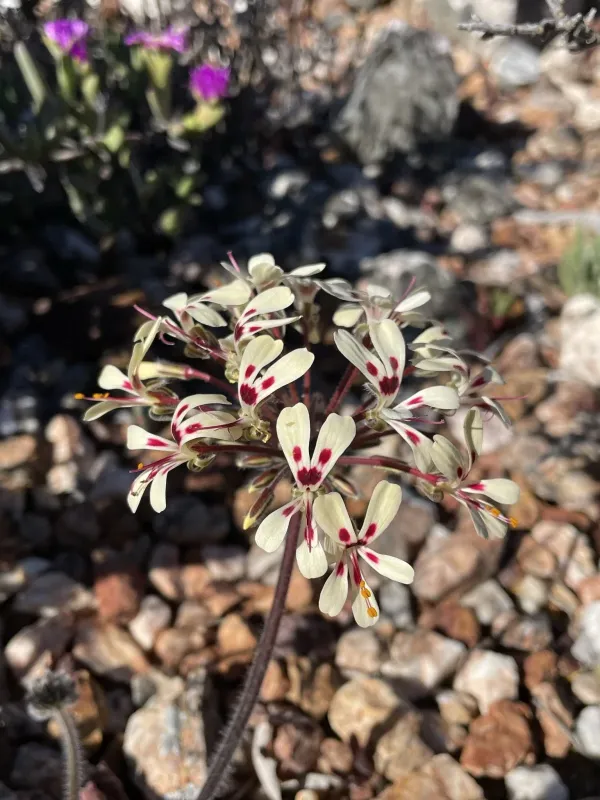
Description
Growing requirements
Pelargonium moniliforme is a distinctive tuberous species within the Geraniaceae family. Native to the arid regions of South Africa, it has evolved as a geophyte, possessing a specialized tuber that stores essential moisture during harsh, dry seasons.
This species is highly adapted to extreme environmental cycles. It typically enters a dormant phase, shedding its foliage when environmental conditions become unfavorable. Understanding this dormancy is the most important aspect of its successful cultivation.
The cultural requirements dictate a highly porous and well-draining soil medium. A mix of pumice, coarse sand, and organic components is recommended to mimic its natural habitat and prevent the accumulation of water around the tuber.
Regarding light, this plant thrives in bright, filtered sunlight. It is not suitable for full, scorching midday sun, as the leaves are sensitive to photo-damage. Partial shade or diffused light in a greenhouse setting is ideal.
Irrigation practices must be strictly controlled according to the plant's growth cycle. During the active growing period, water sparingly, allowing the substrate to dry completely. During dormancy, water must be almost entirely withheld.
Main diseases and pests
The primary threats to Pelargonium moniliforme are soil-borne fungal pathogens. Because the plant relies on a specialized tuber, any compromise in drainage leads to rapid rot, which is often fatal if not treated immediately.
Common pests include mealybugs, which often colonize the crown and the undersides of leaves. Regular monitoring is necessary, as these insects can cause significant damage to the plant's delicate vascular tissues.
Spider mites are another frequent problem, especially in low-humidity environments. They weaken the plant by feeding on cell sap, leading to yellowing of the leaves and a general loss of vigor.
Control strategies involve the careful application of appropriate pesticides. Since the plant is sensitive to chemical burns, it is essential to follow manufacturer recommendations regarding dilution rates and application timing.
Preventive hygiene is the most effective defense against pests and diseases. This includes keeping the growing area clean, ensuring adequate ventilation, and quarantining any new plant additions to prevent the spread of infestations.