
Pelargonium endlicherianum
Pelargonium endlicherianum
Description
Growing requirements
Pelargonium endlicherianum is a distinct perennial species belonging to the Geraniaceae family. Unlike common garden pelargoniums, this plant is notable for its natural hardiness, being one of the few species capable of surviving freezing temperatures in temperate climates when provided with proper care.
The species is native to the mountainous regions of Turkey, where it thrives in limestone rock crevices. Its evolutionary history in high-altitude environments has shaped its compact habit, which includes a stout rootstock and a low-growing leaf rosette that remains close to the substrate for protection against winds.
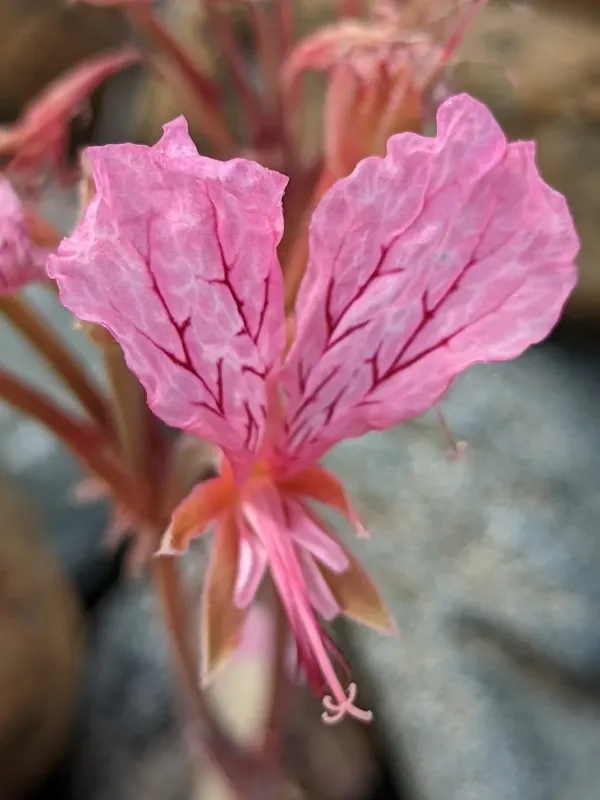
Botanically, it is characterized by its unique floral display. The flowers feature a zygomorphic shape with two large, broad upper petals and three smaller, narrow lower petals, typically ranging in color from deep pink to purple, making it a prized specimen for specialized rock gardens.
For successful cultivation, excellent drainage is the absolute priority. The plant requires a well-aerated, gritty soil mix that mimics its native limestone habitat. A sunny position is essential, as the species demands high levels of solar exposure to maintain its compact shape and promote healthy blooming.
Agronomic management focuses on managing water during the dormant period. While cold-hardy, the plant is susceptible to crown rot if exposed to excessive winter moisture. Planting on slopes or raised beds with a protective gravel mulch layer is the standard practice to ensure long-term plant health.
Main diseases and pests
The primary threat to Pelargonium endlicherianum is waterlogging during the cooler months. If the root crown remains damp for extended periods, fungal pathogens thrive, leading to rapid tissue decay and eventual plant death. Ensuring winter protection from rainfall is critical in wet climates.
Pests such as aphids and spider mites can occasionally affect the foliage during the peak of summer, especially if the plant is stressed by extreme heat or drought. Providing adequate air circulation and using targeted biological control methods can mitigate the risk of pest outbreaks effectively.