

Disease · fungal · affects African violet, Alfalfa, Almond
Especially harmful
Sclerotinia rot
Sclerotinia sclerotiorum
Description
Symptoms
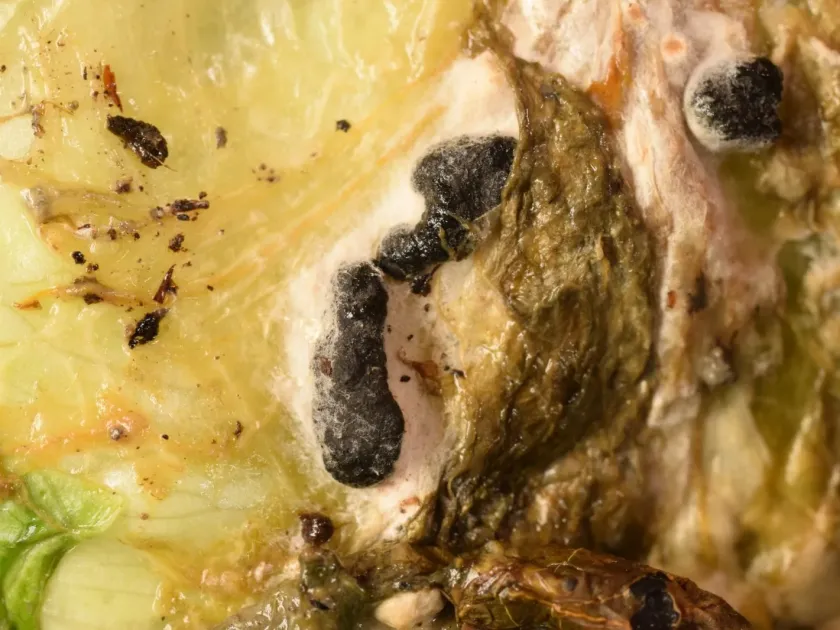
The first symptoms typically appear as water-soaked lesions on stems, leaves, or pods. These lesions expand rapidly and are soon covered by a dense, white, cottony mycelial growth, which is the trademark sign of the disease.
As the infection progresses, stems become soft and mushy, leading to stem collapse and premature wilting of the plant. Infected foliage turns yellow and withers, eventually resulting in the death of the entire plant or infected branches.
Inside the stem cavities or on the surface of infected parts, the fungus produces black sclerotia. These structures are initially soft and light-colored but harden and darken with age, serving as a definitive diagnostic feature.
In root crops like turnips or celery, the disease causes a soft, watery rot. This decay can spread quickly through storage facilities if infected produce is harvested and stored with healthy material.
In flowering crops, the infection often begins at the flower head, where petals become colonized by the fungus, leading to blight and premature flower drop before the rot spreads down to the stem.
Pathogen
The disease is caused by the ascomycete fungus Sclerotinia sclerotiorum. It is a highly destructive pathogen known to infect over 400 plant species, including economically important crops such as oilseed rape, celery, peanut, asparagus, mustard, and turnip, as well as ornamentals like Anemone coronaria and Calceolaria.
The fungus survives in the soil and on plant debris as sclerotia — hard, black, irregular-shaped resting structures. These sclerotia can remain viable in the soil for 5 to 8 years, representing a long-term reservoir for infection.
In moist conditions, sclerotia germinate to produce apothecia (small mushroom-like structures) that release ascospores into the air. These spores are wind-dispersed over long distances and land on susceptible plant tissues to initiate infection.
The fungus acts as a necrotroph, secreting enzymes that degrade cell walls and kill plant tissue. This allows the mycelium to rapidly colonize the host, often resulting in complete tissue collapse.
While infection is primarily initiated by ascospores, the mycelium can also infect plants directly through contact with contaminated soil or infected neighboring plant tissues, forming new sclerotia within the diseased biomass.
Conditions for development
Sclerotinia sclerotiorum thrives in cool to moderate temperatures (15°C to 25°C) and high humidity (above 80%). Prolonged wet weather during the flowering period is the most critical factor for widespread outbreaks.
Dense crop canopies that limit airflow and promote high moisture levels at the soil surface create an ideal microclimate for fungal development and spore germination.
The accumulation of sclerotia in the soil due to intensive farming of susceptible crops significantly increases the inoculum potential. Fields with a history of frequent white mold outbreaks are at a much higher risk.
Excessive nitrogen fertilization often leads to lush, overly succulent vegetative growth. Such plants are more susceptible to infection because the dense foliage maintains higher humidity and the soft tissues are easily penetrated by the pathogen.
Any mechanical damage to plants, whether caused by field operations, insect feeding, or hail, creates open wounds that serve as entry points for the fungus, making the plants highly vulnerable to infection.
Why it matters
The economic impact of Sclerotinia rot is severe, as it causes direct yield loss through plant death and poor seed development. Infected seeds are often shriveled and have lower oil content in oilseed crops.
Widespread outbreaks can reduce crop yields by 50% or more in single seasons. Furthermore, the loss of plant stand density cannot be easily rectified during the growing season.
Post-harvest losses are significant, as the pathogen can continue to grow in storage, turning healthy crops into a mass of rot. This necessitates strict sorting and grading practices to protect market value.
The production of secondary toxins by the fungus further compromises the plant's health, leading to early senescence and reduced quality of any surviving fruit or seed.
For ornamental producers, the disease results in the loss of aesthetic value and the death of high-value stock, forcing expensive remediation efforts to clean up nursery beds and greenhouses.
Protection
Cultural practices are the first line of defense, with crop rotation being the most effective strategy. Rotating susceptible crops with non-hosts (like cereals or grasses) for 4-5 years can significantly deplete the soil sclerotia population.
Field hygiene is essential; this includes deep plowing to bury debris and sclerotia, as well as maintaining proper plant spacing to improve ventilation and reduce the humidity within the canopy.
Fungicide application should be targeted at the flowering stage, as protecting the petals is crucial to prevent the fungus from entering the plant. Systemic fungicides are generally required for effective control.
- Use certified, sclerotia-free seed lots.
- Manage weeds that might act as alternative hosts for the fungus.
- Avoid excessive nitrogen to prevent overly succulent growth.
- Harvest promptly to avoid field rot after maturation.
Biological control agents, such as the mycoparasitic fungus Coniothyrium minitans, can be applied to the soil to infect and degrade sclerotia, thereby reducing the primary inoculum source for the following seasons.
In brief
60
Affects crops
Biology
Pathogens and affected parts
Pathogens
Sclerotinia sclerotiorum· fungus
Sclerotium rolfsii· fungus
Sclerotinia trifoliorum· fungus
Sclerotinia borealis· fungus
Sclerotinia minor· fungus
Sclerophthora rayssiae· oomycete
Sclerophthora macrospora· oomycete
Sclerospora· fungus
Sclerospora graminicola· fungus
Sclerospora maydis· fungus
Sclerospora miscanthi· fungus
Sclerospora philippinensis· fungus
Affected plant parts
whole plantstemfruitseedflowerrootleafear
Content graph
Affects crops · 60
African violetAlfalfaAlmondAnemone coronariaAppleApricotAsparagusAvocadoBananaCalceolariaCarnationCarpathian bellflowerCassavaCattleyaCeleryChickpeaCitrusCommon hopCommon sunflowerCottonDahliaDouglas firDuracina cherryField mintField peaFlaxFlaxGarlicGerbera jamesoniiHempIndian mustardIvy-leaved pelargoniumJerusalem artichokeLentilLettuceMangoOnionPapayaPassion fruitPeachPeanutPelargoniumPeppermintPistacia veraPoinsettiaRadishRiceSafflowerScented geraniumSour cherrySoybeanSpearmintStrawberrySugarcaneSweet potatoTobaccoTurnipWatermelonWinter barleyWinter rapeseed
Reference
Connections · Sclerotinia rot
Most often together:
Marketplace
Products · 2447
















Community
Discussion
No discussions yet — be the first.