
Sclerophthora macrospora
Sclerophthora macrospora
Description
How to identify
Sclerophthora macrospora is an obligate parasitic oomycete responsible for the disease commonly known as "crazy top" in various cereal crops.
The pathogen thrives in the intercellular spaces of the host plant, where it disrupts normal growth regulation and developmental processes.
Its life cycle involves the production of thick-walled oospores, which allow the organism to survive in soil and plant debris for several years.
Under saturated moisture conditions, these oospores germinate to release zoospores, which infect the roots and crowns of susceptible seedlings.
This biological mechanism makes the pathogen highly adapted to environments with poor drainage and excessive early-season rainfall.
What it damages
The primary hosts of this pathogen include wheat, barley, oats, and various wild grass species that serve as alternate reservoirs.
The disease systemically affects the plant, causing morphological changes that render the plant sterile and unproductive.
Yield loss is significant because infected plants fail to produce viable seeds, directly impacting the economic output of the field.
Severe infestations can lead to substantial reductions in crop stand quality, often resulting in patchy and uneven crop development.
In addition to cultivated grains, its ability to persist in diverse grassy weed species makes managing its spread quite challenging for farmers.
Signs of infestation
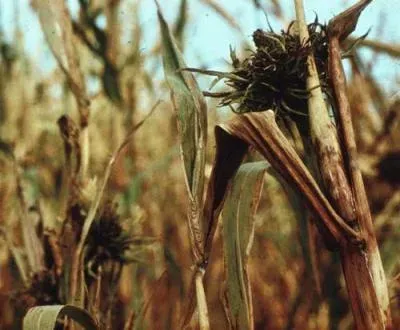
The most distinctive symptom is the extreme proliferation of tissues, leading to thickened stems and stunted, distorted growth.
Plants often exhibit a "bushy" appearance, with excessive tillering and malformed leaves that twist around the main stem.
Inflorescences are frequently transformed into leafy, stunted structures, a phenomenon known as phyllody, which prevents grain formation.
Early-stage infection may be difficult to detect, but the structural deformation becomes highly visible as the plants enter the reproductive phase.
In humid conditions, a fine, fuzzy layer of sporangiophores may appear on the surface of distorted tissues, confirming the presence of the pathogen.
Control measures
Improving field drainage is the most critical cultural practice to limit the availability of free water required for zoospore infection.
Crop rotation remains a fundamental strategy to reduce the concentration of oospores in the soil and mitigate the disease pressure.
The use of certified seeds and the cultivation of resistant or tolerant cereal varieties are essential for successful long-term management.
Weed control is necessary to eliminate reservoir hosts in and around the fields, preventing the carryover of the pathogen between seasons.
Avoiding the planting of cereals in low-lying, flood-prone areas significantly decreases the probability of encountering high disease levels.
Causes diseases · 2
Discussion
No discussions yet — be the first.