
African violet
Saintpaulia ionantha H. Wendl.
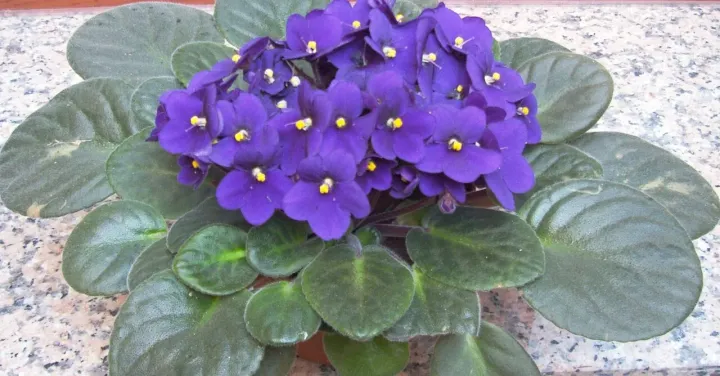
Description
Growing requirements
African violet (Saintpaulia ionantha) is a perennial herbaceous plant belonging to the Gesneriaceae family. Originally found in the cloud forests of Tanzania and Kenya, this species has become a staple in indoor horticulture worldwide.
The climate requirements for this culture are specific: steady temperatures between +20°C and +24°C are ideal. The plant is highly sensitive to cold drafts and extreme temperature fluctuations, which can cause significant stress or death.
Soil quality is paramount for root health. A well-draining, lightweight, and aerated substrate with a pH between 5.5 and 6.5 is recommended. Mixtures containing peat moss, perlite, and vermiculite are preferred by professional growers.
Lighting should be bright but indirect. Intense sunlight can cause leaf scorching, while low light leads to poor bloom production and distorted leaf growth. Many growers use supplemental LED lighting to ensure the required 10–12 hours of light.
Agricultural practices require precise irrigation management. Watering should be done by applying water to the soil surface or using a wick system, strictly avoiding wetting the foliage, as moisture on leaves can lead to crown rot.
Main diseases and pests
The culture faces several severe diseases, particularly in environments with poor air circulation or overwatering. Key threats include Rhizoctonia, Sclerotinia, and Fusarium root rot, which target the root system and vascular tissues.
Pythium root rot and Gray mold (Botrytis) are widespread issues in humid conditions. Prevention relies on controlling environmental humidity and ensuring optimal drainage in pots to prevent anaerobic soil conditions.
Powdery mildew appears as a fine white powder on leaves and is highly contagious among plant collections. Leaf spot diseases may also occur, often signaling improper hygiene or environmental stress within the growing area.
The root-knot nematode is a devastating pest that creates galls on roots, severely impairing the plant's ability to absorb water and nutrients. Detecting these requires careful inspection of the root system during repotting.
Management of these threats involves a multi-pronged approach: regular visual inspections, strictly regulated watering, sanitation of pots and tools, and the strategic application of fungicides and nematicides when necessary.