
Disease · fungal · affects Alfalfa, American cranberry, Anemone coronaria
Especially harmful
Plant Rust
Puccinia aristidae
Description
Symptoms
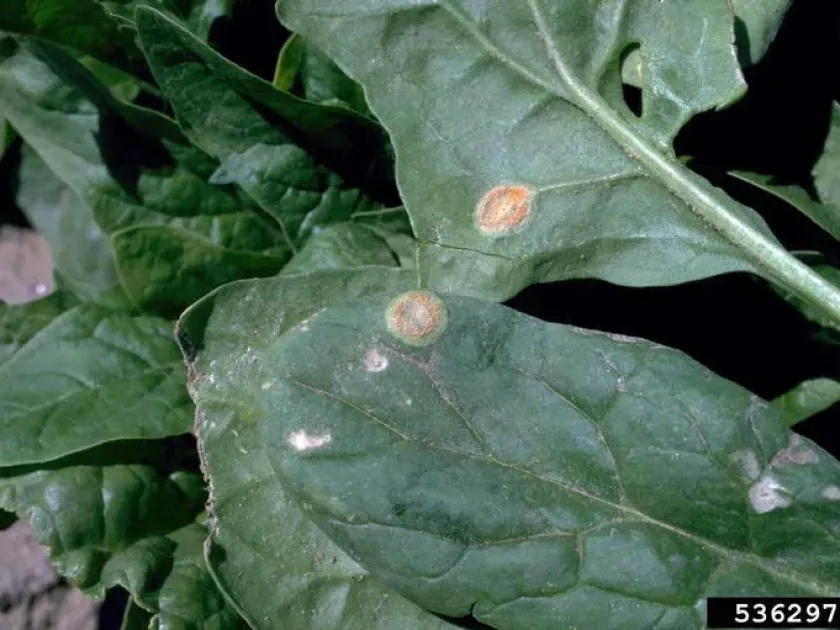
Initial signs of infection appear as small yellow or orange spots on the surface of leaves and stems, which gradually develop into pustules.
Within these pustules, masses of fungal spores are formed, and upon maturation, they burst to release a characteristic "rusty" dust that coats affected plant parts.
Severe infection leads to premature drying and leaf drop, often giving the plant an appearance similar to thermal burns or severe nutrient deficiency.
In bulbous crops like onions, the disease frequently affects the foliage, causing yellowing, twisting, and eventual necrosis, which negatively impacts crop quality.
- Appearance of chlorotic spots on leaves.
- Formation of raised orange-colored pustules.
- Dispersal of rusty dust upon physical contact.
- Loss of turgor and wilting of infected shoots.
Pathogen
The causative agent of this disease is the fungus Puccinia aristidae, which belongs to the class of basidiomycetes. This pathogen is a highly specialized parasite often requiring a host change to complete its life cycle.
It affects a wide variety of crops, including onion, garlic, oats, fodder beet, asparagus, and various ornamental plants such as crown anemone and the bellflower.
The fungus develops mycelium within the plant tissues, absorbing nutrients from living cells, which leads to metabolic disruption and impaired physiological functions of the host plant.
Transmission occurs primarily through spores, which are disseminated by wind, rain splashes, or contaminated agricultural equipment, allowing the pathogen to travel long distances.
The biology of Puccinia aristidae is characterized by high adaptability, enabling the pathogen to survive under varying climatic conditions and persist in the environment.
Conditions for development
High humidity and moderate temperatures between 15 and 22 degrees Celsius create an ideal environment for spore germination and infection development.
Dense crop stands and poor ventilation promote high local humidity, which significantly accelerates the spread of the pathogen throughout the field.
The presence of free moisture, such as dew or frequent rain, is a critical factor, as spores require a thin layer of water to successfully penetrate plant tissues.
Failure to manage weeds, which can act as alternative hosts, significantly increases the risk of infection spreading to primary agricultural crops.
Poor crop rotation practices and improper handling of infected crop residues allow the pathogen to accumulate in the soil, leading to recurring outbreaks.
Why it matters
The primary danger of plant rust is the drastic reduction in photosynthetic surface area, preventing the plant from synthesizing sufficient energy and organic compounds.
This results in significant yield losses, poor produce appearance, and reduced shelf life for vegetable crops during subsequent storage.
In cereal crops like oats, the disease induces grain shriveling and reduces seed viability, making the crop unsuitable for future planting.
In fodder crops, such as beets, rust decreases the energy value of both roots and tops, which negatively affects livestock productivity.
Massive outbreaks of the disease can lead to complete crop failure, causing significant economic damage to agricultural enterprises.
Protection
Effective management begins with the use of resistant crop varieties and the application of high-quality seed treatments before planting.
Adherence to optimal planting schedules helps plants avoid peak pathogen activity, while balanced fertilization supports robust plant immunity.
Chemical control includes the application of modern systemic fungicides that inhibit mycelial development and prevent reinfection during the growing season.
Rigorous sanitation, including the thorough removal and deep plowing or destruction of plant residues, is crucial to reducing the primary inoculum source.
Regular field monitoring during critical growth stages allows for the early detection of disease hotspots, enabling prompt intervention and containment.
In brief
60
Affects crops
Biology
Pathogens and affected parts
Pathogens
Puccinia aristidae· fungus
Uromyces striatus· fungus
Tranzschelia discolor· fungus
Puccinia asparagi· fungus
Pucciniastrum minimum· fungus
Uromyces musae· fungus
Puccinia coronata· fungus
Puccinia hordei· fungus
Puccinia striiformis· fungus
Uromyces appendiculatus· fungus
Phakopsora meibomiae· fungus
Phakopsora pachyrhizi· fungus
Affected plant parts
whole plantleafseedstem
Content graph
Affects crops · 60
AlfalfaAmerican cranberryAnemone coronariaArabica coffeeAsparagusBananaCarnationCarpathian bellflowerCassavaCattleyaChickpeaCoffea canephoraCommon beanCommon hazelCommon oatCommon sunflowerCottonCranberryDouglas firField mintField peaFlaxFlaxFodder beetFuchsiaGarlicHempIvy-leaved pelargoniumJerusalem artichokeLentilLettuceLingonberryOnionPassion fruitPeachPeanutPelargoniumPeppermintPistacia veraPoinsettiaPoison primrosePotatoPrimrosePrimulaPrimula malacoidesRaspberryRed cloverRhododendronRiceRoseRyeSafflowerScented geraniumSorghumSoybeanSpearmintSpinachSugarcaneWinter barleyWinter wheat
Content graph
Connections · Plant Rust
Most often together:
Marketplace
Products · 51












Community
Discussion
No discussions yet — be the first.