


SKU #34504
·
77 views
MADRAS
Pea
APSOVSEMENTI S.P.A.User rating
0 votes0% positive reviews
No ratings yet — be the first.
Growth Direction
On grain
Plant Type
Leafless (Bearded)
Growing Season
70-80 days, 80-90 days
Plant; height
Average Height
Store offers · 2 from 2 stores
Prices are updated on loadLoading offers…
Available at: Saddom · Zelen Plus
Aggregator catalog: prices are collected automatically from store websites, normalized by AI and converted at the current exchange rate. Before ordering, confirm the price and availability on the store's website. This block is not indexed by search engines — the data is loaded after the page opens.
About product

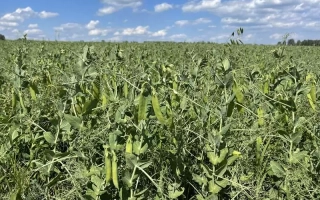
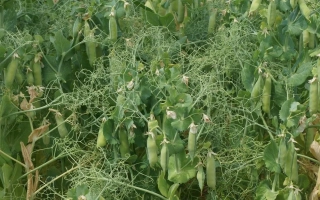
The Madras variety of field pea is a medium-late, leafless, hairy-stemmed variety with plants reaching 60 to 80 cm in height. Seeds are egg-shaped, with green cotyledons and green seed coat that retains its color upon maturation. The vegetative period ranges from 70 to 95 days, enabling early sowing and successful tolerance to early spring frosts. The recommended seeding rate is 90–100 germinating…
Growth Direction
On grain
Plant Type
Leafless (Bearded)
Growing Season
70-80 days, 80-90 days
Plant; height
Average Height
Description
The Madras variety of field pea is a medium-late, leafless, hairy-stemmed variety with plants reaching 60 to 80 cm in height. Seeds are egg-shaped, with green cotyledons and green seed coat that retains its color upon maturation. The vegetative period ranges from 70 to 95 days, enabling early sowing and successful tolerance to early spring frosts. The recommended seeding rate is 90–100 germinating seeds per square meter, with 1000-seed mass varying from 190 to 230 grams. Harvesting is recommended at grain moisture of 16–18%, using a gentle combine mode followed by post-harvest treatment.
The Madras variety is distinguished by its resistance to lodging and pod cracking, which helps preserve yield and improve quality. Average yields in the Central region reach 21.8 centners per hectare, and in the Central Black Earth region — around 17.1 centners per hectare, with potential yields up to 64 centners per hectare. The variety exhibits moderate resistance to fungal diseases such as fusarium and bacterial blight, but is susceptible to ascochytosis, root rot, and rust.
Additionally, Madras pea is widely used as microgreens, prized for their refined taste and high nutritional value. Microgreens contain high levels of vitamins, trace elements, antioxidants, enzymes, and protein, significantly surpassing mature plants in beneficial properties. Microgreens cultivation requires no special conditions or fertilizers, making this variety attractive for professional chefs and health-conscious consumers.
The Madras variety is distinguished by its resistance to lodging and pod cracking, which helps preserve yield and improve quality. Average yields in the Central region reach 21.8 centners per hectare, and in the Central Black Earth region — around 17.1 centners per hectare, with potential yields up to 64 centners per hectare. The variety exhibits moderate resistance to fungal diseases such as fusarium and bacterial blight, but is susceptible to ascochytosis, root rot, and rust.
Additionally, Madras pea is widely used as microgreens, prized for their refined taste and high nutritional value. Microgreens contain high levels of vitamins, trace elements, antioxidants, enzymes, and protein, significantly surpassing mature plants in beneficial properties. Microgreens cultivation requires no special conditions or fertilizers, making this variety attractive for professional chefs and health-conscious consumers.
Crop & resistance
Crop
Disease resistance
Specifications
| Growth Direction | |
|---|---|
| Plant Type | |
| Growing Season | 70-80 days, 80-90 days |
| Plant; height | Average Height |
| Beans; Weight per 1000 seeds | 180-200 grams, 200-220 grams, 220-240 grams |
| Suitability for direct cleaning | |
| Registration year | 2021 |
| Catalog | Catalog → Pea |
| Manufacturer | APSOVSEMENTI S.P.A. |
| Legal data |
Show · 7
|
| Country | Italy |
Not yet комментариев. Be the first!



FLORA 2
ФГБНУ Федеральный исследовательский центр «Немчиновка»
041 1 offer
23.24 €per 1 kg ≈ 1 197 ₴
See also
Often considered together with this variety





Recently viewed
Products you’ve viewed on this site
Reviews · 0