

Description
Symptoms
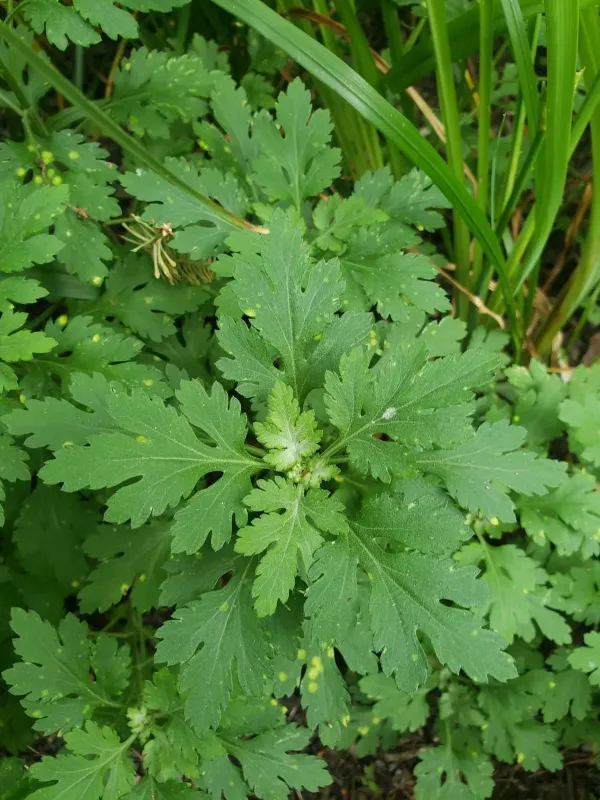
Initial symptoms are characterized by small, pale green or yellow spots appearing on the upper surface of the leaves. As the disease progresses, these spots expand and become more distinct in color.
The most diagnostic feature is found on the underside of the leaf, where raised, white to cream-colored pustules emerge beneath the spotted areas. These pustules contain masses of fungal spores.
As the infection intensifies, the foliage may lose its vitality, turning yellow and eventually drying out entirely. Defoliation is a common consequence of severe infection, compromising the plant's overall health.
Affected plants exhibit stunted growth and poor flower development. In severe cases, the entire plant may collapse, especially if the stems are also infected by the fungal pathogen.
- Yellow spots on upper leaf surfaces
- White, raised pustules on leaf undersides
- Premature yellowing and leaf drop
- Stunted growth and poor bud development
- Necrotic lesions on stems and bracts
Pathogen
The causal agent of this destructive disease is the basidiomycete fungus Puccinia horiana. It is an obligate parasite, meaning it can only complete its life cycle by extracting nutrients from living host tissues.
The fungus reproduces primarily via teliospores, which develop in specialized structures called pustules on the undersides of the chrysanthemum leaves. These spores are highly mobile and serve as the main mechanism for rapid disease spread.
Environmental conditions dictate the speed of infection. Under optimal humidity and temperature, the fungus can produce new generations of spores in just a few weeks, leading to devastating outbreaks.
The mycelium of the pathogen colonizes the intercellular spaces of the plant. This systemic colonization makes the disease difficult to control once it has established itself within the foliage of the host.
Survival of the pathogen in the absence of a host is generally short-term. However, dormant spores can persist in plant debris or on contaminated surfaces, creating a recurring infection risk for future plantings.
Conditions for development
High humidity and moisture are critical for the development of Puccinia horiana. Free water on the leaf surface is required for the spores to germinate and penetrate the plant tissues.
The fungus thrives within a temperature range of 15 to 22 degrees Celsius. While it can survive outside this range, the infection rate decreases significantly when temperatures are outside the optimal zone.
Greenhouse environments often provide the perfect conditions for the disease, especially if plants are densely spaced and ventilation is inadequate, leading to long periods of leaf wetness.
Overhead irrigation is a primary driver of disease transmission. Water droplets splash spores from infected plants onto healthy ones, making consistent, dry-foliage watering methods essential.
Air circulation is a key environmental factor in disease management. Proper airflow helps to dry leaf surfaces quickly, preventing the conditions necessary for fungal spore germination and penetration.
Why it matters
Chrysanthemum white rust is considered a high-risk quarantine disease globally. Its ability to spread rapidly can result in total losses for commercial growers within a matter of days.
The disease causes significant aesthetic degradation, rendering flowers unmarketable. This results in heavy financial losses and strict regulatory inspections for growers involved in international trade.
Metabolic disruption occurs as the fungus consumes plant energy, leading to poor bloom quality and reduced yield. The economic burden is further exacerbated by the costs of chemical treatments.
Because the spores are easily dispersed by air currents, tools, and clothing, a localized outbreak can quickly become a large-scale infection requiring drastic eradication measures, including total crop destruction.
The cumulative impact includes not only lost crops but also the necessity for mandatory fallow periods and thorough greenhouse disinfection to eliminate all remnants of the fungus from the facility.
Protection
Prevention starts with sourcing disease-free cuttings from certified nurseries. Implementing strict quarantine measures for any new incoming plant material is essential to keep the greenhouse clean.
Good cultural practices include maintaining appropriate plant density to ensure adequate airflow. Watering should be applied to the soil base to keep foliage dry at all times.
Immediate action must be taken upon spotting symptoms: infected leaves and entire plants should be removed, bagged, and destroyed to minimize the secondary spread of fungal spores.
Systemic fungicides, particularly those containing triazoles or strobilurins, are effective for both control and prevention. These should be applied preventatively according to manufacturer labels.
Maintaining rigorous sanitation protocols, including the disinfection of tools and workspaces, is vital to prevent cross-contamination. Workers should follow hygiene best practices to stop the spread of spores.
Reference
Connections · Chrysanthemum white rust
Most often together:
Marketplace
Products · 3


Community
Discussion
No discussions yet — be the first.