


SKU #34514
·
69 views
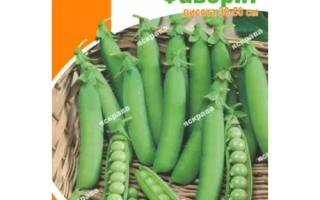
Pea Otaman
Pea
User rating
0 votes0% positive reviews
No ratings yet — be the first.
Growth Direction
On grain
Plant Type
Dwarf, Leafless (Bearded)
Plant; height
Average Height
Beans; Weight per 1000 seeds
220-240 grams
About product

A high-tech, semi-leafless pea variety optimized for direct combining and disease resistance.
Growth Direction
On grain
Plant Type
Dwarf, Leafless (Bearded)
Plant; height
Average Height
Beans; Weight per 1000 seeds
220-240 grams
Description
Efficiency and Yield: The Ataman Pea Variety
In an era of climate volatility and rising machinery costs, farmers are increasingly shifting towards leafless pea varieties. The "Ataman" variety, developed by the V. Ya. Yuriev Plant Production Institute, addresses these precise needs. It is more than just a classic pea; it is a high-tech solution for farms planning direct harvesting with minimal field losses.
Agronomic Profile and Resilience
The defining feature of Ataman is its semi-leafless (tendrilled) architecture. The plants form a strong interlocking structure, preventing lodging even under conditions of high humidity. Its medium height and controlled vegetative mass significantly simplify the combine harvesting process.
- Phytosanitary Shield: The variety exhibits robust resistance to pathogens critical to pea yields. It provides a defensive barrier against anthracnose, fusarium, rust, and powdery mildew. Notably, its resistance to downy mildew (peronosporosis) and rhizoctonia root rot allows for a reduction in fungicide applications within intensive protection programs.
- Technological Suitability: With a thousand-seed weight of 220–240 grams, the variety is ideal for standard drill calibration. A protein content of 20–22% ensures marketability in both human consumption and animal feed sectors.
Why Choose Ataman?
Ataman is the optimal choice for operations prioritizing direct combining. Thanks to its semi-dwarf type and excellent harvestability, you can significantly mitigate the yield losses typical of traditional varieties, which can often reach 15–20%. Ataman is designed for growers who prioritize profitability, predictable results, and risk management during the ripening phase.
Crop & resistance
Crop
Specifications
| Growth Direction | |
|---|---|
| Plant Type | |
| Plant; height | Average Height |
| Beans; Weight per 1000 seeds | 220-240 grams |
| Beans; Protein Content | 20-22% |
| Suitability for direct cleaning | |
| Registration year | 2010 |
| Catalog | Catalog → Pea |
| Legal data |
Show · 1
|
| Country | Ukraine |
Store offers
Prices are updated on loadLoading offers…
Aggregator catalog: prices are collected automatically from store websites, normalized by AI and converted at the current exchange rate. Before ordering, confirm the price and availability on the store's website. This block is not indexed by search engines — the data is loaded after the page opens.
Not yet комментариев. Be the first!







See also
Often considered together with this variety




Recently viewed
Products you’ve viewed on this site
Reviews · 0