

Disease · fungal · affects American cranberry, Common bean, Raspberry
Especially harmful
Yellow rust
Puccinia striiformis
Description
Symptoms
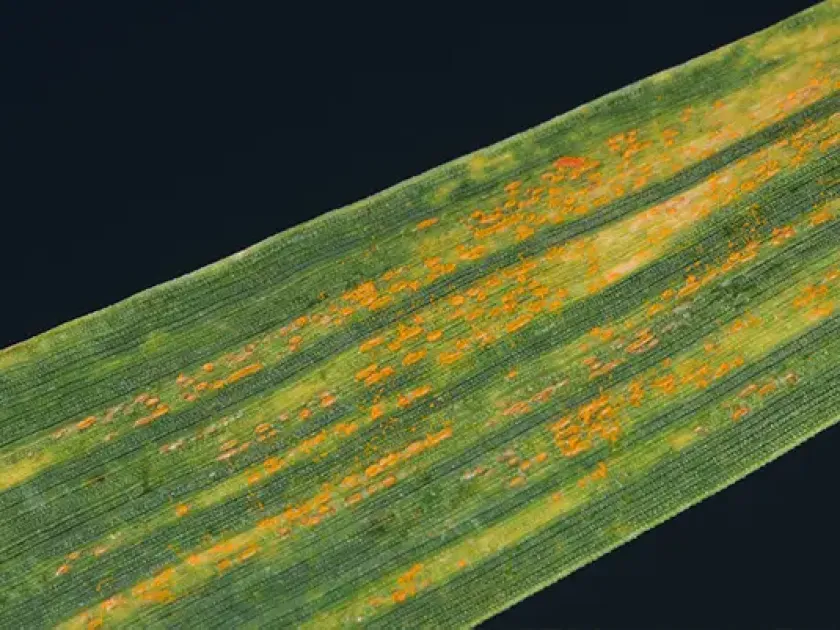
The disease is characterized by small, yellow to orange-colored pustules that form in distinct, linear patterns along the veins of the leaves.
These rows of pustules often create a striped effect on the leaf surface, which is the most reliable diagnostic feature for identifying this specific rust infection in the field.
As the infection progresses, leaves may become chlorotic, curled, and eventually necrotic, leading to early senescence and reduced surface area for active photosynthesis.
In severe cases, the fungus can infect the leaf sheaths and even the glumes of the ear, which significantly interferes with grain filling and plant development.
Early-stage infection, particularly in young plants, can cause stunting and poor tillering, which may lead to significant plant loss if the environment remains conducive for the fungus.
Pathogen
Yellow rust is caused by the fungus Puccinia striiformis, an obligate biotrophic pathogen that requires living host tissue to complete its life cycle and survive.
The disease primarily affects cereals like wheat, barley, and rye, but it is also known to infect other plants including common bean, red raspberry, sorghum, and large cranberry.
The fungus survives the off-season as mycelium on winter crops or self-sown volunteers. Once temperatures become favorable, it produces urediniospores which are spread by wind over vast distances.
Inside the host plant, the fungus develops haustoria, which penetrate the plant cell walls to extract nutrients, weakening the plant and disrupting its essential physiological functions.
It is classified as a rust disease due to the characteristic powdery appearance of spore masses that break through the plant epidermis during the later stages of the infection cycle.
Conditions for development
Yellow rust prefers cooler temperatures compared to other cereal rusts, with optimal development occurring between 5°C and 15°C under high humidity conditions.
Periods of prolonged leaf wetness, such as morning dew or mist, are essential for spore germination and successful entry into the plant host via the stomata.
Growth of the fungus is inhibited when temperatures consistently exceed 20–25°C, providing a natural check on the disease during the warmer months of the season.
Dense crop canopies and high nitrogen fertilizer application often exacerbate the disease by maintaining a humid microclimate within the crop and providing lush, susceptible growth.
In regions with mild winters, the fungus can continue to reproduce throughout the winter season, leading to a much higher initial inoculum load when spring arrives.
Why it matters
The primary damage is caused by the loss of photosynthetic area, which significantly reduces the amount of carbohydrates transported to the developing grains.
Yield losses can be catastrophic, with some susceptible cultivars experiencing a decrease of up to 70% in grain production if the infection starts early and is not controlled.
Grain quality is severely affected, often resulting in small, shrivelled seeds with lower bushel weight, reduced protein content, and poor germination potential.
Plants weakened by yellow rust are more susceptible to secondary stressors, including root rot diseases and frost damage, which can lead to further indirect losses.
The economic impact is twofold: the direct loss of harvest and the increased production costs associated with necessary fungicide applications to manage the epidemic.
Protection
The most effective long-term strategy for managing yellow rust is the cultivation of resistant or tolerant crop varieties that contain specific resistance genes.
Good agricultural practices, such as removing volunteer plants and managing weed reservoirs, are critical for reducing the initial inoculum levels in the field.
Timely application of systemic fungicides, particularly triazoles and strobilurins, is standard procedure once the disease is detected to halt its spread within the canopy.
Integrated pest management (IPM) requires regular scouting of fields during the critical growth stages to ensure that fungicide treatments are applied at the most effective time.
- Selection of genetically resistant crop varieties.
- Avoidance of early planting near infected areas.
- Balanced fertilization to prevent excessive succulent growth.
- Use of high-quality seed treatment for early protection.
In brief
4
Affects crops
Biology
Pathogens and affected parts
Pathogens
Affected plant parts
stemwhole plant
Content graph
Affects crops · 4
Reference
Connections · Yellow rust
Most often together:
Marketplace
Products · 660








Community
Discussion
No discussions yet — be the first.