
Description
Symptoms
Symptoms of PVY infection are highly variable, depending on the viral strain, potato variety, and environmental conditions during the plant's growth stages.
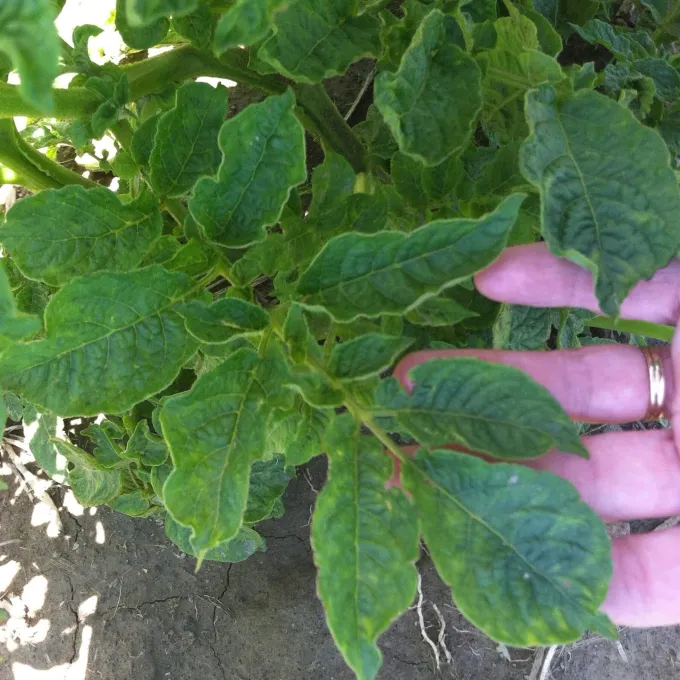
Typical visual signs include mottling, mosaic patterns, chlorosis, and crinkling of the leaves, which significantly disrupt the plant's photosynthetic process.
In many susceptible cultivars, the disease manifests as severe leaf distortion, vein necrosis, and premature yellowing or wilting of the foliage.
Infected plants exhibit stunted growth and an overall decrease in vigor, leading to a significant reduction in the quantity and quality of the potato yield.
Some infections may be latent, showing no visible symptoms, which is particularly dangerous as it allows the virus to spread undetected in seed stocks.
Pathogen
The causative agent of the disease is the Potato virus Y (PVY), a member of the Potyvirus genus, which is a major pathogen affecting various Solanaceous crops globally.
The virus consists of flexuous, rod-shaped particles containing a single-stranded RNA genome, known for its high genetic diversity and the existence of multiple pathogenic strains.
The primary reservoir of the virus is infected potato tubers, which carry the pathogen from one season to the next, as well as volunteer potatoes from previous crops.
Alternative hosts, including various weed species in the Solanaceae family, act as overwintering sites where the virus survives until the start of the next growing season.
The transmission of the virus is primarily mediated by aphids, which act as non-persistent vectors, carrying the virus on their mouthparts and infecting plants within seconds of feeding.
Conditions for development
The rate of virus spread is strongly correlated with the population dynamics of aphids and their migration patterns during the summer months.
Warm and dry weather conditions generally promote aphid reproduction, increasing the frequency of plant visits and the probability of virus transmission.
Poor spatial isolation between seed potato production fields and commercial potato fields is a critical factor leading to widespread secondary infections.
The presence of wild Solanaceous weeds around field borders provides continuous virus reservoirs, ensuring a steady supply of inoculum for aphids.
High plant density and inadequate weed control measures create a microclimate that favors both vector movement and the persistence of the virus within the field.
Why it matters
Potato virus Y is considered one of the most economically damaging viruses in agriculture, causing substantial losses in both tuber quantity and quality.
Infected tubers often show reduced size, distorted shape, and reduced internal quality, making them unsuitable for market and storage requirements.
The accumulation of the virus in tubers over successive generations leads to severe degeneration of seed stocks, rendering them unproductive.
Beyond direct losses, the cost of managing aphid populations and the need for frequent seed stock renewal impose a heavy economic burden on growers.
Because there is no cure for viral infection in plants, the damage caused by PVY is irreversible for the entire infected crop cycle.
Protection
The use of high-quality, certified, virus-free seed tubers is the most fundamental and effective strategy for preventing the introduction of PVY.
Maintaining a significant spatial distance between seed potato fields and other potato plantations is essential to reduce the risk of aphid-mediated transmission.
Implementing regular roguing—removing and destroying plants that show any symptoms of viral infection—helps to maintain the health of the remaining crop.
Systematic insecticide treatments aimed at managing aphid populations help to interrupt the transmission cycle, though they must be timed accurately.
Effective weed management and early harvesting practices are recommended to minimize the exposure time of the crop to aphid vectors during the season.
Reference
Connections · Potato virus Y
Most often together:
Marketplace
Products · 150










Community
Discussion
No discussions yet — be the first.