


Prices in stores
from0.94 €per 1 kg
pack from 0.98 € per pack
15 offers from 10 stores
Direction
Table Potato, French Fries, Potato for chips
Time to first harvest
75-85 days
Tuber: shape
Oval elongated
Tuber: skin color
Yellow
Your mark
0 votes
0% positive ratings
Store offers · 15 from 10 stores
15 offers in 10 stores — from 0.94 € per 1 kg.
Available at: Agro-market · Сяйво · Добродар · DSH · Kostiuk · Луцена · Malanka · podosinki-center-ru · roselux-com-ua · Интернет магазин садовых растений Все Сорта
Prices are collected automatically from store websites and converted at the current exchange rate. Check the price and availability on the store website before ordering.
Description
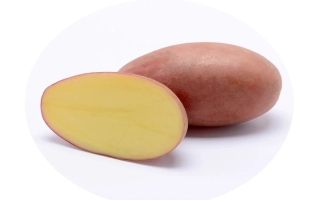
The potato variety "Queen Anne" is a medium-early, universal table variety developed by the German breeding company Solana GmbH & CO KG. The vegetation period is 75-85 days, and full maturity is reached on day 95-105. Plants of this variety form 10 to 16 elongated-oval, smooth tubers weighing 80 to 150 grams. The tuber skin is smooth, tough, yellow, with small, superficial eyes that are practically invisible. The flesh is light yellow, medium density, slightly mealy and moderately moist, ensuring excellent taste and versatility in cooking. The "Queen Anne" variety is characterized by high yield, averaging 395 c/ha, and under optimal conditions can reach up to 500 c/ha. Tubers have a marketability of 82-97%, and storability up to 10 months, allowing the harvest to be preserved until spring without loss of quality. Starch content varies from 12 to 16%, making this potato suitable for various cooking methods: boiling, frying, making French fries, chips, and soups. When boiled, tubers retain their shape and do not break down, and when fried, they develop a soft interior and a crispy crust. One of the key advantages of this variety is its high resistance to a broad spectrum of diseases common to solanaceous crops, including potato scab, rhizoctonia, alternaria, dark spots, late blight, and viral infections. Plants are low-growing, with dark green leaves covered in a slight down, and white flowers. Due to its resistance and stable yield, "Queen Anne" is popular among both professional growers and home gardeners in various climatic conditions across Ukraine, Belarus, and Russia.
Video · 5 videos
Suggest a video →Crop & resistance
Crop
Disease resistance
Pest resistance
Specifications
| Direction | |
|---|---|
| Time to first harvest | 75-85 days |
| Tuber | |
| Shape | |
| Skin color | |
| Flesh color | |
| Skin structure | |
| Eye depth | |
| Mass | 50-130 grams |
| Starch Content | 12-13%, 13-14%, 14-15%, 15-16% |
| Registration year | 2015 |
| Catalog | Catalog → Potato |
| Manufacturer | Solana |
| Legal data |
Show · 11
|
| Country | Germany |
No reviews yet. Be the first to share your experience.
Alternatives
Seed potatoes · similar varieties



See also
Often considered together with this variety




Recently viewed
Products you’ve viewed on this site
Reviews