

Description
Symptoms
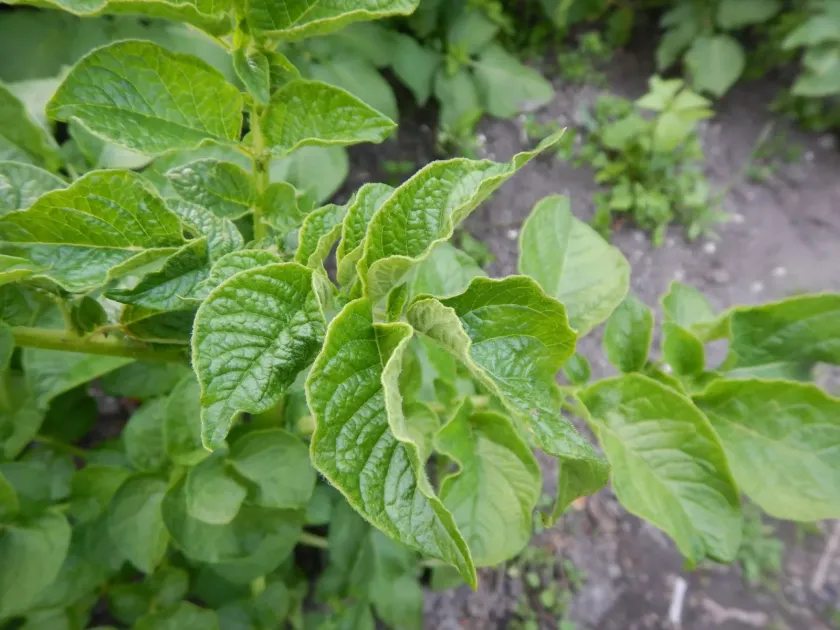
Primary infection in young plants typically appears as rolling of the upper leaflets, which become leathery and exhibit slight chlorosis.
Secondary infection, occurring in plants grown from infected tubers, presents as an upward rolling of the lower leaves along the midrib.
Leaves on infected plants are often thick, brittle, and may develop a reddish or purplish (anthocyanin) discoloration on the underside.
Infected plants show stunted growth and a stiff, upright habit due to shortened internodes, leading to a significant reduction in overall plant vigor.
In certain cultivars, tubers may show internal net necrosis, characterized by brown strands of dead phloem tissue within the flesh.
Pathogen
The causal agent of the disease is the Potato leaf roll virus (PLRV), which belongs to the genus Polerovirus within the Solemoviridae family.
This virus is transmitted in a persistent, circulative manner by aphid species, most notably the green peach aphid (Myzus persicae).
The virus cannot be transmitted mechanically through sap contact, pruning, or machinery, which is a unique characteristic compared to other potato viruses.
PLRV is strictly phloem-limited, meaning it colonizes the plant's vascular tissues and interferes with the translocation of sugars and nutrients.
Infected potato tubers used for planting serve as the primary reservoir for the virus, ensuring its presence in the field every season.
Conditions for development
The spread of PLRV is closely tied to the population dynamics and migration patterns of its aphid vectors during the growing season.
Hot and dry climatic conditions tend to favor aphid reproduction and movement, significantly increasing the probability of secondary spread.
The presence of weeds or volunteer potatoes near the production area provides a habitat for aphids, facilitating the virus's arrival in potato fields.
A high percentage of infected seed tubers creates an initial inoculum source that enables rapid disease progression throughout the field.
Optimal conditions for disease development include the coincidence of high aphid activity with the susceptible growth stages of the potato crop.
Why it matters
PLRV causes substantial yield losses, ranging from 30% to 80%, as the disruption of nutrient transport prevents proper tuber development.
Infected plants produce fewer and smaller tubers, significantly decreasing the marketable yield and overall quality of the harvest.
The accumulation of the virus over successive generations leads to rapid seed stock degeneration, making regular seed replacement necessary.
Net necrosis in tubers renders them visually unappealing and technically unsuitable for both fresh market consumption and processing industries.
The weakened state of infected plants makes the crop more susceptible to environmental stress and secondary fungal infections in the field.
Protection
The use of certified virus-free seed tubers, produced via meristem culture and rigorous testing, is the primary control measure.
Effective management of aphid populations through systematic insecticide applications helps reduce the spread of the virus within and between fields.
Rogueing, which involves identifying and removing infected plants as soon as symptoms appear, is critical to reduce the source of inoculum.
Maintaining spatial isolation from other susceptible crops and controlling weeds help minimize the pressure from aphid vectors carrying the virus.
Early harvesting practices in seed production areas can prevent late-season infection by aphids, ensuring higher quality of the progeny tubers.
In brief
1
Affects crops
Biology
Pathogens and affected parts
Affected plant parts
leaf
Content graph
Affects crops · 1
Reference
Connections · Potato leaf roll virus
Most often together:
Marketplace
Products · 108

















Community
Discussion
No discussions yet — be the first.