

Common scab
Streptomyces
Description
Symptoms
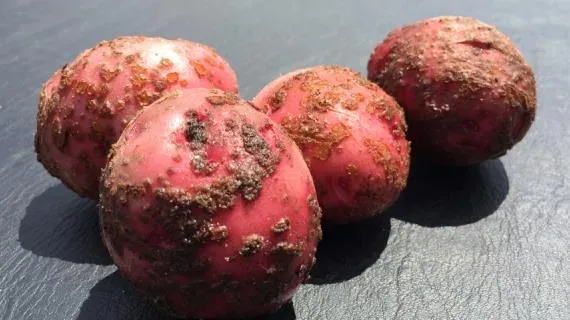
Common scab is primarily recognized by the appearance of corky lesions on the surface of tubers, root vegetables, and underground stems. These lesions can manifest as superficial scabs, raised pustules, or deep, pitted cavities that penetrate the flesh of the host tissue.
On potatoes, the symptoms often vary depending on the susceptibility of the cultivar. The skin can develop irregular, rough, and thickened patches that may merge to cover the entire tuber, significantly diminishing its market value and shelf appeal.
When attacking root crops such as beets, radishes, or turnips, the pathogen creates crusty spots that disrupt the epidermal layer. These areas often darken over time, becoming necrotic and prone to cracking, which makes the plant highly susceptible to secondary invaders.
In seedlings or ornamental plants like Poinsettia, the infection often targets the roots and the crown. This leads to stunted growth, wilting, and in severe cases, the death of the root system, which prevents the plant from absorbing nutrients and water efficiently.
The severity of signs can fluctuate based on environmental conditions. Under favorable conditions for the pathogen, the lesions become more pronounced, and the damage becomes deeper, indicating a rapid colonization of the plant's periderm by the bacterial colonies.
Pathogen
The causative agent of common scab is a group of filamentous soil bacteria belonging to the genus Streptomyces. The most prominent and studied species involved in this plant disease is Streptomyces scabies.
These organisms are gram-positive bacteria that possess a complex, branching mycelium structure, which resembles fungal growth. They act as saprophytes in the soil, decomposing organic matter, but switch to a pathogenic lifestyle when suitable plant hosts are present.
The pathogenicity is largely driven by the production of specialized phytotoxins, such as thaxtomins. These chemical compounds interfere with the normal development of plant cells, causing them to undergo abnormal division and leading to the characteristic corky tissue formation.
Streptomyces bacteria are exceptionally hardy, capable of surviving for many years in the soil even in the absence of a host crop. They can persist as spores or dormant mycelial fragments, making them incredibly difficult to eradicate completely from an infested field.
Their life cycle is closely linked to soil moisture and pH. Unlike many other plant pathogens, they thrive in environments that would typically inhibit fungi, allowing them to occupy a unique ecological niche in cultivated agricultural landscapes.
Conditions for development
Common scab development is heavily influenced by soil conditions. It thrives in well-aerated, dry, and sandy soils, where oxygen availability is high. Such conditions promote the growth and colonization speed of Streptomyces species.
Soil pH plays a decisive role in the disease cycle. The pathogen is most active in neutral to slightly alkaline soils, typically with a pH range of 6.0 to 7.5. Acidic soils, with a pH below 5.2, are generally suppressive to the development of the pathogen.
Temperature is another critical factor. The bacteria prefer warm soil conditions, with the optimum range for disease development being between 20°C and 25°C. This often aligns with the period of rapid tuber or root development in many susceptible crops.
Low soil moisture during the critical stages of plant development (like tuber initiation) is a major risk factor. Inadequate water prevents the plant from maintaining its natural resistance, allowing the bacteria to easily infect through the lenticels or small wounds.
The presence of high levels of fresh, decomposing organic matter, such as uncomposted manure, can stimulate the growth of Streptomyces populations in the soil, thereby increasing the overall disease pressure for the following growing season.
Why it matters
The economic impact of common scab is significant, primarily due to the severe reduction in the aesthetic and commercial value of the produce. Potatoes and root crops with scab lesions are often rejected by retailers and consumers.
The disease also facilitates significant post-harvest losses. The damaged skin of the tuber or root provides an entry point for other pathogens, leading to soft and dry rots that can devastate stored harvests in warehouses and domestic storage facilities.
Yield quality is compromised in industrial processing, as scabbed potatoes require deeper peeling and trimming, which leads to higher waste volumes and reduced efficiency in food production lines for snacks and frozen products.
In crops like soybeans or rapeseed, the pathogen can weaken the root system, resulting in poor stand establishment and overall reduced vigor. This ultimately leads to lower grain yields and diminished oil content, affecting the farmer's profitability.
The persistence of the pathogen in the soil creates a long-term management challenge. Once an area is infested, the disease risk remains high, limiting the farmer’s choices for crop rotation and necessitating costly preventative treatments.
Protection
Crop rotation remains the most fundamental control strategy. Incorporating non-host crops and plants that encourage soil acidification, such as rye, oats, or certain legumes, can help suppress the population of the pathogen in the soil over time.
Managing soil moisture is vital during the critical period of tuber or root initiation. Maintaining higher soil moisture levels (near field capacity) for a few weeks during this stage can physically restrict the activity of Streptomyces and reduce infection rates.
The use of physiologically acidifying fertilizers, such as ammonium sulfate, helps maintain a lower soil pH, which is less favorable for the pathogen. Conversely, it is advisable to avoid excessive liming of the soil prior to planting susceptible crops.
Selecting resistant cultivars is a key component of integrated pest management. Breeders continue to develop varieties with stronger periderm structures that resist bacterial penetration, providing a more reliable defense against the disease.
For high-value crops, seed treatment with authorized chemical agents or biological control products containing antagonistic bacteria can help provide initial protection, although these must be used in conjunction with strict sanitation practices for farm equipment.
In brief
21
Affects crops
Biology
Pathogens and affected parts
Pathogens
Streptomyces· bacterium
Venturia carpophila· fungus
Cladosporium carpophilum· fungus
Venturia inaequalis· fungus
Venturia carpophilia· fungus
Sphaceloma perseae· fungus
Streptomyces scabiei· bacterium
Streptomyces scabies· bacterium
Fusarium· fungus
Elsinoe mangiferae· fungus
Sphaceloma mangiferae· fungus
Cladosporium cladosporioides· fungus
Affected plant parts
whole plant
Content graph
Affects crops · 21
Reference
Connections · Common scab
Most often together:
Weeds
1 contact
Marketplace
Products · 920
All 920
Potato 426
Apple 275
Sugar Beet 62
Fungicides 49
Cucumber 27
Tulips 27
Insecticides, Acaricides 16
Plum 11
Pear 4
Carrot 3
Table Beet 2
Tomato 2


Pridesnyanskaya
Chernihiv Elite Potato Research and Production Association
Potato
0
0
1 offer
0.98 €per pack
Buy



Community
Discussion
No discussions yet — be the first.