
Brown birch bolete
Leccinum scabrum
Description
Symptoms
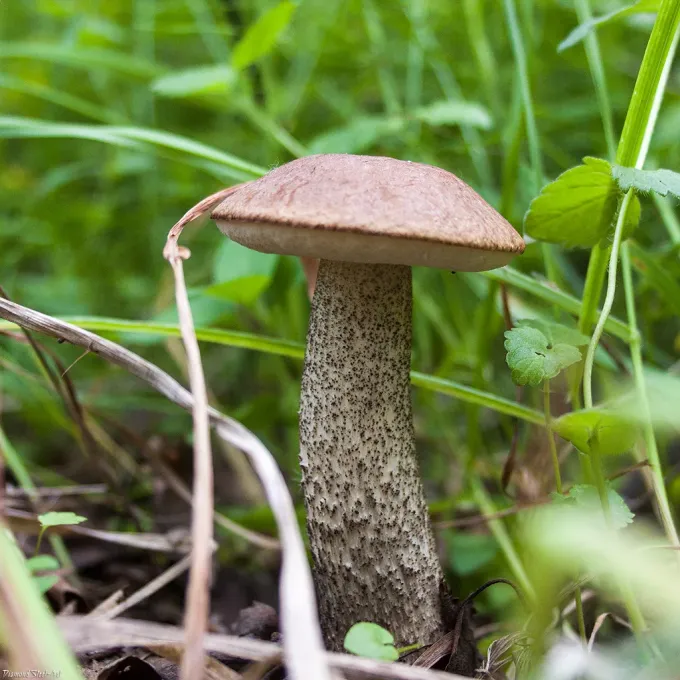
The visible presence of the fungus is characterized by the growth of fruiting bodies near birch trees. The cap is brownish, and the stem is typically covered with distinct dark scales.
There are no symptoms of plant damage associated with this fungus. The host trees do not exhibit leaf yellowing, wilting, or decay of the trunk or root system.
The fungus is a clear indicator of a healthy, biodiverse soil environment where trees and fungal networks coexist in a stable state.
If you observe mushrooms under a birch tree, it simply reflects the presence of an active, healthy underground mycelial network supporting the tree.
No pathological signs are present on the tree, confirming that the relationship between the bolete and the birch is strictly non-parasitic.
Pathogen
Brown birch bolete (Leccinum scabrum) is not a plant disease or pathogen. It is a common species of mycorrhizal fungus that forms beneficial symbiotic relationships with birch trees.
Biologically, it is a macrofungus that establishes a mutually beneficial connection with the roots of trees, known as ectomycorrhiza, which is essential for healthy forest growth.
In agronomy, it is never classified as a pathogen because it does not cause infections, tissue necrosis, or any form of damage to the host plant.
The fungus provides the tree with essential water and mineral nutrients from the soil, in exchange for the carbohydrates produced by the tree through photosynthesis.
Therefore, this organism is considered a symbiont that enhances plant health rather than an agent that degrades biological systems.
Conditions for development
The development of Leccinum scabrum is strictly dependent on the proximity of host birch trees, as it is an obligate mycorrhizal partner.
Ideal conditions for fruit body production include high soil moisture levels, moderate temperatures (15–22°C), and acidic soil conditions.
The fungus is highly sensitive to soil pollution, such as excessive pesticides or fertilizers, which can disrupt the mycorrhizal connection.
Mycelial growth is generally most active during late summer and autumn when temperature and precipitation levels align with the needs of the fungus.
Spore dispersal occurs naturally through wind and local wildlife, allowing the fungus to colonize areas where birch populations are stable.
Why it matters
The brown birch bolete is completely harmless to both forest ecosystems and ornamental birch trees. There is no damage associated with this organism.
The species does not have the ability to invade living plant tissue or cause disease; it only utilizes the root surface for nutrient exchange.
Its role is highly beneficial, as the mycorrhizal network helps the trees tolerate drought and nutrient-poor soil conditions.
There is no impact on crop production or plant quality, making it irrelevant to plant pathology control programs.
It has significant ecological and economic value as a food source, but this value is entirely separate from any concerns regarding plant health.
Protection
There are no control measures for Leccinum scabrum because it is not a pest or disease; it is a vital part of the forest ecosystem.
The application of fungicides is discouraged, as it would destroy the symbiotic network and weaken the tree’s overall vitality.
No prophylactic measures are necessary; maintaining soil health and preserving the natural fungal microflora is recommended for forest management.
If mushroom fruiting bodies are unwanted for aesthetic reasons in landscape design, manual removal is sufficient and safe.
The best approach is to embrace the presence of this fungus as a indicator of a thriving environment and a healthy tree population.
Discussion
No discussions yet — be the first.