
Streptomyces scabiei
Streptomyces scabiei
Description
How to identify
Streptomyces scabiei is a filamentous, gram-positive bacterium belonging to the phylum Actinomycetota. It is a soil-dwelling organism that typically thrives as a saprophyte, feeding on decaying organic matter.
This pathogen is widely recognized as the primary agent responsible for common scab in potatoes and other root crops. It is distinguished by its ability to produce a specialized phytotoxin known as thaxtomin A.
Thaxtomin A is critical for the pathogen's virulence, as it disrupts cellulose synthesis in plant cell walls, leading to the characteristic lesions seen on infected tubers. This chemical attack is the hallmark of the disease process.
The bacteria are highly resilient, capable of surviving in the soil for extended periods even in the absence of a host crop. They can persist through adverse environmental conditions by forming resistant spores.
Development is heavily influenced by soil conditions. Streptomyces scabiei favors neutral to alkaline soil environments (pH 6.0–7.5). It is largely suppressed in acidic soils (pH < 5.2), which remains a fundamental principle for biological management.
What it damages
Potatoes are the primary host for Streptomyces scabiei. The pathogen attacks developing tubers by entering through lenticels, natural openings, or mechanical wounds, which triggers the formation of scab-like lesions.
In addition to potatoes, the bacterium affects various root vegetables, including beets, carrots, parsnips, and radishes. These crops suffer from decreased aesthetic quality and marketability, which can lead to significant economic losses.
The disease causes physical damage to the periderm (skin) of the vegetable. This damage not only affects the appearance but also increases water loss, leading to premature dehydration and shriveling of the produce during storage.
Deep scab lesions can compromise the integrity of the tuber, providing a entry point for secondary bacterial and fungal pathogens. This often leads to rot and further spoilage during post-harvest storage.
- Reduced market grade and aesthetic value of tubers.
- Increased susceptibility to secondary storage rots.
- Diminished yield quality affecting the processing industry.
When it appears
Infection primarily occurs during the rapid tuberization phase. As tubers begin to swell, the developing periderm is highly susceptible to invasion by the bacteria present in the soil environment.
The disease is most prevalent in warm, dry weather conditions. Temperatures ranging from 20°C to 30°C are optimal for the growth of the pathogen and the subsequent production of thaxtomin A.
Spread of the disease across fields is facilitated by the movement of contaminated soil. Farm machinery, irrigation runoff, and infected seed tubers act as the primary vectors for introducing the pathogen to new areas.
Soil moisture levels are critical. Maintaining high soil moisture during the first few weeks of tuber development can effectively prevent infection, as the bacteria are less active when the soil environment is near saturation.
The duration of the pathogen's activity spans the entire vegetative period, but the most aggressive symptoms develop during the active growth phase when the tubers are expanding most rapidly.
Signs of infestation
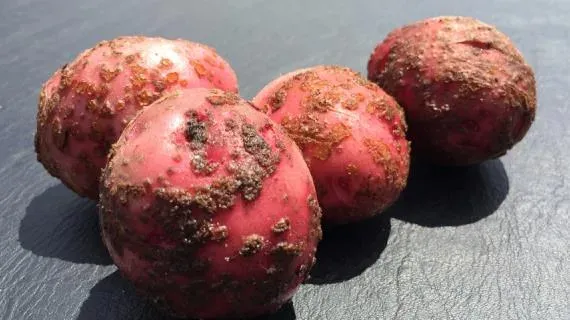
The appearance of scab symptoms varies significantly depending on the cultivar and environmental factors. Lesions can present as superficial, raised, or deeply pitted areas of corky tissue.
Initial signs consist of small, dark, circular spots that eventually expand. As the lesion matures, the corky tissue becomes more prominent and may merge with other lesions, creating large, rough, and unsightly patches.
On harvested tubers, a faint white or gray mycelial growth may be visible under the scab lesions, especially in high-humidity conditions. This represents the bacteria colonies thriving on the host surface.
In carrots and other root vegetables, the symptoms appear as localized areas of suberized, rough skin. This alters the shape of the root and creates a crusty texture that is undesirable for fresh market consumption.
Internal tissue remains mostly healthy, as the pathogen restricts its impact to the outer periderm layers. However, the presence of these lesions drastically reduces the commercial utility of the harvested crop.
Control measures
Implementing a proper crop rotation strategy is the foundation of control. Avoiding susceptible crops on the same land for at least 3–4 years helps reduce the resident population of Streptomyces scabiei.
Modifying soil pH is highly effective. The application of acidifying fertilizers, such as ammonium sulfate, can help maintain soil acidity below the threshold required for bacterial proliferation.
Using disease-free, certified seed tubers is essential to prevent the introduction of the pathogen into new soil. Chemical treatments of seed tubers can also provide a layer of protection during the initial planting phase.
Water management is a key cultural practice. Providing consistent irrigation during the critical tuber initiation period can suppress the pathogen and significantly lower the severity of common scab.
Genetic resistance is the most sustainable management tool. Planting resistant potato varieties that have been bred specifically for their ability to withstand the pathogen is highly recommended for infested areas.
Causes diseases · 2
Discussion
No discussions yet — be the first.