
Eutypa dieback
Eutypa scabrosa
Description
Symptoms
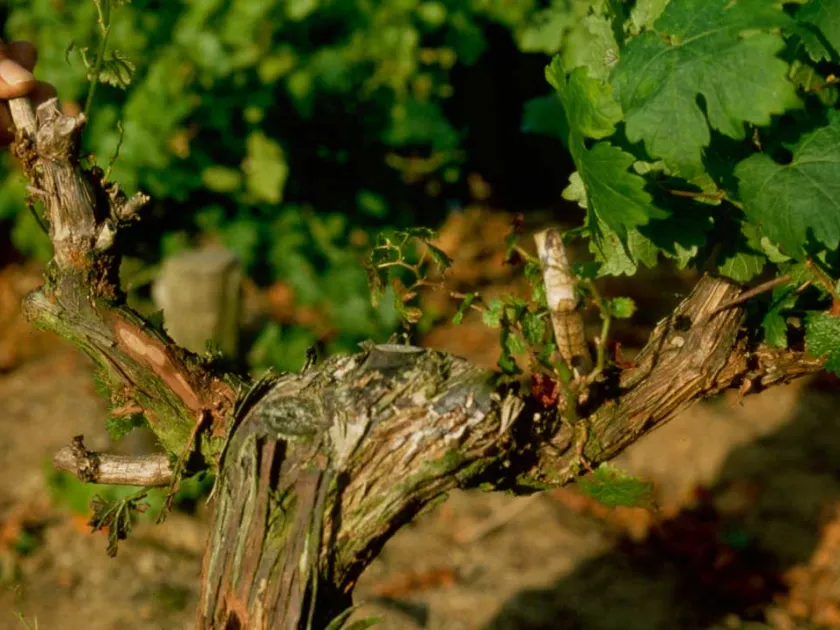
The most visible symptom is a distinct stunting of shoots on affected arms during the early growing season, often referred to as "spring dieback".
Leaves on infected shoots appear small, chlorotic, and may exhibit marginal necrosis or leaf deformation, giving the foliage a cupped appearance.
Internodes on affected shoots are significantly shortened, making the growth look cramped and stunted compared to healthy vine branches.
Upon cutting into an infected trunk or cordon, one will observe a dark, wedge-shaped necrotic zone in the center, typically surrounded by a lighter band.
- Stunted and chlorotic leaf growth.
- Shortened internodes on current season shoots.
- Gradual dieback of permanent cordons or arms.
- Wedge-shaped necrotic discoloration in cross-sections.
Pathogen
The disease is caused by the ascomycete fungus Eutypa lata (formerly classified as Eutypa scabrosa), which infects the woody tissues of the grapevine.
It acts as a wood-decay pathogen, colonizing the xylem and permanently damaging the vascular system of the vine's permanent structures.
The fungus enters the vine primarily through pruning wounds, where spores germinate and penetrate deep into the woody tissue of the cordons or trunk.
The infection cycle involves the production of airborne ascospores, which are spread by wind and rain throughout the vineyard environment.
The mycelium grows slowly within the wood, decomposing lignin and cellulose, which eventually results in the characteristic necrotic lesions.
Conditions for development
Favorable conditions for infection include cool to moderate temperatures and high humidity, especially during the pruning season.
Rainfall is a critical factor, as it facilitates the release and dispersal of spores from the fungal fruiting bodies found on dead wood.
The fungus thrives in temperatures between 15°C and 25°C, making early spring a high-risk period for fresh pruning wound colonization.
Vines that have experienced winter frost injury are often more susceptible to infection due to the increased presence of dead or damaged wood.
Poor vineyard hygiene, such as leaving infected pruning debris nearby, creates a continuous reservoir for spore production and dispersal.
Why it matters
Eutypa dieback causes significant economic losses by progressively destroying the permanent cordons of the vine, leading to reduced overall productivity.
As the vascular tissue is destroyed, water and nutrient transport are severely restricted, leading to poor fruit set and reduced berry quality.
The disease is progressive and irreversible, eventually killing the entire arm or the whole vine, requiring extensive remedial action.
Infected vines serve as a source of inoculum, placing the entire vineyard block at risk if management practices are not strictly implemented.
The long-term impact includes the loss of vineyard longevity and the necessity for costly vineyard rejuvenation or plant replacement strategies.
Protection
The primary control method involves rigorous sanitation pruning, where all infected woody tissue must be removed until only healthy wood remains.
Applying protective wound sealants or fungicidal pastes to large pruning cuts is essential to prevent spore colonization on open surfaces.
Tools such as pruners and saws must be disinfected regularly, especially when moving between potentially infected and healthy vines.
Timing pruning tasks for dry weather periods is a highly effective strategy to avoid the conditions that promote spore dispersal and infection.
Establishing a long-term monitoring program for symptomatic vines allows for early intervention and limits the spread of the pathogen within the block.
Discussion
No discussions yet — be the first.