


SKU #52662
·
70 views
Udacha
Potato
User rating
0 votes0% positive reviews
No ratings yet — be the first.
Direction
Table Potato
Beginning of fruiting
85-95 days
Corm; shape
Oval, Round
Corm; skin color
Light yellow (white)
Prices in stores
from2.26 €per 1 kg
pack from 4.51 € per 2 kg
1 offer from 1 store
Store offers · 1 from 1 stores
Prices are updated on loadLoading offers…
Available at: Сад от А до Я
Aggregator catalog: prices are collected automatically from store websites, normalized by AI and converted at the current exchange rate. Before ordering, confirm the price and availability on the store's website. This block is not indexed by search engines — the data is loaded after the page opens.
About product

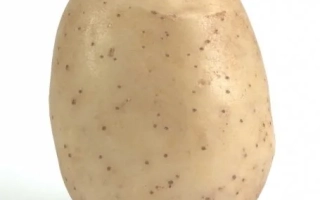
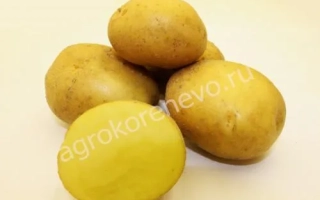
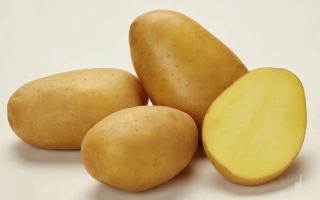
The potato variety 'Luck' is an early-maturing table variety distinguished by high yield and stable quality under various growing conditions. Plants of medium height with semi-spreading form, dark green large leaves, and white flower buds. Tubers are oval or round, smooth and even, with thin light beige or cream-colored skin and small dark eyes. Flesh is white, slightly turns yellow when boiled, g…
Direction
Table Potato
Beginning of fruiting
85-95 days
Corm; shape
Oval, Round
Corm; skin color
Light yellow (white)
Description
The potato variety 'Luck' is an early-maturing table variety distinguished by high yield and stable quality under various growing conditions. Plants of medium height with semi-spreading form, dark green large leaves, and white flower buds. Tubers are oval or round, smooth and even, with thin light beige or cream-colored skin and small dark eyes. Flesh is white, slightly turns yellow when boiled, giving dishes an attractive appearance. Average tuber mass ranges from 120 to 250 grams, with starch content varying from 12 to 15%, ensuring good fluffiness and excellent taste, especially when making mashed potatoes and fried potatoes, which retain their shape well.
The 'Luck' variety has high marketability — up to 96% — and stable yield, reaching 300–500 centners per hectare, equivalent to approximately 40–45 tons. Full maturation period is about 80–90 days, though young tubers can be harvested as early as 40 days after emergence. The potato adapts well to various soil types and climatic conditions, preferring sandy soils and responding well to legume and perennial grass predecessors. It is resistant to summer heat and can be stored for up to 5 months, making it convenient for long-term storage.
The 'Luck' variety shows moderate resistance to late blight on foliage and tubers, and high resistance to diseases such as mosaic, wet rot, scab, and potato cancer. Its frost tolerance allows cultivation in various regions, including Northwestern, Central, Volgo-Vyatka, North Caucasus, Ural, and Far Eastern regions. Thanks to its combination of high yield, marketability, and disease resistance, the 'Luck' variety is an excellent choice for both commercial and home cultivation.
The 'Luck' variety has high marketability — up to 96% — and stable yield, reaching 300–500 centners per hectare, equivalent to approximately 40–45 tons. Full maturation period is about 80–90 days, though young tubers can be harvested as early as 40 days after emergence. The potato adapts well to various soil types and climatic conditions, preferring sandy soils and responding well to legume and perennial grass predecessors. It is resistant to summer heat and can be stored for up to 5 months, making it convenient for long-term storage.
The 'Luck' variety shows moderate resistance to late blight on foliage and tubers, and high resistance to diseases such as mosaic, wet rot, scab, and potato cancer. Its frost tolerance allows cultivation in various regions, including Northwestern, Central, Volgo-Vyatka, North Caucasus, Ural, and Far Eastern regions. Thanks to its combination of high yield, marketability, and disease resistance, the 'Luck' variety is an excellent choice for both commercial and home cultivation.
Video · 6 videos
Suggest a video →Crop & resistance
Crop
Disease resistance
Specifications hover over for a hint about the specification
Not yet комментариев. Be the first!
Alternatives
Seed potatoes · similar varieties




See also
Often considered together with this variety


GLORIA
ФГБНУ Федеральный Аграрный Научный Центр Северо-востока имени Н.В. Рудницкого
062 1 offer
21.36 € ≈ 1 101 ₴



Recently viewed
Products you’ve viewed on this site
Reviews · 0