


SKU #52675
·
69 views
PUSHKINEC
Potato
ФГБОУ ВО Санкт-Петербургский государственный аграрный университетUser rating
0 votes0% positive reviews
No ratings yet — be the first.
Direction
Table Potato
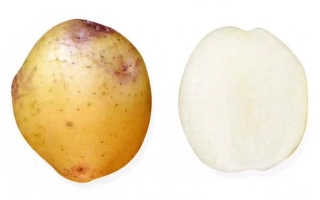
Corm; shape
Oval
Corm; skin color
Light yellow (white)
Corm; flesh color
White
Store offers · 1 from 1 stores
Prices are updated on loadLoading offers…
Available at: purple-potatoesru
Aggregator catalog: prices are collected automatically from store websites, normalized by AI and converted at the current exchange rate. Before ordering, confirm the price and availability on the store's website. This block is not indexed by search engines — the data is loaded after the page opens.
About product

The potato variety Pushkinec is an early table variety developed at the Saint Petersburg State Agrarian University and recommended for cultivation in various regions of Russia, including the Northern, Northwestern, Central, Volga-Vyatka, Middle Volga, West Siberian, East Siberian, and Far Eastern regions. The plants are characterized by medium-height, spreading bushes, and the tubers have an oval…
Direction
Table Potato
Corm; shape
Oval
Corm; skin color
Light yellow (white)
Corm; flesh color
White
Description
The potato variety Pushkinec is an early table variety developed at the Saint Petersburg State Agrarian University and recommended for cultivation in various regions of Russia, including the Northern, Northwestern, Central, Volga-Vyatka, Middle Volga, West Siberian, East Siberian, and Far Eastern regions. The plants are characterized by medium-height, spreading bushes, and the tubers have an oval shape with a light beige or cream color, weighing between 100 to 134 grams. The flesh is white and does not darken during boiling, making this variety suitable for various culinary purposes, including boiling, baking, frying, and making mashed potatoes.
The Pushkinec variety is distinguished by its stable high yield, reaching 290-320 centners per hectare, and good tuber marketability — from 85 to 94%. The starch content of the tubers is within 15-18%, ensuring good taste qualities, rated from average to good. The storage capacity of the variety is at 89-94%, allowing the crop to be preserved during winter with satisfactory to good storage quality. The number of tubers per plant varies from 9 to 12.
Special attention has been paid to the variety's resistance to diseases. Pushkinec exhibits high resistance to potato nematode and potato scab, while it is moderately susceptible to late blight, common scab, alternaria, and viral diseases. Standard agronomic practices are recommended for growing this variety. Due to its combination of early maturity, stable high yield, and resistance to pests and diseases, the Pushkinec variety is a valuable choice for farmers and gardeners aiming to obtain high-quality, versatile potatoes.
The Pushkinec variety is distinguished by its stable high yield, reaching 290-320 centners per hectare, and good tuber marketability — from 85 to 94%. The starch content of the tubers is within 15-18%, ensuring good taste qualities, rated from average to good. The storage capacity of the variety is at 89-94%, allowing the crop to be preserved during winter with satisfactory to good storage quality. The number of tubers per plant varies from 9 to 12.
Special attention has been paid to the variety's resistance to diseases. Pushkinec exhibits high resistance to potato nematode and potato scab, while it is moderately susceptible to late blight, common scab, alternaria, and viral diseases. Standard agronomic practices are recommended for growing this variety. Due to its combination of early maturity, stable high yield, and resistance to pests and diseases, the Pushkinec variety is a valuable choice for farmers and gardeners aiming to obtain high-quality, versatile potatoes.
Crop & resistance
Crop
Disease resistance
Pest resistance
Specifications hover over for a hint about the specification
|
Direction
Direction
Existing varieties and types of cabbage are grown for fresh consumption, long-term storage, and technical processing. |
|
|---|---|
| Corm; shape | |
| Corm; skin color | |
| Corm; flesh color | |
| Corm; mass | 50-130 grams |
| Registration year | 1993 |
| Catalog | Catalog → Potato |
| Manufacturer | ФГБОУ ВО Санкт-Петербургский государственный аграрный университет |
| Legal data |
Show · 2
|
| Country | Russia |
Not yet комментариев. Be the first!
Alternatives
Seed potatoes · similar varieties




See also
Often considered together with this variety





Recently viewed
Products you’ve viewed on this site
Reviews · 0