


SKU #52660
·
71 views
LUSINDA
Potato
IPR BVUser rating
0 votes0% positive reviews
No ratings yet — be the first.
Direction
Potato for chips, Table Potato, French Fries
Beginning of fruiting
95-105 days
Corm; shape
Oval, Oval-rounded
Corm; skin color
Yellow
Prices in stores
from0.96 €per 1 kg
pack from 0.96 € per 1 kg
4 offers from 3 stores
Store offers · 4 from 3 stores
Prices are updated on loadLoading offers…
Available at: Добродар · Florium · Megasad · Semena · Сонцесад
Aggregator catalog: prices are collected automatically from store websites, normalized by AI and converted at the current exchange rate. Before ordering, confirm the price and availability on the store's website. This block is not indexed by search engines — the data is loaded after the page opens.
About product

The Lusinda potato variety is a mid-late, high-yielding variety with a vegetative period of 125 to 140 days and market maturity occurring after 90-105 days. The plant features a robust, upright stem reaching 45-50 cm in height and dark green leaves on short petioles. Tubers are large, oval or round-oval in shape, with small eyes, smooth yellow skin, and uniform yellow flesh that cleans easily. Sta…
Direction
Potato for chips, Table Potato, French Fries
Beginning of fruiting
95-105 days
Corm; shape
Oval, Oval-rounded
Corm; skin color
Yellow
Description
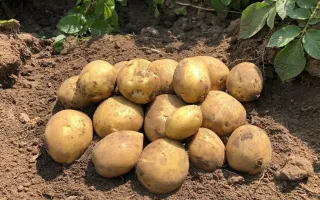
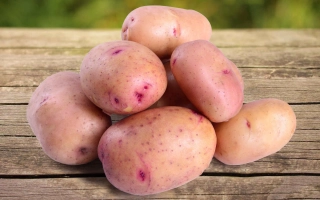
The Lusinda potato variety is a mid-late, high-yielding variety with a vegetative period of 125 to 140 days and market maturity occurring after 90-105 days. The plant features a robust, upright stem reaching 45-50 cm in height and dark green leaves on short petioles. Tubers are large, oval or round-oval in shape, with small eyes, smooth yellow skin, and uniform yellow flesh that cleans easily. Starch content in the tubers ranges from 12-16%, making them especially delicious, particularly when fried, as they develop a crisp crust. This variety is excellent for boiling, frying, and baking, and is distinguished by its exemplary flavor reminiscent of buttered potatoes.
Lusinda exhibits high resistance to heat, drought, and various diseases, including late blight, nematodes, scab, and blackleg. Thanks to these qualities, the variety shows excellent storage and transportability, allowing the harvest to be preserved for an extended period. The yield potential of this variety can reach up to 600 centners per hectare, making it attractive for commercial cultivation. The plant requires minimal care, but for optimal development, it is recommended to plant sprouted tubers when soil temperature reaches +7...+8°C at a depth of 8-14 cm, depending on soil type and moisture.
To increase yield and protect against hidden infections, it is recommended to use organic microbial preparations that suppress the development of phytopathogenic fungi and bacteria on tuber surfaces. When planting, it is important to consider the potato’s sun-loving nature: optimal row orientation from northwest to southeast ensures even lighting and increases yield by 10-15%. Also, avoid deep planting to prevent delaying seedling emergence and to ensure better tuber warming. All these characteristics make the Lusinda variety a versatile and reliable choice for cultivation under various climatic conditions.
Lusinda exhibits high resistance to heat, drought, and various diseases, including late blight, nematodes, scab, and blackleg. Thanks to these qualities, the variety shows excellent storage and transportability, allowing the harvest to be preserved for an extended period. The yield potential of this variety can reach up to 600 centners per hectare, making it attractive for commercial cultivation. The plant requires minimal care, but for optimal development, it is recommended to plant sprouted tubers when soil temperature reaches +7...+8°C at a depth of 8-14 cm, depending on soil type and moisture.
To increase yield and protect against hidden infections, it is recommended to use organic microbial preparations that suppress the development of phytopathogenic fungi and bacteria on tuber surfaces. When planting, it is important to consider the potato’s sun-loving nature: optimal row orientation from northwest to southeast ensures even lighting and increases yield by 10-15%. Also, avoid deep planting to prevent delaying seedling emergence and to ensure better tuber warming. All these characteristics make the Lusinda variety a versatile and reliable choice for cultivation under various climatic conditions.
Video · 3 videos
Suggest a video →Crop & resistance
Crop
Disease resistance
Pest resistance
Specifications hover over for a hint about the specification
|
Direction
Direction
Existing varieties and types of cabbage are grown for fresh consumption, long-term storage, and technical processing. |
|
|---|---|
|
Beginning of fruiting
Beginning of fruiting
The early maturity of watermelon varieties mainly depends on the duration of growth and fruit ripening phases, rather than the timing of female flower blooming. Many varieties, ripening at different times, begin to bloom almost simultaneously. Approximately 30 days after fruit se... |
95-105 days |
| Corm; shape | |
| Corm; skin color | |
| Corm; flesh color | |
| Corm; skin structure | |
| Cormorant; eye depth | |
| Corm; mass | 200-300 grams, 300-400 grams |
| Starch Content | 12-13%, 13-14%, 14-15%, 15-16% |
| Flavor Characteristics | |
| Registration year | 2013 |
| Catalog | Catalog → Potato |
| Manufacturer | IPR BV |
| Country | Netherlands |
Not yet комментариев. Be the first!
Alternatives
Seed potatoes · similar varieties




See also
Often considered together with this variety




GLORIA
ФГБНУ Федеральный Аграрный Научный Центр Северо-востока имени Н.В. Рудницкого
062 1 offer
21.36 € ≈ 1 100 ₴


Recently viewed
Products you’ve viewed on this site
Reviews · 0