

Disease · fungal · affects American cranberry, Asparagus, Bleeding heart vine
Especially harmful
Tobacco mosaic virus
Tobacco mosaic virus
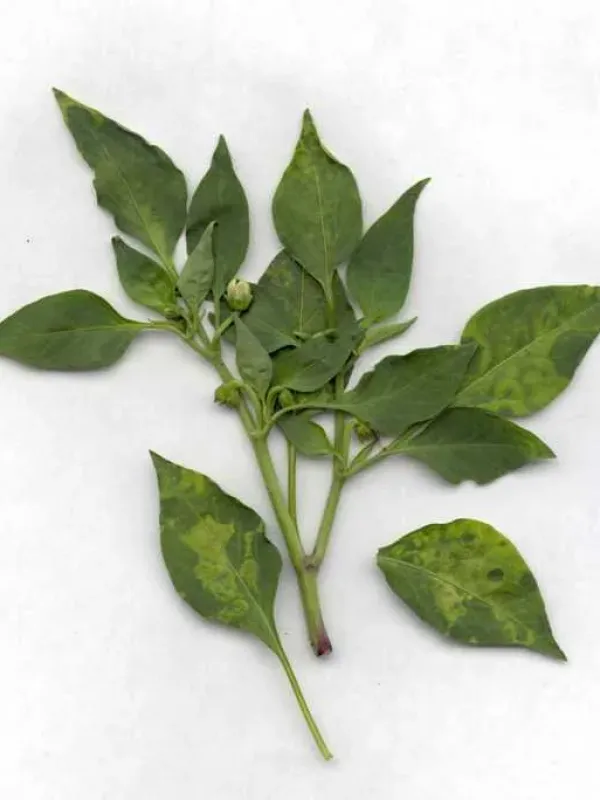
Description
Symptoms
The primary symptom of infection is a mosaic pattern on leaves, characterized by alternating patches of light green, yellow, and dark green tissue.
Affected plants often exhibit severe leaf deformation, such as curling, crinkling, or a "shoestring" appearance, which drastically reduces photosynthetic capacity.
Fruits, particularly on peppers and tomatoes, may develop mottled discoloration, bumpy textures, or necrotic spots, rendering the harvest unmarketable.
Stunting is a common systemic reaction to the infection, resulting in shortened internodes and a significantly diminished overall plant size compared to healthy specimens.
Premature abscission of flowers and buds is frequently observed, leading to a substantial decrease in the total fruit set and agricultural yield.
Pathogen
The causative agent is Tobacco mosaic virus (TMV), a single-stranded RNA virus known as one of the most stable plant pathogens in existence.
TMV particles are rigid, rod-shaped structures that can maintain infectivity for years in soil, dry plant debris, and even in processed tobacco products.
As an obligate parasite, TMV relies on the host's cellular machinery to replicate, spreading systemically through the plant's phloem after initial entry.
The virus does not require an insect vector for transmission, which sets it apart from many other plant viruses, as it spreads primarily through contact.
The host range is exceptionally broad, affecting species including asparagus, pepper, papaya, chickpea, Clerodendrum thomsoniae, watermelon, cyclamen, and strawberry.
Conditions for development
Transmission occurs predominantly through mechanical contact, such as handling plants with contaminated hands, tools, or through friction between adjacent foliage.
High temperatures facilitate the replication process within plant cells, often causing symptoms to appear more rapidly during warmer growing seasons.
Greenhouse environments are particularly conducive to the rapid spread of TMV due to high plant density and the necessity for regular pruning and handling.
The presence of perennial weed reservoirs near production areas serves as a continuous source of inoculum that can trigger new outbreaks each season.
Any damage to the plant epidermis, whether from insect feeding, physical injury, or horticultural practices, creates entry points for the virus to infect the host.
Why it matters
The economic damage caused by TMV includes severe yield reduction, with losses in susceptible crops often reaching up to 80% under favorable conditions.
Infected crops suffer from poor quality, as the fruit produced is often undersized, discolored, or malformed, failing to meet commercial grading standards.
Because the virus causes systemic damage, infected plants cannot be cured, necessitating their total removal to protect the remaining crop from secondary spread.
TMV weakens the overall physiological health of the plant, potentially predisposing the crop to secondary opportunistic fungal or bacterial infections.
Due to the long-term persistence of the virus in the environment, soil contamination can necessitate lengthy crop rotations, significantly impacting land management.
Protection
The most effective strategy is rigorous sanitation, including the disinfection of tools with bleach or specialized detergents after every single plant contact.
Growers should use only certified, virus-free seeds and ensure that the nursery environment is completely isolated from potential sources of infection.
Prohibiting tobacco use by staff around greenhouse and field operations is vital, as TMV is frequently transmitted from smokers' hands to plants.
Early identification and culling of symptomatic plants, accompanied by careful handling to avoid spreading sap, remain the cornerstone of effective management.
- Utilizing genetically resistant cultivars and hybrids.
- Strict adherence to crop rotation cycles.
- Frequent cleaning of equipment and greenhouse surfaces.
- Managing insect populations to prevent mechanical wounding of leaves.
In brief
34
Affects crops
Biology
Pathogens and affected parts
Pathogens
Affected plant parts
whole plantleafstem
Content graph
Affects crops · 34
American cranberryAsparagusBleeding heart vineChickpeaCommon beanCommon sunflowerCranberryDuracina cherryGerbera jamesoniiImpatiensIvy-leaved pelargoniumJerusalem artichokeJerusalem cherryLettucePapayaPassion fruitPelargoniumPepperPersian cyclamenPoison primrosePotatoPrimrosePrimulaPrimula malacoidesRaspberryRed cloverScented geraniumSour cherrySoybeanSpinachStrawberryTobaccoWatermelonWinter wheat
Content graph
Connections · Tobacco mosaic virus
Most often together:
Marketplace
Products · 2213
All 2213
Tomato 1467
Pepper 509
Tulips 156
Eggplant 40
Cucumber 14
Tobacco 5
Cabbage 2
Coriander 2
Sweet Corn 2
Beans 1
Pumpkin 1
Hippeastrum 1







Slonovo Uvo
SUPERIOR D.O.O. ZA POLJOPRIVREDNU PROIZVO
Pepper
0
0
·
75
14 offers
13.44 €per 1000 seeds
Buy















Community
Discussion
No discussions yet — be the first.