

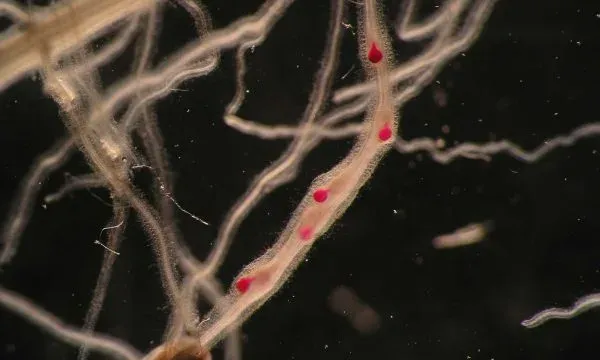
Description
How to identify
Pratylenchus pinguicaudatus is a plant-parasitic nematode belonging to the order Tylenchida and the family Pratylenchidae.
These are microscopic, vermiform organisms that penetrate the roots of host plants, moving through the cortex while feeding on cells.
Adults and juvenile stages possess a stylet used to puncture root cells, causing localized damage to the host plant tissues.
They are migratory endoparasites, meaning they do not form permanent galls and often move between the soil and root tissues throughout their life cycle.
Their reproductive cycle is relatively fast under optimal soil moisture and temperature conditions, leading to multiple generations during a single growing season.
What it damages
The primary hosts for this species include various cereal crops such as wheat, barley, and oats, which suffer significant yield losses.
Besides cereals, it can parasitize several weed species, which act as alternative hosts and allow the population to persist in the absence of crops.
The feeding process results in the destruction of root hairs and cortex cells, which severely impairs the plant's ability to take up water and nutrients.
Lesions formed on the roots provide entry points for soil-borne pathogens, such as fungi and bacteria, leading to complex root rot diseases.
Severe infestations often result in stunted growth, reduced tillering in cereals, and significantly lowered grain filling and overall biomass.
Signs of infestation
Infected crops typically display patches of stunted, chlorotic plants that appear significantly less vigorous than surrounding healthy crops.
When examining the root system, one may observe discoloration, lesions, and a reduction in the number of healthy lateral roots.
The plants often exhibit signs of physiological stress, including wilting during dry periods due to the compromised integrity of the root system.
Yield mapping of the field often reveals reduced productivity in areas with high nematode density, often incorrectly attributed to soil compaction.
Confirming the presence of Pratylenchus pinguicaudatus requires soil and root sample analysis conducted in a specialized nematology laboratory.
Control measures
Crop rotation is the most effective management strategy, utilizing non-host crops to starve the nematode population over one or more seasons.
Maintaining high soil fertility and optimal moisture levels helps plants compensate for the damage caused by the nematode feeding.
Effective weed control is critical, as many common weeds serve as reservoirs for the nematode population when host crops are not present.
Sanitation practices, such as cleaning machinery before moving between infested and clean fields, are essential to prevent the spread of the pest.
While chemical nematicides exist, they are often cost-prohibitive for large-scale cereal production and are mainly used in high-value horticulture.
Content graph
Connections · Root-lesion nematode
Most often together:
Marketplace
Products · 14





Biology
Taxonomy
- Latin name
- Pratylenchus pinguicaudatus
- Order
- Nematodes
- Family
- Pratylenchidae
- EPPO code
- PRATPI
Community
Discussion
No discussions yet — be the first.