

Disease · fungal · affects Watermelon
Especially harmful
Zucchini yellow mosaic virus
Zucchini yellow mosaic virus
Description
Symptoms
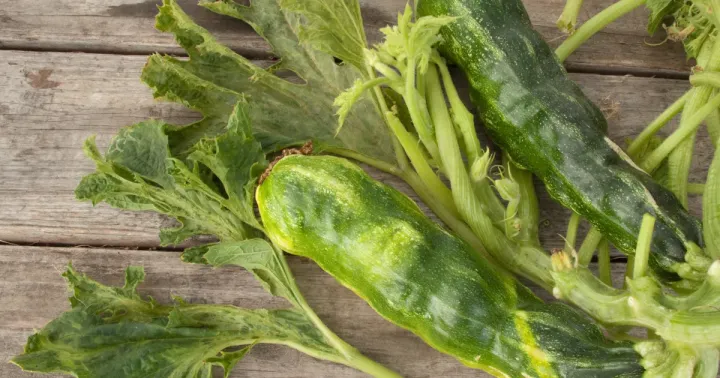
Symptoms typically manifest as pronounced yellow mosaic patterns, leaf chlorosis, and severe mosaic mottling on the foliage of affected plants.
Leaves exhibit significant distortion, becoming wrinkled, blistered, and often reduced in size, sometimes developing a characteristic shoestring or fern-leaf appearance.
Fruits show severe symptoms including knobs, bumps, irregular shapes, and mottled discoloration, which render them unsellable and decrease market value.
Overall plant growth is severely stunted, with shortened internodes and a bushy appearance that significantly limits the plant's physiological capacity to produce fruit.
- Bright yellow mosaic on leaves.
- Severe leaf distortion and shoestring leaves.
- Knobby and discolored fruit.
- Stunted plant growth and low yields.
Pathogen
The causative agent is the Zucchini yellow mosaic virus (ZYMV), a member of the Potyviridae family. It is a highly contagious RNA virus that poses a significant threat to agriculture.
The virus has a wide host range, primarily targeting the Cucurbitaceae family, including zucchini, squash, cucumber, melon, and watermelon.
Transmission occurs primarily through aphid vectors in a non-persistent manner, meaning aphids can acquire and transmit the virus after very short feeding periods.
Mechanical transmission is also a major concern, as the virus can easily spread via farming tools, clothing, or plant-to-plant contact during routine field operations.
Weeds in the cucurbit family often act as overwintering reservoirs, allowing the virus to persist in the field from one season to the next.
Conditions for development
The spread of ZYMV is highly correlated with warm weather conditions, which favor the rapid population growth and movement of aphid vectors.
Temperatures ranging from +20°C to +30°C provide an optimal environment for both the virus replication within the host and the activity of insect vectors.
High planting densities can lead to increased mechanical spread of the virus through physical leaf-to-leaf contact during windy conditions or human handling.
The presence of wild cucurbits or related weed species near the crop serves as a constant source of inoculum, fueling the cycle of infection throughout the season.
Environmental stress, such as water deficit, does not cause the virus, but can exacerbate symptoms and reduce the plant's tolerance to the pathogen.
Why it matters
The virus causes severe economic losses by drastically reducing the marketable yield of crops like watermelon and cucumber, often causing total loss of quality.
Plants infected early in the season may fail to produce any fruit at all, leading to significant financial burden for producers and agricultural enterprises.
Infected crops show decreased vigor, making them more susceptible to subsequent attacks by secondary pathogens, fungi, or drought conditions.
There is no curative treatment for ZYMV once a plant is infected, forcing growers to discard affected crops and implement strict containment measures.
The widespread nature of the virus and its ability to spread rapidly through aphid populations make it one of the most destructive diseases in cucurbit production.
Protection
Managing the aphid population through the judicious use of insecticides is the primary method of controlling the spread of the virus in the field.
Rigorous weed control around the perimeter of the crop is essential to eliminate reservoirs of the virus and reduce the initial inoculum pressure.
Selecting and planting genetically resistant or tolerant hybrids is currently the most effective and sustainable strategy for managing ZYMV in commercial farming.
Sanitation practices, such as disinfecting tools and removing infected plants immediately upon symptom detection, are crucial to limit secondary transmission.
Implementing physical barriers like insect-proof netting can be beneficial for high-value crops grown in greenhouses or small-scale plots to prevent aphid access.
In brief
1
Affects crops
Biology
Pathogens and affected parts
Pathogens
Affected plant parts
whole plant
Content graph
Affects crops · 1
Reference
Connections · Zucchini yellow mosaic virus
Most often together:
Marketplace
Products · 40



Community
Discussion
No discussions yet — be the first.