
Tobacco mosaic virus
Tobacco leaf
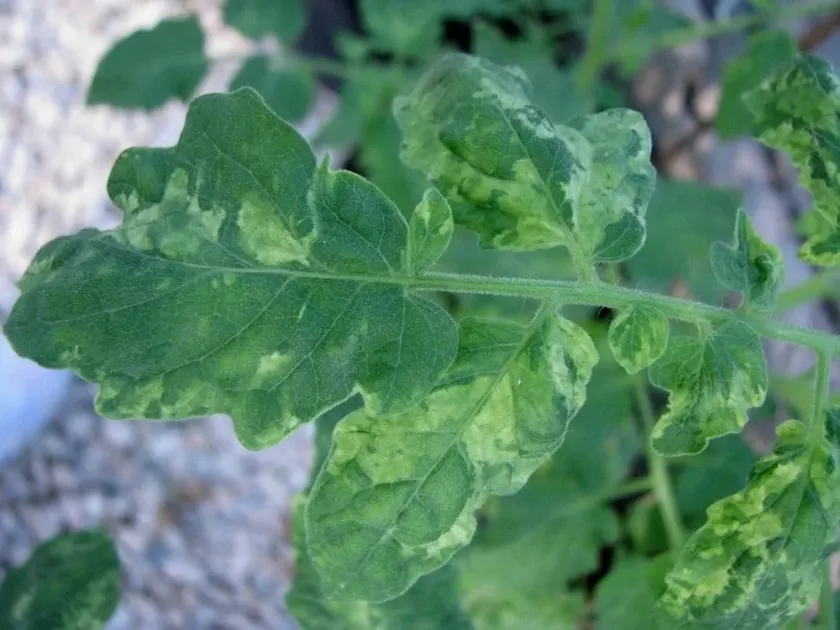
Description
How to identify
Tobacco mosaic virus (TMV) is one of the most widespread and stable plant pathogens in the world. As a positive-sense single-stranded RNA virus, it belongs to the Virgaviridae family and the Tobamovirus genus, characterized by its resilient rod-shaped particles.
Its extraordinary stability allows the virus to survive for long periods in infected plant debris, soil, and on the surface of tools. This makes it particularly challenging to eradicate once it has established itself in an agricultural environment.
What it damages
The virus primarily affects plants in the Solanaceae family, with tomatoes, peppers, and tobacco being the most economically significant hosts. Other susceptible plants include cucumbers and various ornamental species.
Transmission occurs primarily through mechanical contact. Human activity, such as pruning, harvesting, or handling plants after smoking tobacco products contaminated with the virus, acts as the main vector for its spread within a crop field.
Signs of infestation
Symptoms are manifested as a distinct mosaic pattern of light and dark green patches on foliage. Affected plants often exhibit leaf curling, yellowing, and severe stunting, which limits the overall photosynthetic capacity of the plant.
In addition to foliage damage, fruit development is frequently compromised. Tomatoes may show uneven ripening, internal browning, or a knobby, deformed surface, making them unsuitable for market distribution.
Control measures
There are no chemical treatments available to cure plants infected with TMV. Therefore, integrated pest management strategies focusing on sanitation and exclusion are the only effective methods for controlling the disease.
Producers should prioritize using virus-free seeds, disinfecting tools with bleach or trisodium phosphate, and maintaining strict hygiene protocols. Removing and destroying infected plants promptly is essential to minimize the risk of secondary infections.
Causes diseases · 1
Discussion
No discussions yet — be the first.