
Alfa-Prometrin
Zhejiang Zhongshan Chemical Industry Group Co., Ltd.
Herbicides
1
1
20 offers
4.93 €per pack
Buy

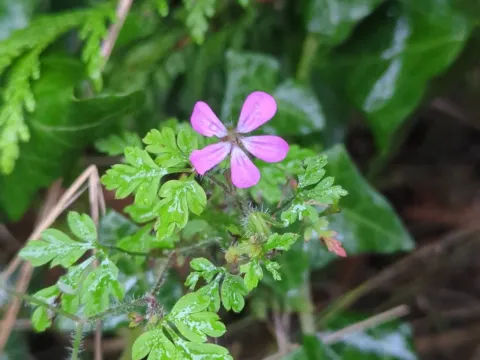
Geranium L.
Geranium (Latin: Geranium L.) is a diverse genus of flowering plants belonging to the Geraniaceae family. As an agricultural and horticultural crop, it is valued for its adaptability and chemical profile, often used for essential oil extraction or landscape management.
 Cut-leaved cranesbill
Geranium dissectum L.
3 products
Cut-leaved cranesbill
Geranium dissectum L.
3 products
 Antipodean cranesbill
Geranium x antipodeum Yeo
Antipodean cranesbill
Geranium x antipodeum Yeo
 Armenian cranesbill
Geranium psilostemon Ledeb.
Armenian cranesbill
Geranium psilostemon Ledeb.
 Ashy cranesbill
Geranium cinereum Cav.
Ashy cranesbill
Geranium cinereum Cav.
 Bigroot geranium
Geranium macrorrhizum L.
Bigroot geranium
Geranium macrorrhizum L.
 Bloody cranesbill
Geranium sanguineum L.
Cambridge geranium
Geranium x cantabrigiense Yeo
Bloody cranesbill
Geranium sanguineum L.
Cambridge geranium
Geranium x cantabrigiense Yeo
 Carpet geranium
Geranium incanum Burm. f.
Carpet geranium
Geranium incanum Burm. f.
 Clark's cranesbill
Geranium clarkei Yeo
Clark's cranesbill
Geranium clarkei Yeo
 Clark's meadow cranesbill
Geranium clarkei Yeo x Geranium pratense L.
Clark's meadow cranesbill
Geranium clarkei Yeo x Geranium pratense L.
 Dalmatian cranesbill
Geranium dalmaticum (Beck) Rech. f.
Dalmatian cranesbill
Geranium dalmaticum (Beck) Rech. f.
 Dove's-foot crane's-bill
Geranium columbinum L.
Dove's-foot crane's-bill
Geranium columbinum L.
 Dove's-foot crane's-bill
Geranium molle L.
Dove's-foot crane's-bill
Geranium molle L.
 Geranium endressii
 J. Gay
Geranium endressii
Geranium endressii J. Gay
 Geranium macrostylum
 Boiss.
Geranium macrostylum
Geranium macrostylum Boiss.
 Geranium renardii
 Trautv.
Geranium renardii
Geranium renardii Trautv.
 Geranium sessiliflorum
 Cav.
Geranium sessiliflorum
Geranium sessiliflorum Cav.
 Geranium shikokianum
 Matsum.
Geranium shikokianum
Geranium shikokianum Matsum.
 Geranium subcaulescens
 L’Hér. ex DC.
Herb-Robert
Geranium robertianum L.
Geranium subcaulescens
Geranium subcaulescens L’Hér. ex DC.
Herb-Robert
Geranium robertianum L.
 Himalayan geranium
Geranium himalayense Klotzsch
Himalayan geranium
Geranium himalayense Klotzsch
 Hybrid Geranium
hybrids between Geranium himalayense and Geranium wallichianum
Hybrid Geranium
hybrids between Geranium himalayense and Geranium wallichianum
 Hybrid Geranium
Hybrids between Geranium sanguineum and Geranium himalayense
Hybrid Geranium
Hybrids between Geranium sanguineum and Geranium himalayense
 Iberic cranesbill
Geranium ibericum Cav.
Iberic cranesbill
Geranium ibericum Cav.
 Knotty cranesbill
Geranium nodosum L.
Knotty cranesbill
Geranium nodosum L.
 Meadow cranesbill
Geranium pratense L. x Geranium psilostemon Ledeb.
Meadow cranesbill
Geranium pratense L.
Meadow cranesbill
Geranium pratense L. x Geranium psilostemon Ledeb.
Meadow cranesbill
Geranium pratense L.
 Mourning widow
Geranium phaeum L.
Mourning widow
Geranium phaeum L.
 Nepalese cranesbill
Geranium nepalense Sweet
Oxford geranium
Geranium x oxonianum Yeo
Nepalese cranesbill
Geranium nepalense Sweet
Oxford geranium
Geranium x oxonianum Yeo
 Oxford geranium
Geranium traversii x Geranium oxonianum
Oxford geranium
Geranium traversii x Geranium oxonianum
 Pencilled geranium
Geranium versicolor L.
Pencilled geranium
Geranium versicolor L.
 Purple cranesbill
Geranium x magnificum Hyl.
Purple cranesbill
Geranium x magnificum Hyl.
 Shikoku-Wallich geranium
Geranium shikokianum x Geranium wallichianum
Shikoku-Wallich geranium
Geranium shikokianum x Geranium wallichianum
 Small-flowered crane's-bill
Geranium pusillum L.
Small-flowered crane's-bill
Geranium pusillum L.
 Spotted geranium
Geranium maculatum L.
Spotted geranium
Geranium maculatum L.
 Thunberg's geranium
Geranium thunbergii Siebold ex Lindl. & Paxton
Thunberg's geranium
Geranium thunbergii Siebold ex Lindl. & Paxton
 Travers's geranium
Geranium traversii Hook. f.
Travers's geranium
Geranium traversii Hook. f.
 Wallich's geranium
Geranium wallichianum D. Don ex Sweet
Wallich's geranium
Geranium wallichianum D. Don ex Sweet
 Wlassov's cranesbill
Geranium wlassovianum Fisch. ex Link
Wlassov's cranesbill
Geranium wlassovianum Fisch. ex Link
 Wood cranesbill
Geranium sylvaticum L.
Wood cranesbill
Geranium sylvaticum L.
 Woolly-anther geranium
Geranium erianthum DC.
Woolly-anther geranium
Geranium erianthum DC.


The crop thrives in well-drained, fertile soil with a slightly acidic to neutral pH level. Proper drainage is critical, as the roots are highly susceptible to rot when subjected to waterlogged conditions, which frequently occurs in heavy clay soils.
Climatic requirements involve moderate sunlight and consistent temperature ranges. While most species prefer full sun, they require shelter from intense midday heat to prevent wilting and maintain physiological efficiency during the peak summer months.
Agrotechnical maintenance includes regular weed management and the application of balanced NPK fertilizers. Nitrogen is vital during the early vegetative stage, whereas phosphorus and potassium promote blooming and overall structural integrity of the stems.
The geographical origin of the genus is broad, spanning temperate zones across the globe. Today, it is cultivated under varying systems, ranging from intensive greenhouse production to open-field agricultural practices, depending on the end-use of the biomass.
Geraniums are susceptible to several fungal diseases, most notably Botrytis blight and root rot. These issues are often exacerbated by poor ventilation in the field or greenhouse, which creates an environment conducive to fungal spore germination.
Pest populations such as aphids, spider mites, and whiteflies frequently infest the crop, causing damage by feeding on plant sap. Early detection is essential, as these pests can reproduce rapidly, causing significant yield losses if left unchecked.
Integrated Pest Management (IPM) is the most effective approach for protecting geraniums. This includes monitoring for early symptoms, utilizing biological control agents where possible, and deploying targeted chemical treatments during the active growth phase.
Viral infections may also pose a risk, typically transmitted through insect vectors or contaminated horticultural tools. Sterilization of equipment and strict hygiene practices are fundamental to maintaining a disease-free crop production cycle.
Crop rotation and selecting resistant cultivars are recommended strategies to mitigate soil-borne pathogens. Keeping the foliage dry through proper irrigation techniques significantly reduces the incidence of common leaf-spot diseases.