
Herb-Robert
Geranium robertianum L.
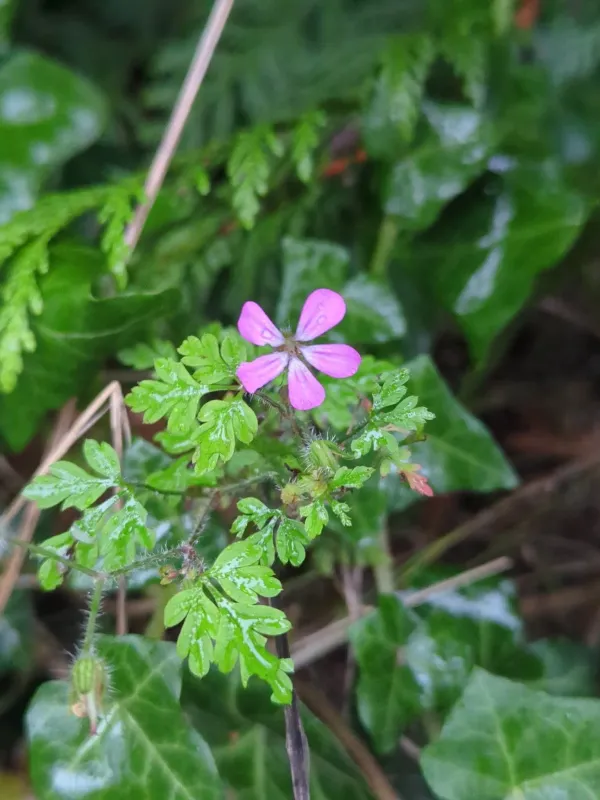
Description
Sowing dates
Herb-Robert is an annual or biennial plant that propagates primarily through seeds. Sowing should take place in the autumn or early spring, ensuring the soil is well-prepared and free from aggressive perennial weeds that could compete with young seedlings.
Seeds should be sown at a depth of 0.5 to 1 cm. Given the plant's natural tendency for self-seeding, careful planning of density is required if the crop is intended for commercial harvesting to allow for easier collection later in the season.
In colder regions, seeds may require a period of stratification to improve germination rates. Spring sowing is most effective when soil temperatures consistently reach at least 5-8 degrees Celsius, signaling the start of the growth season.
Spacing is crucial for the development of healthy biomass. Rows should be spaced 30–40 cm apart, which facilitates proper aeration and reduces the risk of fungal infections within the dense foliage of the plant.
After sowing, it is essential to keep the seedbed moist but not waterlogged. Once the plants reach the four-leaf stage, thinning may be necessary to ensure that each plant has enough space to grow to its full potential.
Growing requirements
Herb-Robert belongs to the Geraniaceae family and thrives in partially shaded environments. While it can adapt to sunny spots, it prefers moist, humus-rich soil with a neutral to slightly alkaline pH, which promotes the development of active compounds.
Watering requirements are moderate; the soil should be kept evenly moist. However, the plant is highly susceptible to root rot if water is allowed to stagnate, making proper soil drainage a non-negotiable factor for successful cultivation.
Climatically, the plant is robust and can withstand various conditions, but it performs best in regions with stable moisture levels. It does not require high-intensity fertilization; moderate application of organic compost is usually sufficient.
The plant benefits from periodic mulching, which helps retain soil moisture and prevents the growth of competing vegetation. This practice is especially helpful in the early stages of the biennial growth cycle.
- Partial shade or filtered light.
- Well-drained, fertile soil.
- Consistent moisture, avoiding water stagnation.
- Moderate organic fertilization.
Yield
The economic value of Herb-Robert lies in its aerial parts, harvested for their medicinal properties. Average yields can reach up to 3-5 tonnes of fresh biomass per hectare under optimal environmental conditions and good agricultural management.
Biologically active components, including tannins and essential oils, reach their peak concentration during the full flowering stage. Aligning the harvest date with this phase is critical to ensuring high-quality market-ready output.
Post-harvest processing involves cleaning the biomass and removing any coarse stems or weeds that might reduce the value of the final product. Drying is the most delicate stage, as it determines the potency of the herbal medicine.
Yield stability depends heavily on the prevention of moisture stress and the maintenance of soil fertility. With correct crop rotation practices, growers can maintain high yield levels over several consecutive seasons.
The dried product is evaluated based on its aromatic profile and overall cleanliness. Properly managed crops show high market demand from herbal pharmaceutical manufacturers seeking standardized quality raw materials.
Main diseases and pests
The most common disease affecting Herb-Robert is powdery mildew, particularly when air circulation is poor or humidity levels remain high for extended periods. Thinning the plants is the most effective preventative measure.
Root rot remains a major threat to the crop, especially in heavy or water-saturated soils. Proper site selection and drainage management are essential to prevent significant crop losses during the vegetative stage.
Pests such as aphids and mites can cause localized damage to the foliage. Integrated pest management, focusing on biological controls, is highly recommended to protect the safety and quality of the medicinal herb.
Occasional monitoring for leaf-eating insects is necessary, though outbreaks are rarely catastrophic. If left unchecked, however, these insects can significantly reduce the marketable yield by damaging the leaf surface.
Applying prophylactic biological treatments before the onset of flowering can effectively reduce the risk of infestation, ensuring the plants stay healthy and vigorous until the scheduled harvest time.
Harvesting
Harvesting should be conducted during the plant's peak flowering period. Using sharp, clean tools, the aerial parts are cut approximately 5-10 cm above the ground to preserve the plant's health or encourage potential regrowth in biennial types.
Drying must occur in a well-ventilated, shaded environment. Direct sunlight should be avoided during the drying process, as it can cause the essential oils to evaporate and the active compounds to degrade.
Once the material is dry—meaning the stems snap easily rather than bend—it must be packaged immediately. Containers should be light-proof and moisture-resistant to ensure long-term shelf stability of the harvested herb.
Storage facilities must be cool and dry to prevent mold growth or insect infestation. Quality control checks during the packaging phase are essential to remove any discolored or damaged parts of the plant.
With correct handling, the harvested product remains potent for up to two years. Maintaining this quality requires consistent monitoring of warehouse conditions, including protection from rodents and extreme temperature fluctuations.