
Himalayan geranium
Geranium himalayense Klotzsch
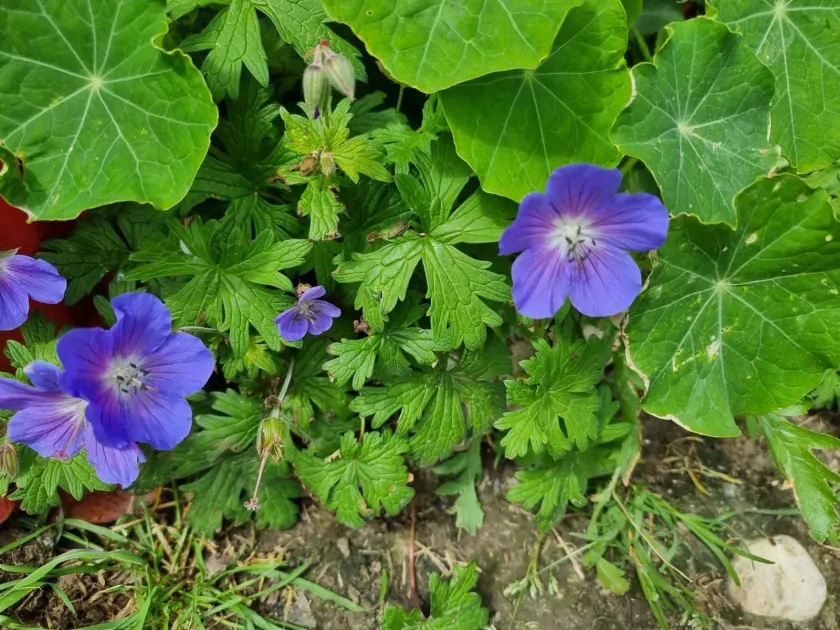
Description
Growing requirements
The Himalayan geranium (Geranium himalayense Klotzsch) is a perennial herbaceous plant belonging to the Geraniaceae family. This species is highly valued for its striking blue-violet flowers and compact growth habit, typically reaching up to 40 centimeters in height.
Originating from the mountainous regions of the Himalayas, this plant is naturally adapted to cool and temperate climates. It exhibits strong cold hardiness, making it suitable for cultivation across various temperate zones.
The culture thrives in well-drained, fertile soil that maintains a consistent moisture level without becoming waterlogged. While it prefers full sun, it performs well in partial shade, especially in regions with intense summer heat.
Standard agrotechnical practices include spring fertilization to support vegetative growth and regular weeding to ensure the plant has enough space to spread. Pruning after the first bloom can encourage a second flowering phase.
In landscaping, it is utilized as an excellent groundcover and border plant. Its ability to create dense, weed-suppressing mats makes it a practical choice for sustainable garden management.
Main diseases and pests
Powdery mildew is the most common fungal disease affecting Himalayan geranium, often triggered by high humidity levels and poor airflow around the foliage during the growing season.
Root rot remains a serious threat in soils with poor drainage. Once the roots are compromised by sustained saturation, the entire plant may quickly decline, emphasizing the need for sandy or loamy soil amendments.
Slugs and snails are frequent pests that cause significant damage to the foliage, particularly during damp spring and autumn periods, requiring manual removal or deterrent measures.
Aphid infestations may occur on tender young shoots, causing curling and reduced vigor. Monitoring is essential, as these pests can also transmit various viral diseases within the garden.
Effective management strategies include spacing plants to allow for adequate airflow, ensuring proper soil drainage, and applying appropriate biological or chemical controls only when necessary to preserve garden health.