
Travers's geranium
Geranium traversii Hook. f.
Description
Growing requirements
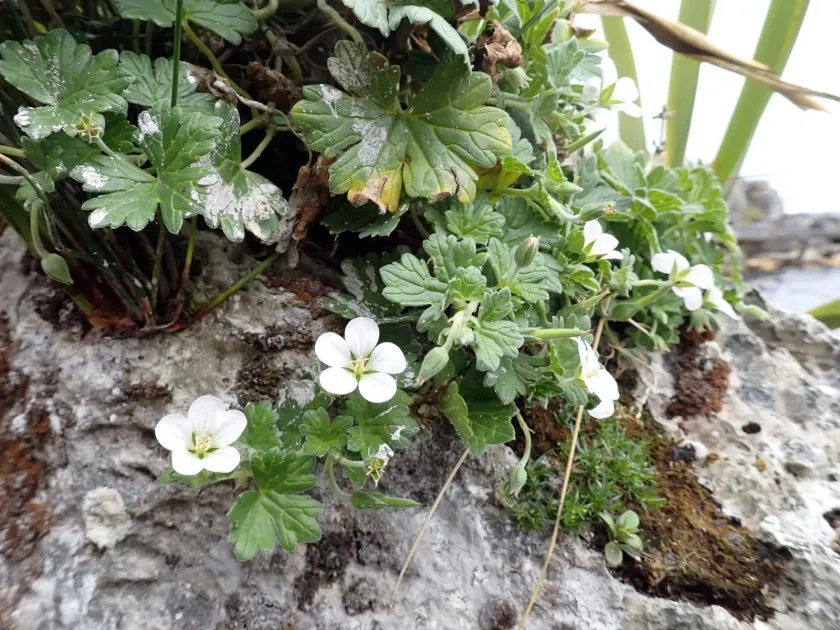
Travers's geranium (Geranium traversii) is a herbaceous perennial belonging to the Geraniaceae family. Native to the Chatham Islands, this plant is naturally adapted to coastal environments, including rocky cliffs and sand dunes.
The plant is known for its distinctive silver-green, pubescent foliage that forms a low-growing, compact rosette. Its delicate pink or white flowers appear in clusters, making it a highly prized species for rock gardens and maritime-style landscaping.
Cultivation requires exceptionally well-draining soil, as the plant is highly susceptible to root rot in waterlogged conditions. Sandy or gritty substrates are ideal for mimicking its natural habitat and ensuring long-term health.
This species thrives in full sun and requires excellent airflow to maintain its structural integrity. It is moderately hardy, but in colder regions, it should be protected from harsh frost or treated as a container plant that can be moved indoors during winter.
Routine maintenance involves deadheading spent flowers to encourage further blooming cycles and keeping the foliage clean. Pruning helps maintain the plant's shape and prevents it from becoming overly woody as it ages.
Main diseases and pests
The most significant threat to Geranium traversii is fungal infection, particularly root rot, triggered by poor soil drainage and high humidity levels during the cooler months of the growing season.
Powdery mildew can occasionally affect the leaves if the plant is grown in overcrowded spaces with poor air circulation, necessitating corrective pruning and proper spacing between individual plants.
Pests such as aphids and spider mites are common in dry, hot weather. These insects feed on the plant's sap, which can weaken the growth and lead to premature yellowing of the silver leaves.
Effective management includes regular monitoring for pests and using appropriate horticultural oils or systemic insecticides if infestations are detected early in their development cycle.
Maintaining the overall health of the plant through consistent, careful watering and avoiding foliage wetting during irrigation helps reduce the risk of secondary infections and pest outbreaks.